What medicine should be used to prevent and control watermelon viral disease
Watermelon viral disease is also called little leaf disease and mosaic disease. As the name suggests, the main parts harmed by this disease are the flowers and leaves. This disease occurs in all watermelon-growing areas across China. Among them, mosaic-type virus is the main type in northern watermelon areas, while fern-leaf-type virus is the main type in southern watermelon areas. Although the main parts harmed by this virus are flowers and leaves, once the flowers and leaves are affected, it can also lead to stunted plants and poor flower organ development. In severe cases, it causes poor fruit development, and both yield and quality cannot be guaranteed, which likewise affects growers' economic interests. Here, Qinnong Web introduces for everyone the prevention and control work related to watermelon viral disease, as well as related matters concerning what medicine to use after watermelons become diseased.
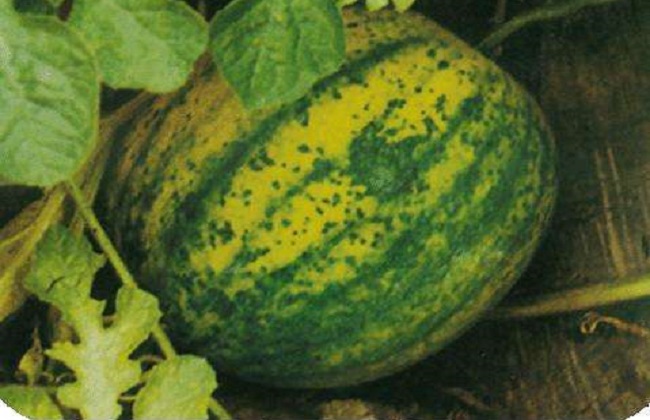
I. Harmful symptoms of watermelon viral disease
As mentioned earlier by Qinnong Web, the disease-causing viruses of watermelon viral disease differ between northern and southern China. In the south it is fern-leaf-type virus, and in the north it is mosaic-type virus. The symptoms of these two viruses are not completely the same, so here Qinnong Web will also introduce them separately for everyone.
Watermelon virus mainly shows two types of symptoms in the field: mosaic type and fern-leaf type. The first is the mosaic type. In the early stage, yellow-green mottled patterns appear on the top leaves, which later become wrinkled and deformed, with smaller leaves and an uneven leaf surface. The internodes of new stems and vines shorten, and they become slender and twisted, with few or no fruits set. The second is the fern-leaf type. New leaves become narrow and long, wrinkled and twisted, growth is slow, and the plant is dwarfed. Sometimes the top shows clustered growth without elongating, flower organ development is poor, and in severe cases no fruit can be set. In diseased plants with later onset, fruit development is poor, forming deformed melons. Some also have uneven fruit surfaces, small fruits, and dark brown flesh, which greatly affects yield and quality.
II. Prevention and control methods for watermelon viral disease
1. Agricultural control
Choose disease-resistant varieties. Select and keep seeds from disease-free plants. Seed treatment. Soak seeds in 55°C warm water for 30 minutes or in 10% trisodium phosphate solution for 20 minutes, wash clean with clear water, then germinate and sow. Raise seedlings in a centralized way, and spread silver-gray film in the field to repel aphids.
2. Chemical control
In the early stage of disease onset, use 2% Jungkeduke aqueous solution at 200-250 times dilution, or 20% Virus A wettable powder at 500 times dilution, or 1.5% Zhibingling emulsifiable concentrate at 1000 times dilution, or 30% Virus K wettable powder at 800 times dilution, or 20% Xiaoyedi at 1000 times dilution, etc., mixed with insecticides for controlling aphids, and spray for control. Once every 7 days, for 2-3 consecutive times. For fern-leaf-type symptoms, add “Qibao 920”, and the control effect is good.
3. Fertilization
Apply sufficient basal fertilizer, topdress reasonably, increase potassium fertilizer, water in time to prevent drought, and prune reasonably to improve plant disease resistance. Pay attention to removing weeds in and around the watermelon field, and pull out diseased plants in time. When carrying out field operations such as pruning and pollination, pay attention to minimizing damage to the plants. Choose sunny days for removing side shoots, and do it in sunlight so that wounds dry and shrink as quickly as possible. Eliminate aphids.
The above are the related prevention and control measures for watermelon viral disease. Here Qinnong Web reminds everyone that for the prevention and control of viral diseases, the principle of “prevention first, integrated control” must still be carried out. Qinnong Web has mentioned this principle many times, which also conforms to the needs of market development. Nowadays “pollution-free vegetables” are advocated, and naturally there is the same demand for fruits. If prevention is done well, later pesticide control will also be correspondingly reduced, and the watermelons grown will better meet consumers' requirements.