Detailed Explanation of Methods for Applying Carbon Dioxide Gas Fertilizer to Greenhouse Grapes
The main raw materials for plant photosynthesis are carbon dioxide and water. The organic matter and starch produced by photosynthesis are deposited within the plant as nutrients for its own growth. Therefore, the quality of photosynthesis also affects plant growth and development. Nowadays, grape cultivation mostly uses greenhouse planting methods, but while greenhouses provide insulation, they are also often in a closed state, causing the carbon dioxide inside to be replenished untimely and unable to meet the needs of grape growth and development. Therefore, timely supplementation of carbon dioxide concentration in the greenhouse is particularly important. Qinnong Web below introduces the methods for applying carbon dioxide gas fertilizer to greenhouse grapes:
I. Application Time
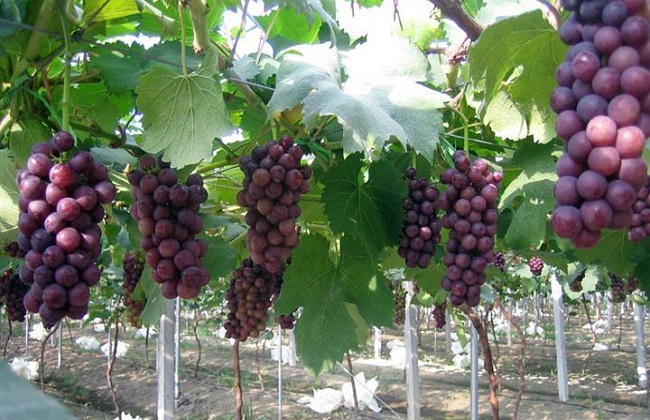
Usually from the end of February to the end of April, gas fertilizer should be applied after the grapes have sprouted. In the early stage, because the temperature is lower, the gas application time is slightly longer; in the later stage, the gas application time can be slightly shortened. The specific gas application time is from 6:50—8:00 every day, that is, it can start after sunrise. After gas application, close the greenhouse until 9:00, and after 9:00 remove the film for ventilation and cooling. Apply more on sunny days, less on cloudy days, and stop application on rainy days.
II. Application Concentration and Methods
According to experience, the carbon dioxide content per cubic meter of gas should be 1.0-1.3 grams. When the temperature is low and the greenhouse is closed for a long time, the dosage can be appropriately increased. The specific gas application methods are:
1. First, calculate the required volume and amount of carbon dioxide based on the length, width and height of the greenhouse.
2. Place the carbon dioxide generator in the middle of the greenhouse, which helps the gas spread to the surroundings.
3. Put ammonium bicarbonate into a plastic bucket, add an appropriate amount of clean water and mix, then hang the dilute sulfuric acid bucket at a high place and let it slowly drip through a conduit into the plastic bucket, reacting with the ammonium bicarbonate to produce carbon dioxide.
4. Carbon dioxide is released through another conduit, and the valve is closed after the application is finished. The ammonium bicarbonate in the plastic bucket can be used continuously, and should be replaced promptly after the reaction is complete.
III. Application Effects
After applying carbon dioxide gas fertilizer to greenhouse grapes, the effects are mainly reflected in the leaves and fruit. The leaves are noticeably darker green in color, with increased glossiness, increased thickness and larger size; the fruit colors early, with large berries and sweet taste, and the maturity period is more than one week earlier than open-field cultivation, with yield per mu increasing by 150-250 kg.
IV. Precautions
Since the ammonium bicarbonate and dilute sulfuric acid used both have a certain degree of corrosiveness, attention should be paid during use:
1. The reaction liquid must not come into direct contact with the roots and stems of plants;
2. Children are prohibited from contacting the reaction liquid;
3. Pay attention to personal safety during use to prevent the reaction liquid from splashing onto human skin;
4. The temperature inside the greenhouse must be strictly controlled, and attention should be paid to ventilation and air exchange time;
5. If the residual liquid in the reaction bucket is used as fertilizer, prevent it from causing phytotoxicity to crops during application.
If you accidentally come into contact with dilute sulfuric acid, if it is a small amount, immediately rinse with a large amount of water, then apply sodium bicarbonate solution (baking soda water), which can minimize the harm caused by sulfuric acid.
The above is the method compiled by Qinnong Web for how to apply carbon dioxide gas fertilizer to greenhouse grapes. The method of using the residual liquid in the reaction bucket as fertilizer refers to applying ten times the amount of clean water to the remaining ammonium sulfate aqueous solution after the reaction is completed, which can then be used as topdressing for other crops. This not only saves costs but also avoids burning crops.