Key Points for Watermelon Cultivation and Detailed Explanation of High-Yield Cultivation Techniques
What is the most enjoyable thing about summer? Nothing beats “hiding under a quilt with the air conditioner on, watching a movie and eating watermelon.” Indeed, watermelon has almost become synonymous with summer. The mere thought of summer brings watermelon to mind. Watermelon promotes salivation and quenches thirst, clears heat and relieves summer heat, making it one of the fruits commonly kept at home during summer. For farmers, watermelon is also a good planting choice, so how can watermelon be made high-yield? What are the key points for watermelon cultivation? The following is presented by Qinnong Web: the technical key points for high-yield watermelon cultivation.
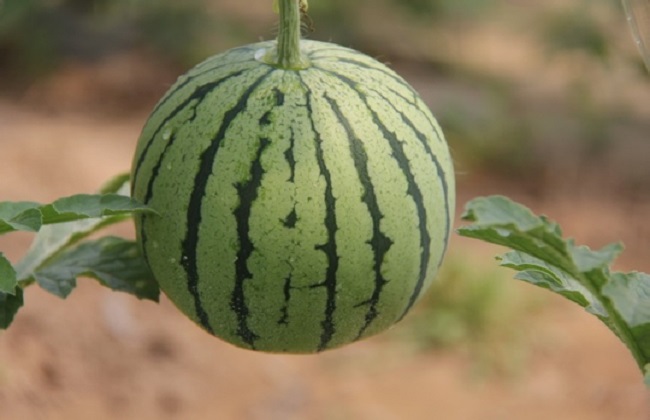
The cultivation process of any agricultural product cannot do without the five basic steps of site selection —— seed selection —— sowing —— application of water and fertilizer —— harvest, and watermelon is no exception. What this article presents is the three key periods after adequate preliminary work such as site selection and seed selection has been done, specifically introduced as follows:
I. Timely sprouting and sowing, careful seedling raising and transplanting
1. Sowing period. Open-field sowing is best in mid-to-late April; if the supply period is to be delayed, sowing can be done in early June; if heat-preservation seedling raising is used for early supply, sowing can be done in late March to early April.
2. Seed quantity. Use 1—1.5 liang of seed per mu of field; hybrid watermelon seeds are larger, so use 2—2.5 liang of seed per mu of field.
3. Seed soaking and sprouting. First soak seeds in 50—55°C warm water (if no thermometer is available, use two parts boiling water plus one part cold water) for 15—20 minutes, then add a small amount of cold water to bring the water temperature down to about 30°C, wait for the water to cool naturally and soak for 2—3 hours, then put the soaked seeds into a small cloth bag, wash clean with clear water and air-dry, mix with an equal amount of clean wet river sand, wrap with cloth and spread flat to about one finger thick for sprouting. The suitable temperature for watermelon seed germination is 30—35°C; they can also be placed in a 30°C constant-temperature chamber or beside a stove for sprouting. Generally after 48 hours all seeds can germinate.
4. Open-field sowing. When the sprouts are 1—2 fen long, they can be selected for sowing, with 2—3 seeds per hole, sprout tip facing downward when sowing, covered with soil about 2—3 cm thick, and immediately watered with root-setting water after sowing; if the weather is sunny, water should still be applied once on the 2nd—3rd day. When the seedlings have 2—3 true leaves, thin them to a final stand, removing the weaker one from any pair of plants, and promptly fill in gaps where seedlings are missing.
5. Heat-preservation seedling raising. Nutrient pot plus plastic film mulching for seedling raising requires meticulous work, and the following key steps should be well handled. ① Making nutrient pots. The pot body can be made from old newspaper or book paper into a paper tube 20 cm long, 13 cm wide, 8—10 cm high, and 6 cm in diameter. ② Preparing nutrient soil. Use 60—70% garden soil that has not grown cucurbits in recent years, add 10—15% sieved coal ash or burnt soil ash, add 20—25% decomposed pig and cattle manure and 0.2% phosphate fertilizer, mix thoroughly; prepare at least 300 jin per mu, and after mixing, pile up, cover and seal for later use. ③ Management of film seedling raising and transplanting. After true leaves appear, pay attention to ventilating the seedbed, letting in light and regulating temperature and humidity, to prevent the occurrence and harm of damping-off, anthracnose and Rhizoctonia rot. When the melon seedlings have two leaves, choose good weather to harden the seedlings and uncover the film; when the melon seedlings have two leaves and one heart or three leaves and one heart, and the outside temperature is stable at 15°C, they can be promptly transplanted to the field.
II. Reasonable close planting and good fertilizer management
1. The cultivation density of watermelon varies with variety and soil fertility, and about 450 plants per mu is suitable. For varieties with medium vigor, about 500 plants is suitable. That is, with beds including ditches 9 chi wide, plant one row along each side of the bed, with plant spacing (hill spacing) of 2.6 chi.
2. Intertillage and soil loosening and weed removal should be done promptly; generally intertillage 2—3 times, and in topdressing, grasp the principle of small meals more often, light first and heavy later.
3. Seedling-promoting fertilizer: can be applied when the melon seedlings are established and show true leaves, once every 10—15 days, each time 15—20 dan per mu (each dan contains 10% decomposed human and animal manure, plus 1 liang urea, 100 jin water); on rainy days, 3—5 jin urea per mu can be applied in holes 2—3 cun from the roots.
4. Vine-spreading fertilizer: apply when the melon seedlings have 5—6 leaves, using 100—200 jin decomposed cake fertilizer and 10—20 dan human and animal manure per mu, applied in holes opened one chi from the base of the plant in the direction of vine extension.
5. Fruit-strengthening fertilizer: when 60—70% of the melons are as large as eggs, apply 100—200 jin cake fertilizer and 15—20 dan human and animal manure per mu in holes.
First melon fertilizer: when most melons are as large as bowls, apply 15—20 jin urea + 5—8 jin potassium fertilizer per mu, mixed with water and applied near the melon base.
6. Second melon fertilizer: after the first batch of melons is harvested, in order to grow the second and third batches of melons well and prevent premature aging of the vines, apply 20—26 jin urea per mu.
III. Adopt multiple measures to increase the fruit-setting rate
1. Pruning and sucker removal: pruning methods include single-vine, two-vine and three-vine types. The single-vine type keeps the main vine and removes side branches on the main vine; this method results in fewer leaves per plant and smaller fruit shape, and is generally only suitable for high-density situations. The two-vine or three-vine type removes side branches growing from the leaf axils of nodes 3—7 at the base of the plant, keeping only 1—2 branches that grow vigorously and in a suitable direction. Pruning work should be carried out in stages, mainly in the early vegetative growth stage and the early fruiting stage. The first pruning should be done when the 2nd—3rd female flowers on the main vine bloom and several relatively vigorous side branches have formed around the female flower nodes; these side branches should be promptly removed. When the fruit set on the main vine is as large as an egg, pruning should stop. Sucker removal should be carried out from fruit set until before the whole field of watermelons is harvested, wiping out excess suckers, reducing tender leaves and small leaves, retaining large and strong leaves, concentrating nutrients, and promoting fruit development.
2. Vine pressing and vine arranging: Vine pressing method: when the melon vine grows more than 1 chi and begins to fall over, press a piece of soil in the direction opposite to the extension of the main vine, so that the main vine tilts forward; in order to prevent damage from wind and rain, press once every 4—5 nodes thereafter. Vine arranging method: when the main vine extends, straighten and evenly arrange the vines; afterward, simply keep the position of the growing point correct; generally arranging 3—4 times and pressing 3—4 times is sufficient.
3. Artificial supplementary pollination. Method: in the early morning, pick male flower buds opening that day and place them in a small basin to let them open naturally; after the female flower opens, peel off the petals of the male flower and smear the twisted anthers onto the honeycomb-like stigma of the female flower; each male flower can pollinate 1—2 female flowers. However, care should be taken not to touch the ovary, so as to avoid damage. Pollination is generally carried out before 9 a.m. When field plants grow uniformly, the nodes at which female flowers open are relatively uniform, and generally one flush of flowers is 5—6 days apart; therefore, artificial pollination need not be carried out every day, and it is enough to select the ideal fruit-setting position and carry it out for 2—3 days at full bloom.
4. Selecting and retaining melons. Generally it is suitable to select and retain the melon set from the 2nd—3rd female flower on the main vine. Without pruning, sometimes several melons set on one plant, and the fruit shape is noticeably reduced; poorly shaped young fruits can be removed, retaining 1—2, concentrating nutrients, and enlarging the fruit shape.
5. Using hormones. Spraying flower-and-fruit-retention king can significantly increase the fruit-setting rate, but it must never adhere to young fruits.
To achieve high yield in watermelon cultivation, one can never do without practice and the accumulation of experience. The above are the technical key points for high-yield watermelon cultivation compiled by Qinnong Web based on the experience of others. When applying them specifically, fruit farmers can combine their own experience and the local climate and environment, adapt measures to local conditions, and develop their own high-yield techniques.