Detailed Explanation of Greenhouse Strawberry Cultivation Techniques and Key Points
Strawberries have long been deeply loved by people for their sweet-and-sour taste, fresh fragrance and rich nutritional value. Some people group them together with mangosteen and blueberries under the name “Queen of Fruits”, which further highlights the status of strawberries in people's hearts. Nowadays, in order to achieve off-season cultivation of strawberries and obtain greater economic benefits, strawberry cultivation mostly uses plastic film covering small arched tunnels for planting. In order to bring them to market earlier to meet market demand, the key lies in winter management, and the main thing is to grasp the following five technical points.
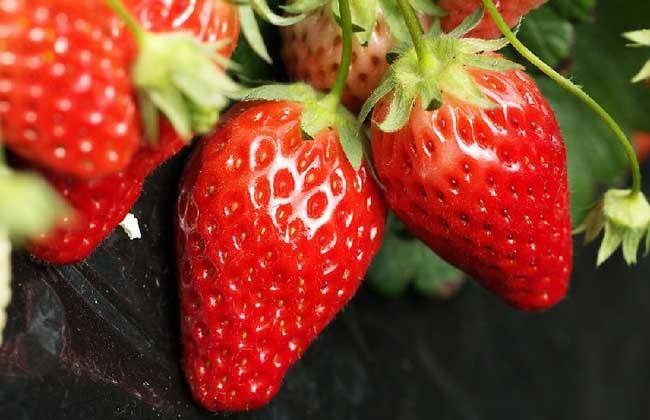
1. Cover the tunnel and keep warm at the right time. Generally, when the temperature drops below 5°C, a semicircular small arched tunnel should promptly be set up over the strawberry cultivation beds and covered with colorless plastic film. In the early stage after covering, attention should be paid to ventilation to prevent the temperature inside the tunnel from exceeding 30°C. Especially around noon on sunny, cloudless days with strong sunlight, greater care should be taken to prevent high temperatures from scorching the seedlings. In addition, when the minimum temperature inside the tunnel is around 5°C, paper quilts or straw mats should be laid over the tunnel film at night to keep warm, and removed promptly after sunrise in the daytime to increase sunlight exposure and raise the temperature inside the tunnel, carefully preventing cold damage or root rotting. Once the coldest days of winter arrive, if the maximum temperature inside the tunnel is below 10°C, the covering insulation materials should also not be removed during the day, so as to help strawberries overwinter safely. After the “fifth nine-day period” and “sixth nine-day period”, when the outside temperature stabilizes above 0°C, the paper quilts or straw mats can be removed after sunrise in the daytime, but they must be put back promptly before sunset in the evening to maintain a relatively high temperature inside the arched tunnel. When the temperature inside the small arched tunnel also remains stable above 5°C at night, the covering can be removed, and attention should be paid to weather changes at all times, with timely ventilation to prevent high-temperature damage.
2. Prevent early buds and early flowering. In the process of greenhouse strawberry production, plants are prone to early budding and early flowering. If this phenomenon occurs too much, it will seriously affect the yield and quality of strawberries. The occurrence of early budding and early flowering in greenhouse strawberries is related to the following factors. First, it is related to variety characteristics. Varieties whose flower buds differentiate easily and whose dormancy is relatively shallow, such as Lihong and Qiuxiang, need only about 50 hours of dormancy, and the low-temperature requirement during the dormant period is relatively small, so they are prone to early budding. Second, it is related to premature flower bud differentiation caused by fertilizer and temporary planting. On the one hand, before flower bud differentiation during seedling raising, if nitrogen absorption is relatively low, strawberry flower bud differentiation often occurs earlier; on the other hand, if temporary planting is done too late, the temporary planting seedlings are too small, or aged seedlings are formed, or the soil in the temporary planting bed is too dry or too wet, or fertilizer is insufficient, all of these can cause premature differentiation of strawberry flower buds. All of these will cause early budding and early flowering in strawberries after field planting. To prevent early budding and early flowering in strawberries, the following should be done in production: First, choose suitable varieties. For greenhouse cultivation, varieties with relatively shallow dormancy should be selected. If varieties with relatively strong dormancy are selected, insulation covering should not be too early. Second, during the seedling raising process, fertilize reasonably, strengthen management and cultivate strong seedlings. By removing old leaves, removing inflorescences, straightening runners and spraying gibberellin and other measures, strengthen the management of the mother plants and produce high-quality strong seedlings. Third, pay attention to temperature control after covering the tunnel. The temperature inside the tunnel should be controlled below 25°C during the day and above 0°C at night. In severe winter, through measures such as setting up small tunnels inside the greenhouse, thickening the covering and installing wind barriers to keep warm, ensure the normal development of strawberries. For plants that have already developed early buds and early flowers, remove the flower buds promptly, strengthen fertilizer and water management, and promote axillary buds to flower and bear fruit, so as to reduce losses.
3. Strengthen fertilizer and water management. Greenhouse strawberries have a long fruiting period, so on the basis of applying heavy base fertilizer, reasonable topdressing should be carried out to meet their nutritional requirements. Topdressing should follow the principle of “small amounts and multiple applications”. From covering the tunnel to budding, fertilizer can be applied with shallow water about once every 10 days, each time applying 10 kg of urea, 5-8 kg each of superphosphate and potassium chloride per mu. In addition, in the middle and later stages, combined with pesticide spraying, foliar spraying of multi-element micro-fertilizer or organic nutrient solutions such as Zhibaosu can increase strawberry fruit weight and sugar content. When the temperature inside the greenhouse is too high and soil moisture evaporation is large, irrigation should be carried out in time. In the early stage, when the outside temperature is high, irrigation should be carried out in the evening; in the later stage, when temperatures both inside and outside the greenhouse are relatively low, irrigation should be carried out in the morning. After irrigation, first raise the greenhouse temperature, then increase ventilation to reduce humidity. Do not water too frequently, and each watering should soak thoroughly. Stop watering 1 week before flowering, and 15 days after flowering, water once in combination with fertilization.
4. Prevent deformed fruit. Interplanting some varieties with large amounts of pollen among the main cultivated varieties is an effective measure to prevent deformed fruit in greenhouse strawberries. The local main cultivated variety is Baojiao Zaosheng, and the pollinating varieties are Chunxiang, Fengxiang, etc., generally interplanted at 5%-10%. Pesticides must not be sprayed during the strawberry flowering period, to prevent reducing pollen germination rate, affecting fertilization and producing deformed fruit. Pesticides can be used before strawberry flowering to control diseases, and after flowering, diseased plants should be removed promptly, and diseased leaves and inflorescences should be removed to control the spread of diseases. When soil moisture is insufficient, timely dark irrigation under the plastic film between ridges should be carried out. When fertilizer is lacking, apply 15 kg of 45% ternary compound fertilizer per mu in combination with watering, and do not apply ammonium bicarbonate. It is better to dilute the fertilizer with water and apply it by punching holes, as this can promote fertilizer uptake with water and meet the needs of normal strawberry flowering and fruiting. When each batch of flower buds forms in greenhouse strawberries, place bees inside the greenhouse, stocking 5,000 bees per standard greenhouse, so that the pollination rate can reach 100%. The bee release times are 8-9 a.m. and 3-4 p.m.
5. Prevent and control pests and diseases. When using small arched tunnels to cultivate strawberries, because the microenvironment inside the tunnel has high temperature and high humidity, it is extremely prone to diseases such as powdery mildew and gray mold, as well as underground pests harming strawberry plants. For insect pests, before field planting, 25% phoxim can be mixed with water or fine soil and scattered into the soil, or trichlorfon powder can be scattered into the soil for control. For diseases, after mulching with film, promptly spray 40% thiophanate-methyl at 300-400 times dilution or Bordeaux mixture at 240 times dilution.
The above are the main technical points for growing strawberries in greenhouses. As severe winter is approaching, strawberry growers may wish to give it a try. Perhaps next year's harvest will reach an even higher level, so take action quickly!