Why is the red ginseng fruit called the alternative king of fruits?
When it comes to the king of fruits, most people's first reaction is “durian.” Durian's firm hold on the title of “king of fruits” is already deeply rooted in people's minds. Durian has a pungent smell: those who love it praise its fragrance, while those who dislike it complain of its stench. Countless people love it, but no small number detest it. The fruit introduced to you today has a unique taste and excellent mouthfeel, with sweet flesh and fragrant seeds; eaten together, seed and flesh are both sweet and fragrant. It is a highly distinctive, irresistible, one-of-a-kind odd-flavored fruit of the world —— the red ginseng fruit.
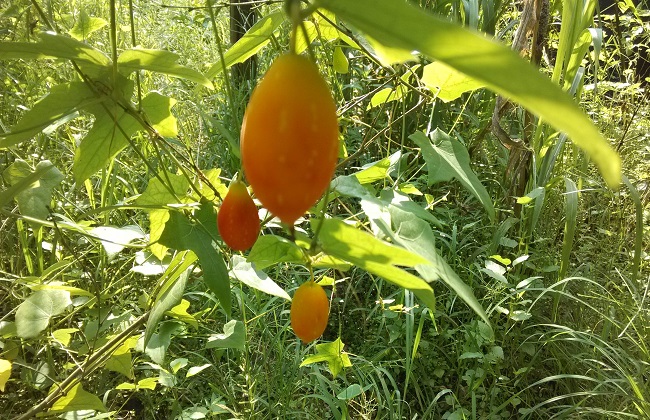
The kiwano (horned melon) originated in the deserts of southern Africa and is an annual herbaceous plant. Why is it called the king of fruits? Because, like durian, apples and kiwifruit, it has extremely high nutritional value. The kiwano is rich in calcium, zinc, iron, potassium, vitamin B1, vitamin B2, vitamin B6 and other nutrients. After eating it, it has effects such as skincare and beauty, calming the nerves and nourishing the brain, strengthening the heart and activating blood circulation, antibacterial and anti-inflammatory action, promoting digestion, boosting immunity, improving sleep, promoting intestinal peristalsis and cleansing the intestines. Its fruit contains glistening seeds and gelatinous flesh, and it is one of the fruits greatly loved by local people in Africa. Its taste is excellent; jelly-like flesh paired with emerald-green seeds makes anyone's mouth water at the sight.
As an annual herbaceous fruit, the red ginseng fruit can produce more than 6,000 fresh fruits per mu, with wholesale prices ranging from 6-10 yuan each. According to those who have grown it, the average profit per mu can reach as high as 30,000 yuan. Its main selling points are:
1. It grows by climbing frames like cucumbers and gourds. It can be grown wherever varieties such as tomatoes, cucumbers and watermelons are planted. It blooms and fruits continuously from May to November of the same year. The red ginseng fruit is a perennial root plant; in the second year it can sprout and grow directly without replanting. It is the fruit with the fastest fruiting among perennials in the world today and the longest continuous harvest period of several months.
2. The domestic market for red ginseng fruit is currently almost blank. Whether selling picked fruit or propagated seedlings, the returns are dozens of times higher than those of other crops.
3. It has extremely strong adaptability, hard leaves and resistance to pests and diseases. It is suitable for cultivation in both north and south, and planted in the same year, it fruits in the same year.
4. It has beautiful appearance, fresh taste and a high selling price, unmatched by other fruits.
5. It can be used for bonsai or courtyard landscaping, and is the preferred high-end ornamental-and-edible dual-purpose variety in upscale villa areas.
Now that the red ginseng fruit has so many cultivation values, how should it be planted?
The red ginseng fruit grows best in loose, fertile sandy loam and gravelly loam. Although it can also grow and fruit in other types of soil, necessary soil improvement should be carried out to increase the yield and quality of the red ginseng fruit. For example, in places where the soil is too sticky and compacted and drainage is poor, the soil should be improved by applying green manure or organic fertilizer, partial soil replacement or mixing in sand. In sandy wasteland, where the soil is barren, low in organic matter, deficient in nitrogen, phosphorus and potassium, and poor at retaining fertilizer and water, improvement must be made. The soil can be improved through winter ploughing, planting green manure, using outside soil, and increasing the application of barnyard manure and farmyard manure, and then the orchard can be established. Heavy saline-alkali land must be desalinated and drained of alkali, and where the soil is strongly acidic, lime should be applied appropriately for improvement, so that the red ginseng fruit can grow and fruit normally.
When the red ginseng fruit is planted on hills and mountains, the berries are often of better quality because of ample light, good air circulation and large day-night temperature differences. Where fertilizer and water can be supplied, cultivation in high, dry places gives the best results: the fruit colors well, has high sugar content, a rich sweet fragrance and few pests and diseases. However, in narrow mountain gullies and valleys, light is insufficient and cold air tends to accumulate, making them prone to frost in early spring and late autumn. When establishing an orchard in mountainous areas, south-facing and southeast-facing slopes should be chosen, and terraces should be built where the slope exceeds 10 degrees.
The groundwater level should be lower than 1.5 m below the surface. In places where the water level is too high, drainage should be carried out or high-ridge cultivation adopted. In windy places, it is best to choose plots with natural barriers (forests, high mountains, etc.) to establish the orchard so as to avoid wind damage; otherwise, shelterbelts must be planted. Avoid establishing a red ginseng fruit orchard in places frequently hit by disasters such as hail.
The above is the relevant introduction to growing the red ginseng fruit. As an emerging fruit, the red ginseng fruit has economic value unmatched by other fruits. Whether planted in an orchard or in a courtyard, it is a uniquely distinctive, high-end and rare variety.