How to Improve the Survival Rate of Fruit Tree Planting? A Detailed Guide to Practical Methods
The survival rate of fruit tree planting is the most important factor affecting early high yields of fruit trees. Therefore, how to improve the survival rate of fruit tree planting is one of the topics fruit growers most want to understand. Through long-term practice and research, mastering good planting methods and effectively managing the planting holes, nursery stock, planting, and post-planting care can significantly improve the survival rate. Below is a summary of nine specific related planting methods: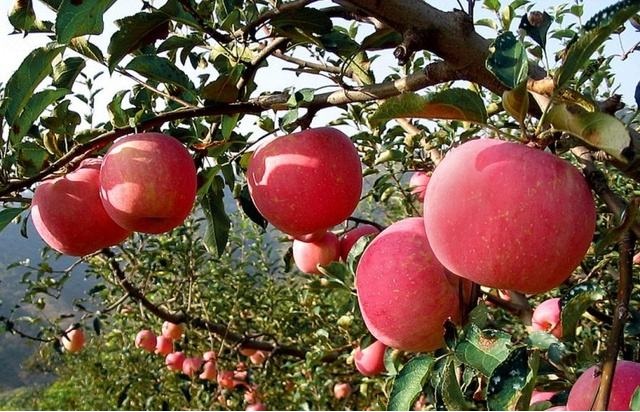
1. Trimming the Root System
After fruit trees are dug out from the nursery, the root system has already been damaged. To reduce the injured area, it needs to be trimmed. Use scissors to remove part of the main root, and cut large lateral roots flat at the injured site. Do not cut at an angle, as flat cuts heal more easily.
2. Trimming Branches and Leaves
After the roots are cut, they cannot absorb enough water from the soil to supply the evaporation from the above-ground branches and leaves. Cut off 2/3 of the branches and leaves to reduce transpiration, thereby improving the survival rate.
3. Timely Planting
Spring planting should be carried out after the soil thaws and before the nursery stock buds. Planting too early or too late is not conducive to the survival of the nursery stock. Planting time should vary according to the characteristics of different tree species. Peach, apricot, plum, and similar trees should be planted early, while red date and similar trees should be planted late. Generally, planting immediately after the soil thaws is appropriate.
4. Selecting High-Quality Nursery Stock
The quality of nursery stock is one of the important factors affecting the survival rate of planting. Whenever possible, choose nursery stock that meets high technical standards, such as being free of pests and diseases, growing vigorously, having a well-developed root system, and having short internodes. Before planting, carefully select the seedlings, remove unqualified weak seedlings, leggy seedlings, and diseased or damaged seedlings, and organize the nursery stock.
5. Planting Techniques
First, apply sufficient base fertilizer. In each planting hole, apply 1 kg of Leili seaweed fertilizer, 2 kg of Aoli bacterial fertilizer, and 0.2 kg of Aoli biological organic bacterial agent, mix thoroughly with soil, and then plant. Second, soak the roots in nutrient solution. Before transplanting, place the roots in a nutrient solution prepared with 15 mL of Genwang, 25 mL of Jikeshan, and 10 L of water, and soak for 30 minutes. This can promote the healing of root wounds, accelerate the recovery of root growth, and improve the survival rate. Third, remove the film at the graft union. If the grafting film is not removed, the lower and upper parts below and above the graft union will thicken, while growth at the graft union will not keep pace. In strong winds, the tree is prone to break at the graft union. Fourth, spread the roots evenly. When placing the nursery stock into the planting hole, spread the root system evenly so that the roots are extended, ensuring normal root growth. Fifth, water thoroughly to settle the plant. Place the nursery stock into the planting hole, cover with a thin layer of fine soil, water thoroughly to settle the plant so that roots and soil are in close contact, then cover with another layer of soil. Sixth, pay attention to the graft union. When planting citrus fruit trees, the graft union should be exposed, while for bayberry, plum, peach, chestnut, and other fruit trees, the graft union should not be exposed, so that they can grow and develop normally. Seventh, cover the tree basin. After planting, cover the surface soil around the tree base with rice straw, thatch, crop stalks, or pig and cattle manure to maintain soil moisture and help recovery growth.
6. Covering with Plastic Film
After planting is completed, rake the surrounding soil fine with the planted seedling as the center to form a shallow pot shape, and cover with plastic film measuring 80-100 cm square. This can effectively increase soil temperature, resist drought, preserve moisture, and promote early and vigorous sprouting and growth.
7. Fertilizer and Water Management
After fruit trees are planted, apply fertilizer solution once each on the 10th day and the 20th day. This is key to restoring root growth. On the 10th day after planting, the root callus tissue begins to recover. At this time, prepare a solution in the ratio of 15 mL of Genwang, 15 mL of Jikeshan, 0.25 kg of high-nitrogen water-soluble fertilizer, and 50 L of water, and pour 1 L per plant. This can improve root vitality and shorten the seedling recovery period. On the 20th day after planting, prepare a solution in the ratio of 0.25 kg of high-nitrogen water-soluble fertilizer, 23 g of 3% metalaxyl · hymexazol, and 50 L of water, and pour 1 L per plant. This can promote vigorous sprouting of new shoots. Until August, apply 0.3% high-nitrogen water-soluble fertilizer once a month, and the survival rate of the nursery stock reaches 95%.
8. Trunk Pruning
According to cultivation requirements, cut at the trunk-setting height where there are 35 full buds. The cut should be smooth, without splitting, and treated with a sealant or wrapped with plastic film to prevent water loss and drying out. In areas with frequent strong spring winds, support stakes should be set up to prevent the tree from swaying.
9. Post-Planting Management
For newly planted nursery stock, follow the management principle of "promote early, control later." Irrigate promptly according to fruit tree growth conditions and soil moisture, and apply additional fertilizer at the right time. At the same time, pay attention to pest and disease control during the seedling stage, and other work. Create as favorable an environmental condition as possible for nursery stock growth.
In combination with the above nine measures, when planting fruit trees, also consider the local temperature and rainfall characteristics, water, fertilize, weed, and remove plastic film at the right times, and create a good growing environment for fruit trees according to the laws of natural development. Only by adapting measures to local conditions and managing scientifically can healthy growth of fruit trees be promoted.