How much does a papaya seedling cost per plant? Detailed explanation of cultivation methods
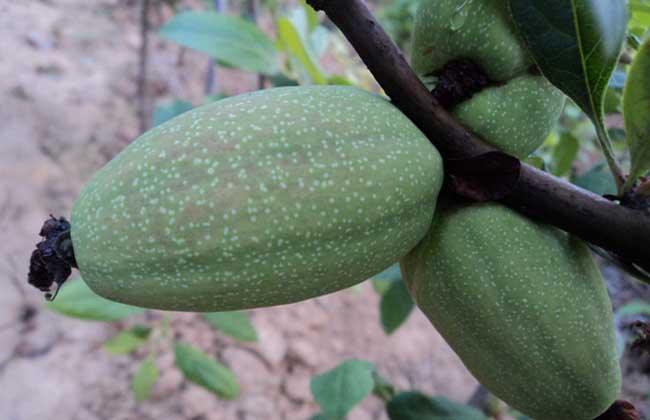
Papaya is also known as Mingzha, Muli, Haitang, etc. It is a shrub or small tree of the genus Chaenomeles in the Rosaceae family, commonly cultivated for ornamental purposes. The fruit is eaten boiled or soaked in sugar liquid, and when used as medicine it has the effects of sobering up, removing phlegm, regulating qi, and stopping diarrhea. It is cultivated in Guangdong, Guangxi, Fujian, Yunnan, Taiwan, China and other places. Let's take a look at papaya seedling prices and cultivation methods together!
How much does a papaya seedling cost per plant?
The price of papaya seedlings is about 3-5 yuan per plant, but prices vary greatly depending on seedling quality, variety, specifications, and purchasing market. In fact, what people often call papaya is divided into two types: one is edible papaya, and the other is medicinal papaya, but many people now confuse them. Medicinal papaya is Chaenomeles in the Rosaceae family, while edible papaya is the tropical fruit pawpaw, so attention should be paid to distinguishing them when buying seedlings. Usually, papaya can bloom and bear fruit in 3-5 years under good cultivation conditions.
Propagation methods of papaya seedlings
1. Cuttings: When taking papaya cuttings, select 1-2 year old, well-developed, pest-free, and fully lignified branches from the mother tree as cuttings. Cut the lower end near a node into a slanted surface, quickly dip it in 0.05% rooting powder for 10-15 seconds, take it out and let it dry slightly before cuttings.
2. Suckers: Many sprout seedlings grow around the root zone of papaya. From September to November, seedlings with roots that are more than 60-80 cm tall and grow robustly can be dug out as seedlings for planting. Seedlings obtained by this propagation method have a high survival rate after planting, but the propagation coefficient is low.
3. Layering: For papaya layering, in spring or autumn, select robust, pest-free branches near the ground, bend them down, and press them into the soil. Girdle the part pressed into the soil, fix it with a wooden fork, then pile fertilized soil on top. After roots grow at the girdled area, separate them into individual seedlings.
Cultivation methods of papaya seedlings
1. Planting density: Papaya can be planted in spring or autumn. After planting, the trunk can be headed at 70-80 cm above ground. When sprouting, promptly remove root suckers and sprouts within 50 cm of the trunk base, and appropriately thin out overly dense new shoots. In mountainous and hilly poor land, the row spacing is generally 2×3 m. In flat land with good fertilizer and water conditions, the row spacing is preferably 3×4 m. When intercropped with grain and vegetables, the row spacing is preferably 5×5 m.
2. Water and fertilizer management: Most base fertilizer in papaya orchards is applied in autumn, accounting for about 70% of the total annual fertilizer application. Topdressing should be carried out during the period of maximum fertilizer efficiency according to the growth and fruiting status of the papaya tree. Trees in full fruit period should be promptly topdressed with pre-flowering fertilizer, post-flowering fertilizer, and fruit expansion fertilizer, while the amount for young trees should be reduced appropriately. After fertilization, irrigate once thoroughly and pay attention to controlling water during the flowering period. In arid areas, after planting, the tree disk should be covered with plastic film or grass to preserve soil moisture.
3. Flower and fruit management: In the first to second years of papaya, pick off the flowers at any time. In the third year, strengthen management in spring and apply pre-flowering fertilizer, fruit expansion fertilizer, and autumn fertilizer well. Papaya has a high self-pollination fruit-setting rate and sets fruit easily. Releasing bees or artificial pollination during the flowering period can increase the fruit-setting rate. Papaya fruit has a self-thinning phenomenon, and poorly pollinated fruit will fall off automatically. After fruit setting in early May each year, it is enough to thin out small fruit and deformed fruit.
4. Training and pruning: After grafting, the central trunk of papaya is relatively upright, and after slight pruning it can be trained into a cup shape, cylindrical shape, or slender spindle shape, generally mainly the slender spindle shape. Pruning is mainly thinning. During the growing season, pay attention to cutting off competing branches of the central trunk, upright vigorous branches within the crown, overly dense branches, slender weak branches, diseased and pest branches, etc. In areas lacking branches, 1-2 buds can be retained for heavy short cutting to promote branching. Aging fruiting branch groups should be promptly retracted and renewed.
Disease control of papaya seedlings
1. Viral disease
[Symptoms] New leaves turn yellow and then develop yellow-green mottled stripes of uneven intensity. Leaf shape becomes smaller, and leaves wither and fall early. Stems, petioles, and petals have oil-soaked streaks. Although flowering occurs, fruit setting is difficult, and circular or elliptical continuous or discontinuous ring-spot lesions appear on the fruit surface.
[Control] Use disease-tolerant varieties. One month after planting, sow corn between the rows to prevent aphids from flying directly onto papaya plants and spreading the virus. Spray aphid-killing pesticide once every 7-10 days, alternating pesticides.
2. Damping-off
[Symptoms] Dark brown spindle-shaped spots can occur on both the stem base and middle part of seedlings. As the disease develops, the lesions become sunken and constricted, and finally the diseased seedlings dry up and die.
[Control] Choose a seedbed plot with high and dry terrain, good drainage, and where vegetables have not been grown. Strengthen seedbed management. In the early stage of disease onset, promptly pull out diseased seedlings and spray pesticides such as 50% carbendazim 600 times liquid to control the spread of pathogens.
3. Powdery mildew
[Symptoms] Leaves and petioles show granular protrusions, then produce white powdery conidia, causing leaves to turn yellow and wither.
[Control] Pay attention to ventilation and drainage, plant at reasonable density, enhance ventilation and light transmission, and change the high-temperature, humid, and stuffy microclimate in the field. In the early stage of disease onset, spray 15% triadimefon 1500 times liquid.
4. Anthracnose
[Symptoms] It damages fruit, branches, and leaves. In the early stage of disease onset, the “small brown spots” on the fruit rapidly expand into lesions, causing the entire fruit to rot. Diseased fruit produces pink slime under high humidity and becomes mummified fruit after water loss.
[Control] In winter, prune diseased branches, remove mummified fruit and diseased leaves, and burn them in a centralized manner. In winter, spray 3-5 degree lime sulfur mixture. At the end of April, spray 70% thiophanate-methyl 1000 times liquid (once every 10 days). At the end of May and beginning of June, spray 75% chlorothalonil 500 times liquid more than 2 times.
5. Gray mold
[Symptoms] The affected papaya seedling leaves look as if scalded by hot water. Young stems and tender shoots spread from small brown spots in the early stage of infection into a ring, causing the parts above the lesion to wilt and form damping-off or dead shoot tips.
[Control] Strengthen winter prevention. After seedlings emerge, spray 1:0.5:200 Bordeaux mixture once a week, or 70% thiophanate-methyl 1500 times liquid once every 10 days. During the disease period, use 65% zineb wettable powder or 50% benomyl for control.