How to plant papaya seeds? Detailed planting method
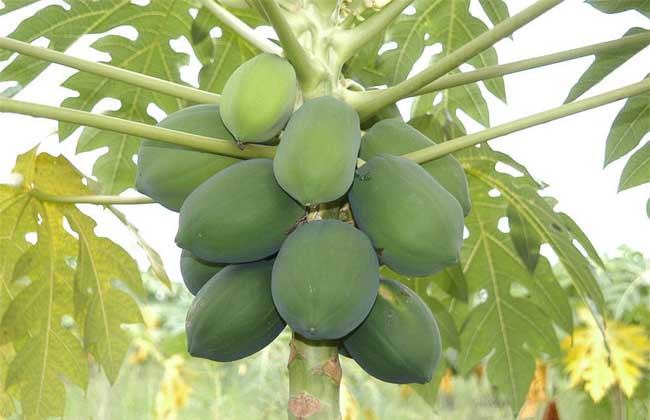
Papaya is also known as Mingzha, Muli, Haitang, etc. It is a shrub or small tree of the genus Chaenomeles in the rose family. In fact, what people often call papaya is divided into two types: one is edible papaya, and the other is medicinal papaya. But now many people confuse them. Medicinal papaya is the rose family papaya, and edible papaya is the tropical fruit papaya. Let's take a look below at how to plant papaya seeds!
What conditions are needed to grow papaya?
1. Soil: Papaya has no strict requirements for soil quality, but it prefers sandy soil with deep soil layers, loose fertility, and good drainage.
2. Water: Papaya prefers semi-dry and semi-moist conditions. It should be slightly dry before and after the flowering period, prefers moisture after fruiting, and the soil should be slightly dry when the fruit is close to maturity.
3. Light: Papaya is not tolerant of shade. A wind-sheltered and sunny location can be chosen for planting.
4. Temperature: Papaya prefers a warm environment and can overwinter outdoors in the Yangtze-Huai River basin.
What value does growing papaya have?
1. Economic: Fresh papaya fruit contains more tannins and organic acids, and its sugar content is relatively low, making its taste sour and astringent, so it is not suitable for raw eating. However, its fruit is rich in nutrients and vitamins and can be made into products with unique flavors.
2. Health care: Papaya has obvious health benefits. Using papaya as a raw material, products that have been successfully developed and marketed mainly include papaya juice beverages, papaya preserves, papaya fruit wine, papaya fruit vinegar, etc.
3. Edible: Papaya is delicious and also has dietary therapeutic effects. It has the effects of relaxing muscles and stimulating collaterals, harmonizing the stomach and resolving dampness. It especially has beauty benefits for women. More importantly, the active ingredients in papaya fruit can improve the function of phagocytes.
4. Ornamental: Because of its graceful tree shape, concentrated flower clusters, abundant flowers, and beautiful flower colors, papaya is often used as an ornamental tree species. It can also be used as rootstock for grafting crabapple, or cultivated as a bonsai in courtyards or gardens.
How to plant papaya seeds?
1. Seed collection: Papaya can be harvested in August to September when the exocarp turns green-yellow. Cut open the freshly collected fruit, take out the seeds and dry them, and select plump seeds to keep for planting. You can also cut open the fruit in November after the fruit skin has air-dried and take out the seeds.
2. Sowing time: Papaya can be sown in spring or winter. For spring sowing, sow from February to April and transplant from April to May, with a seedling period of 50 to 70 days. For winter sowing, sow from mid-October to early December, with a seedling period of 120 to 130 days. Attention should be paid to taking cold protection and warmth measures.
3. Sowing method: Before sowing papaya, soak the seeds in a suitable concentration of soda solution for 6 to 8 hours. After soaking, take them out, drain them, mix them with sand, and broadcast them in the seedbed at a row spacing of 20 cm. After covering with a thin layer of soil, cover with a layer of rice straw and keep moist. Seedlings can emerge in 40 to 50 days.
4. Seedling management: After papaya seedlings emerge, cultivate the soil and maintain moisture. When 2 to 3 leaves have grown, reduce watering to promote deep rooting and prevent excessive growth. Start applying thin fertilizer at the 4-leaf stage. At the 5-leaf stage, hardening off can begin. In the second spring, keep them in the bed or transplant them separately into the field.
Papaya planting management techniques
1. Planting density: Papaya can be planted in spring or autumn. After planting, the trunk can be headed at 70 to 80 cm above the ground. In mountainous and hilly poor land, the plant and row spacing is generally 2×3 m. In flat land with good fertilizer and water conditions, the plant and row spacing is preferably 3×4 m. When intercropping with grain and vegetables, the plant and row spacing is preferably 5×5 m.
2. Water and fertilizer management: The amount of base fertilizer applied in a papaya orchard accounts for about 70% of the total annual fertilizer application. Topdressing should be carried out during the period of maximum fertilizer efficiency according to growth and fruiting conditions. Trees in full fruiting stage should be promptly topdressed with pre-flowering fertilizer, post-flowering fertilizer, and fruit expansion fertilizer. The amount of fertilizer for young trees should be reduced as appropriate.
3. Flower and fruit management: From the first year to the second year, remove the flowers at any time. In the third year, apply pre-flowering fertilizer, fruit expansion fertilizer, and autumn fertilizer well. There is also a self-thinning phenomenon, and poorly pollinated fruits will fall off automatically. After fruit set in early May each year, simply thin out small fruits and deformed fruits.
4. Training and pruning: Papaya pruning is mainly thinning. During the growing season, pay attention to cutting off competing branches on the central trunk, upright water sprouts within the canopy, overly dense branches, thin and weak branches, and diseased and pest-damaged branches. In areas lacking branches, 1 to 2 buds can be retained for heavy short pruning to promote branching. Aged fruiting branches should be promptly retracted and renewed.
5. Pest and disease control: The main diseases of papaya include leaf spot, ring rot, anthracnose, and dry rot. Pests include aphids, red spiders, papaya borers, peach fruit borers, pear psyllids, stinging moths, etc. While controlling them, attention should also be paid to controlling various caterpillars, pear psyllids, and other pests.