How to Plant Avocado Seeds? A Detailed Guide to the Planting Method
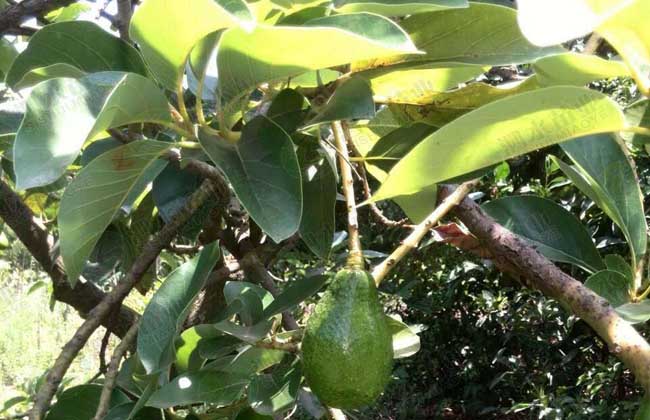
The avocado is a deciduous tree of the genus Persea in the family Sapotaceae, also known as oil pear, alligator pear, butter pear, etc. It is called "forest butter" because it is rich in plant fats. It originated in Mexico and Central America and other places. At present, it is cultivated in small amounts in Guangdong, Hainan, Fujian, Guangxi, Taiwan, China, Yunnan and Sichuan in China. Let us take a look below at how to plant avocado seeds!
The growth habits of the avocado
The avocado likes light and prefers a warm, humid climate. It is not cold-tolerant, and only a few varieties can endure short periods of low temperatures of 0 degrees. The suitable average annual temperature is 20-25°C. Cold resistance varies by variety. Cold-resistant varieties can withstand low temperatures of -6°C, while varieties with low cold resistance wither when exposed to low temperatures of 0°C. It needs annual rainfall of more than 1000 mm. Its roots are shallow and its branches are fragile, so it cannot withstand strong winds. Strong winds can lead to reduced yield. It has strong adaptability to soil.
How to plant avocado seeds?
In production, avocados are generally propagated by seed. When sowing, remove the seed coat and sprout the seeds in a sand bed. Choose a place with deep soil, good drainage and shelter from wind for planting. A plant spacing of 5*(6-7) m is more suitable. Mixed planting of varieties can ensure pollination. After sowing, the seeds germinate in 30-40 days, and after about 1 year of cultivation they can be taken out of the nursery for planting or grafting.
Avocado planting management
1. Field planting: When avocado seedlings are 10-20 cm tall, transplant them by size grade, with a plant spacing of 30×60 cm. Water thoroughly before transplanting, and dig as deep as possible to avoid damaging the roots. The planting spacing is 5-6 m. Grafted seedlings planted for 3-4 years or seedling trees for 4-6 years will bloom and bear fruit.
2. Mulching: The avocado is a fruit tree that grows under tropical rainforest conditions and in competition for sunlight. The high-temperature and high-humidity environment makes it grow quickly. Therefore, avocado cultivation abroad mostly emphasizes growing grass or green manure near the plants in the early stage, and applying a large amount of mulch near the root zone.
3. Fertilization: Avocados are conventionally fertilized with nitrogen fertilizer more than 4 times a year, usually by broadcast application or through the irrigation system. For adult trees, apply 50 kg of organic fertilizer and 50 g of compound fertilizer per tree during the young fruit stage, and apply once more after harvest, with the amount doubled.
4. Drainage: Avocados need to keep the root-zone soil moist all year round and are very sensitive to soil drought. Once lacking water, physiological functions are blocked and tree vigor weakens, causing leaf drop and fruit drop, and reducing cold resistance in winter. Therefore, irrigate appropriately during drought, but pay attention to drainage during the rainy season.
Avocado pest and disease control
1. Anthracnose
[Harm] It harms ripe fruit and can also infect leaves, young branches, flowers and young fruit, causing fruit drop and fruit rot.
[Control] Remove diseased branches in the orchard, prune diseased leaves, and eliminate the source of infection. After harvest, carry out low-temperature pretreatment and low-temperature storage as early as possible. The key to control is to minimize the occurrence of other fruit diseases and avoid mechanical damage during fruit transport.
2. Scab
[Harm] In the early stage, affected fruit develops slight round brown scab-like protrusions, which later turn brown to light purple. After the fruit ripens, the lesions join together, the center sinks, and the peel becomes rough.
[Control] Prune diseased branches to reduce pathogens, and spray Bordeaux mixture or other copper formulations.
3. Stem-end rot
[Harm] The fruit stalk is infected first, and slight withering appears around the stem end of the fruit. As the fruit ripens, the pathogen invades the fruit, and obvious black rot appears around the stem end, with a clear boundary between diseased and healthy parts.
[Control] Remove the source of infection in time, avoid the accumulation of diseased residues in the orchard, and covering the ground under the trees with film or weeds can promote faster decomposition of diseased residues. In addition, do not harvest on rainy days.
4. Sooty mold
[Harm] The surface of fruit, leaves and stems is covered with a large amount of black sooty fungal hyphae and spores, and grows on the honeydew secreted by soft scales and whiteflies.
[Control] The key is to control pests and reduce honeydew production. A better method is to use natural enemies for biological control.