How much is a pecan tree sapling? Introduction to planting methods
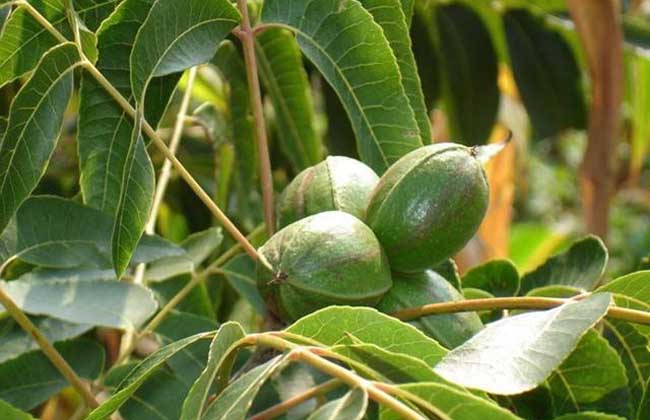
Pecan is also known as American mountain walnut, longevity fruit, wansui zi, etc. It is a tree plant of the genus Carya in the Juglandaceae family, native to the United States and northern Mexico on the North American continent, and has now become one of the world's nut tree species. In China it is cultivated in Hebei, Henan, Jiangsu, Zhejiang, Fujian, Jiangxi, Hunan, Sichuan and other places. Let's take a look at pecan tree sapling prices and planting methods below!
How much is a pecan tree sapling?
The price of pecan tree saplings is about 10-12 yuan each, supplied in Jiangsu, Zhejiang, Shandong, Henan and other places, but prices vary greatly depending on sapling specifications, market and purchase quantity. Pecans are generally sown and raised in the first year, grafted in spring of the second year, transplanted in autumn, and can be sold as saplings in autumn and winter of the third year. After planting, the trees begin to bear fruit in about three years, and can reach full production in five years. The flowering period is April to May, and the fruiting period is July to November.
Growing conditions for pecans
1. Temperature: Pecan prefers a warm and humid climate, with an annual average temperature of 15.2°C being suitable. It can tolerate a maximum temperature of 41.7°C and is relatively cold-resistant, suffering no frost damage even at -15°C, but low temperatures during the flowering period will affect flowering, pollination and flower development.
2. Water: Pecan has different water requirements at different phenological stages throughout the year. During the spring shoot growth period before flowering, an appropriate amount of rain is required; continuous rainy weather is undesirable during the flowering period; and during the fruit and naked bud development period, sufficient and uniform rainfall is required.
3. Light: Pecan is not very demanding regarding light. Young trees require a shaded environment, so artificial shading is necessary when raising pecan seedlings. Adult trees grow poorly on sunny, dry and barren sunny slopes.
4. Soil: For pecan planting, the best soils are dark oil soil and yellow soil developed on limestone, as well as yellow soil developed on sandstone, slate and shale. Red soil and sandy soil are not suitable for planting pecans.
Propagation methods for pecans
1. Sowing: Pecans can be sown in both spring and autumn, but autumn sowing is less safe than spring sowing. Autumn sowing is usually completed before the soil freezes in autumn. Spring sowing should be done early, and can be sown in mid-March, but the seeds must undergo sand storage treatment.
2. Grafting: The rootstock used for pecan grafting is generally walnut. Scions are collected from excellent individual plants, selecting plump and full buds from the middle and lower parts of vigorous developmental branches 30-40 cm long and 1-1.5 cm thick from the outer canopy as grafting buds.
3. Cuttings: Pecan cutting propagation usually uses robust 1-year-old branches. The cuttings are 17-20 cm long. With ordinary cutting methods, the survival rate is usually above 90%.
4. Root cuttings: For pecan root cuttings, roots are collected when seedlings are lifted from the nursery, then heeled in, and planting is carried out in spring. The root cuttings are 1 cm in diameter and 10 cm long, and bed planting is preferable. The upper cut end of the root must be buried 0.5-1 cm below the bed surface.
5. Layering: During the dormant period of pecans, vigorous branches from the base of the mother plant are pressed into the soil. After a period of time they can take root, and then the branches are separated from the mother plant and transplanted for further cultivation.
Planting methods for pecans
1. Land preparation and fertilization: For pecan planting, choose a plot with deep, loose soil, sufficient water sources, and shelter from wind and facing the sun. After digging the hole, first place a layer of straw at the bottom of the pit, then add 50 kg of organic fertilizer, 20 g of Jiadi powder, and 500 g of superphosphate and mix them evenly with the soil.
2. Transplanting and planting: Pecan transplanting is carried out after leaf fall or before germination. Large saplings should be moved with a mud ball, while 1-2 year old small saplings must retain more lateral roots and fibrous roots and be promptly dipped in mud slurry. During the young tree stage, especially before winter in the year of planting, measures such as burying the soil and mounding soil around the base should be taken.
3. Pruning and trimming: Early pruning of pecans should be light, appropriately leaving more main branches so that they bear fruit early. When pruning, the inner canopy of the tree crown should be kept ventilated and light-permeable. In the early stage, branches and shoots in the upper part of the crown should be retained as much as possible, while the lower part of the crown can be gradually thinned.
4. Cultivation and weeding: Within 1-3 years of establishing a pecan orchard, crops such as soybean, corn and Atractylodes macrocephala can be intercropped. During intercropping, the orchard should be cultivated and weeded, and an appropriate amount of organic fertilizers such as burnt mud ash, cake fertilizer and barnyard manure should be applied.
5. Fertilization to protect fruit: For pecans, before germination each spring, apply about 30 kg of urea per mu; during the fruit expansion period, apply 80 kg of special fertilizer for fruit trees; and in autumn, apply 3000 kg of base fertilizer. After entering the fruiting stage, increase fertilizer application according to the fruiting situation.
6. Pest and disease control: The main pests and diseases of pecans include hickory branch blight, star longhorn beetle, greenish prominent moth, coffee wood borer, etc. Focus on pest and disease control in winter orchards, and during the growing season carry out timely control according to the occurrence of pests and diseases.