Ginkgo Seed Prices and Planting Methods Explained
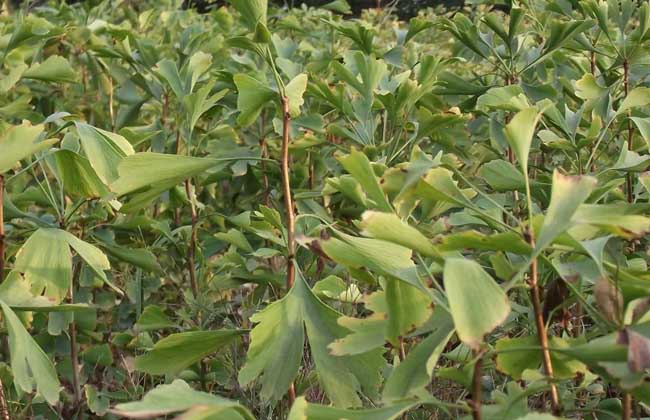
Ginkgo is also known as the white fruit tree, the grandparent-grandchild tree, the duck-foot tree, and so on. It is a deciduous tree of the genus Ginkgo in the family Ginkgoaceae, and its fruit is commonly called white fruit. It grows rather slowly and lives extremely long; under natural conditions it takes more than twenty years from planting to bearing ginkgo fruit, and only after forty years can it produce fruit in large quantities. It has ornamental, economic, and medicinal value. Now let us take a look at ginkgo seed prices and planting methods!
How much is a jin of ginkgo seeds?
The price of ginkgo seeds is about 5 to 8 yuan per jin, but prices vary greatly depending on seed quality, variety, place of origin, market, and purchase quantity. In production, ginkgo is mostly propagated by cuttings, grafting, or division; seed propagation is mostly used for large-scale landscaping seedlings or for making multi-trunk bonsai. After harvesting the seeds in autumn, remove the outer seed coat, dry the seeds with the fruit coat still on, and they can be sown in winter of the same year or in spring of the following year. If sowing in spring, they must first undergo mixed-sand stratification to promote germination.
What varieties of ginkgo are there?
1. Dongting Huang: Dongting Huang is the largest-seeded type among the ginkgoes of Dongting Mountain. The seed is obovate and plump, and the kernel averages 3.53 grams. It is produced in Xishan, Dongting, Suzhou, Jiangsu.
2. Da Mei He: Da Mei He has large seeds that are nearly round, with a round and blunt apex and a slightly broad base. The kernel is round and slightly flat, with a round and blunt or slightly pointed apex and a gradually narrowed base. It is produced in Zhuji, Zhejiang.
3. Tongzi Guo: Tongzi Guo has large seeds that are flat and round, with a round and blunt apex and a broad base. The kernel is nearly round, blunt and rounded with no point, with prominent ridges on both sides and a fish-tail shape at the bottom. It is produced in Xing'an, Guangxi.
4. Da Ma Ling: Da Ma Ling has oblong seeds. The kernel is elliptical and plump, with a bluntly pointed apex and a broad, round base, with ridges above the middle and inconspicuous wings. It is produced in Zhuji, Zhejiang.
How are ginkgo seeds planted?
1. Seedbed preparation: Choose a plot for the ginkgo seedbed that is sheltered from the wind and facing the sun, with level ground. Dig a trench running east-west (30 cm deep and 120 cm wide), spread about 5 cm of fine sand at the bottom, and build a 10 cm earth ridge around the trench to prevent rainwater from flowing in.
2. Seed germination: The time for promoting germination of ginkgo seeds depends on the sowing time, and the sowing time is in turn based on the late frost period, because ginkgo sprouts are susceptible to frost damage below 0°C. Generally, starting germination promotion 30 to 40 days before the sowing period is sufficient.
3. Placing seeds on the bed: After mixing the ginkgo seeds with sand, spread them evenly on the seedbed, cover with 5 cm of fine sand, then place a thin layer of fine soil or a straw mat to maintain the temperature inside the seedbed, and finally cover the seedbed with plastic film, pressing the edges of the film down firmly with soil.
4. Transplanting and planting: Seedlings propagated from ginkgo seeds can grow to 15 to 25 cm tall in the same year, and can be transplanted after leaf fall in autumn. Note, however, that a well-drained section must be chosen for the seedbed to prevent waterlogging from rotting the part of the seedlings near the ground.
Ginkgo planting methods
1. Land selection: The ginkgo tree lives long, and one planting can bring long-term benefits, so land selection is very important. A sunny slope with not too steep a gradient should be chosen as the afforestation site, and the soil should preferably be neutral or slightly acidic with a thick top layer, moist and fertile, and well drained.
2. Arranging pollinator trees: The ginkgo tree is a dioecious plant. To achieve high yield, pollinator trees should be arranged reasonably, choosing male plants with the same variety and flowering period as the female plants. The ratio of female to male plants is 25 to 50:1. A centered arrangement among 5 or 7 plants can be used, or they can be placed at the four corners.
3. Seedling specifications: Ginkgo seedlings should be chosen with a height-to-diameter ratio above 50:1, a main root 30 cm long, uniform lateral roots, and current-year new shoot growth of more than 30 cm. In addition, the seedlings must have robust terminal buds, plump and full lateral buds, and no pests or diseases.
4. Reasonable close planting: Ginkgo trees grow slowly in the early stage, and close planting can improve land utilization and increase yield per unit area. Generally, 88 or 63 plants are set per mu, 44 or 31 plants per mu when the canopy closes, and after a few years, 22 or 16 plants per mu.
5. Planting time: Ginkgo trees are mainly planted in autumn while still in leaf and in spring before leafing out. Autumn planting allows the seedling roots a longer recovery period to prepare for above-ground sprouting the following spring; planting before spring sprouting does not grow as well as autumn planting.
6. Planting method: When planting ginkgo trees, dig planting pits according to the designed row and plant spacing. After the pits are dug, backfill with topsoil and apply fermented fertilizer containing calcium superphosphate. When planting, let the seedling roots spread out naturally, then firm the soil while filling it back, and water thoroughly to settle the roots in time.