How much does a mulberry sapling cost? With planting methods
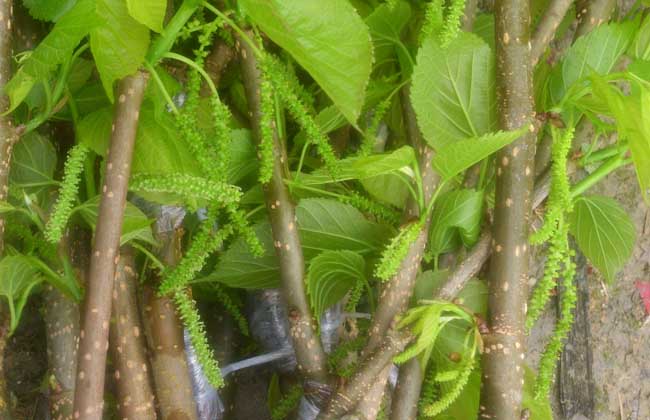
Mulberry, also known as mulberry fruit, mulberry berry, mulberry puff and so on, is the fruit spike of the mulberry tree, a deciduous plant of the genus Morus in the family Moraceae. It is sweet and juicy, rich in nutrients, and has effects such as tonifying the liver and kidney, promoting body fluid and moistening dryness, and darkening hair and brightening the eyes. It originated in central and northern China, and is now cultivated in all provinces and regions from northeast to southwest China, and from the northwest all the way to **. Now let us take a look at mulberry sapling prices and planting methods!
How much does a mulberry sapling cost?
The price of a mulberry sapling is about 2 to 5 yuan each, but prices vary greatly depending on specifications, varieties, places of origin and markets. There are many varieties of mulberry, and common cultivated types include Lu mulberry, white mulberry, Guangdong mulberry, Ruizhui mulberry and so on. They are commonly propagated by seed, grafting and layering. Generally, a new mulberry sapling grafted in the same year can bear fruit in April to June of the following year, but the amount of fruit will be relatively small, and then as the tree body grows larger, the fruit yield will increase accordingly.
Propagation methods of mulberry saplings
1. Seeds: Collect purple ripe mulberries, rub off the fruit skin, wash the seeds, and sow them immediately or store them in wet sand. Spring sowing, summer sowing and autumn sowing are all possible. For summer sowing and autumn sowing, new seeds of the current year can be used. Seedlings emerge about 10 days after sowing.
2. Grafting: For bag grafting, cut the scions 20 days before grafting and store them in wet sand. After the cortex and xylem at the cut of the rootstock separate into a bag shape, insert the scion. In spring and summer, "T"-shaped budding or tubular budding can also be used.
3. Layering: Layering propagation of mulberry saplings is very simple. In early spring, lay the mother plant horizontally and fix it to the ground, bury it in a trench, leave the top exposed, cover with soil and press firmly. After rooting, separate it from the mother plant, and plant it in spring or autumn.
Planting methods of mulberry saplings
1. Site conditions: Mulberry has strong adaptability and can grow healthily whether planted in yellow loess soil, sandy loam or loam. The better the water, fertilizer and light, the higher the yield. Generally, hills, mountain slopes, village sides and fields can all be used for cultivation.
2. Variety selection: For fresh eating as the main use, it is suitable to plant Wu Zi Da Shi and Hong Guo No. 2. For the purpose of processing mulberry juice, it is suitable to choose Hong Guo No. 1, Hong Guo No. 2, 8632 and so on. However, no matter which variety is planted, 5 to 10% pollinator trees must be configured.
3. Planting density: Different mulberry varieties have different planting densities. Wu Zi Da Shi has softer branches and a loose tree shape, with about 370 plants per mu. Other varieties have upright branches and a compact tree shape, so the planting density can be relatively higher.
4. Timely planting: The cultivation period for mulberry is from after leaf fall in late autumn to before sprouting in early spring of the following year. Level the land, apply farmyard manure and phosphate fertilizer, arrange the fruiting trees and pollinator trees in a reasonable matching layout, and after planting, water thoroughly to settle the roots.
5. Reasonable pruning: For mulberry, cut flat at a height of 40 cm above the ground before sprouting in early spring. In early June, cut flat the robust growing branches leaving 15 to 20 cm. After fruit harvest, carry out shaping pruning of the mulberry tree, selecting and retaining 3 to 4 thick strong branches per plant as scaffold branches.
6. Scientific fertilization: Mulberry fertilization should meet the standard of satisfying the tree's growth and good fruit development requirements for various nutrient elements. The principle of fertilization is to mainly use organic fertilizer, supplemented by chemical fertilizer, mainly apply summer pruning sprouting fertilizer, supplemented by others, and properly combine N, P and K.
Pest and disease control of mulberry saplings
1. Sclerotinia disease
[Harm] When the mulberry tree blooms, the pathogen begins to invade, and symptoms appear after fruiting. Diseased fruits have no commercial or edible value. If not controlled in time, the disease incidence in severely affected plots will reach more than 90%.
[Control] 70% thiophanate-methyl 1000 times, or 50% carbendazim wettable powder 1000 times.
2. Broken tip disease
[Harm] Callus tissue forms at the lesion on diseased new shoots. Cracking appears first, and then the lesion sinks and causes girdling. The diseased part loses water and becomes thinner, and is easily broken by wind, rain or touching from above, hanging upside down on the tree.
[Control] Spray 70% thiophanate-methyl wettable powder 1000 to 1500 times solution, or 50% ethyl thiophanate wettable powder 800 to 1000 times solution during the mulberry flowering period to kill the pathogen.
3. Mulberry longhorn beetle
[Harm] Adults feed on the bark and leaves of tender branches, while larvae bore downward within the subcortical layer and xylem of branches and trunks, weakening tree vigor and in severe cases causing death.
[Control] Use hook killing, egg collection, protection of natural enemies, and manual capture.
4. Scarab beetle
[Harm] It damages parts of the mulberry such as roots, leaves, flowers, buds and fruits.
[Control] During the adult damage period, spray 50% methamidophos 800 to 1000 times solution, or 50% phoxim 800 to 100 times solution, or 40% omethoate emulsion 1000 times solution.