How much does a large hazelnut sapling cost? Detailed guide to planting methods
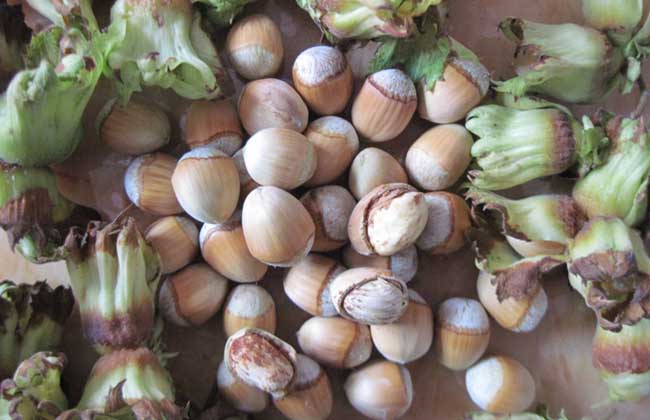
Hazelnut is a woody grain and woody oil tree species, also known as the filbert, chui zi, mountain chestnut, etc. It is a deciduous shrub or small tree of the genus Corylus in the birch family, with high comprehensive utilization value and wide uses. In northern China, sloping land with gentle terrain below 750 m altitude, terraced fields and flat land are most suitable for hazelnut growth. Let us take a look below at the price of large hazelnut saplings and their planting methods!
How much does a large hazelnut sapling cost?
The price of large hazelnut saplings is about 5 to 8 yuan each, but prices vary greatly depending on the specification, quality, place of origin and purchase quantity of the saplings. Hazelnuts are distributed in the temperate zones of Asia, Europe and North America, and have a long cultivation history in China. At present, 22 regions across the country have plants of the genus Corylus, with very rich resources. In particular, large areas of hazelnut forest are distributed in Northeast China, Shanxi, Inner Mongolia, Shandong and Henan.
Growing conditions for large hazelnuts
1. Temperature: Large hazelnuts have strong cold resistance and are suitable for an average annual temperature of 7.5 to 13°C. They can be cultivated in areas where the minimum temperature reaches minus 30°C.
2. Light: Large hazelnuts are light-loving plants and generally require an annual sunshine duration of more than 2100 hours, otherwise few flower buds form and yields are low.
3. Soil: Large hazelnuts have high soil requirements. Dry sandy soil, heavy clay soil, swamps, saline land and low-lying land are all unsuitable for establishing a hazelnut orchard.
Propagation methods for large hazelnuts
1. Seed propagation: In the hazelnut forest, select high-yielding plants with large nuts and no pests or diseases as mother trees, and choose hazelnuts with large grains, plump kernels and no pests or diseases for sowing. Seed germination capacity lasts 1 year. Spring is the suitable sowing time, generally in mid-to-late April.
2. Division propagation: There are two methods of division propagation. One is to dig up the entire mother plant and divide it into several small clumps or individual plants, each with a root system and 1 to 2 branches. The other is to dig out root suckers around the mother plant clump and separate out several plants while the mother plant is retained.
3. Root sucker propagation: There are two methods of root sucker propagation. One is to dig out root suckers around existing plant clumps to obtain seedlings. The other is to propagate in a dedicated mother plant orchard; mother plants prepared for propagation should be cut back at ground level in spring to promote the production of root suckers from the clump.
4. Layering propagation: Layering propagation is divided into horizontal layering and arch layering. Horizontal layering can be done in autumn or spring, but spring is most suitable. Arch layering is further divided into hardwood layering and softwood layering. Hardwood layering is carried out in early spring, and softwood layering in early-to-mid June.
Planting methods for large hazelnuts
1. Land preparation and hole digging: Before planting hazelnut trees, level the land and remove miscellaneous trees, weeds, stones, etc. When digging holes, keep topsoil and subsoil separate, mix the subsoil with organic fertilizer and backfill it, then return the topsoil to the upper part of the planting hole. It is best to complete this in the previous autumn.
2. Planting time: To improve the survival rate, hazelnut trees are generally recommended for autumn planting, usually from October to December. In the Yellow River and Yangtze River basins, it is suitable from late February to early March, no later than mid-March, but in all cases it must be completed before budding, otherwise the survival rate decreases.
3. Planting density: The planting density of hazelnut trees is determined by species, variety, rootstock, cultivation techniques, tree form used, terrain, soil, climatic conditions, etc. Many factors must be considered so that the hazelnut trees grow vigorously.
4. Planting depth: For hazelnut trees, the root system must not be buried too deep or too shallow. After planting, the root crown should be level with the ground or about 5 cm below the ground, and the soil above the root system should preferably be 6 to 10 cm deep.
5. Reasonable watering: Build an irrigation basin around the hazelnut tree to facilitate watering and water storage. After planting, water immediately. After the water infiltrates, seal the soil to conserve moisture, and cover the tree basin with plastic film to retain moisture and increase temperature, promote root activity of the hazelnut tree and improve the survival rate.
6. Weeding and loosening soil: Under loose soil and good aeration, hazelnut trees have well-developed root systems, strong sprouting ability and vigorous growth, which is beneficial to growth and fruiting. Weeding and loosening the soil should be carried out 2 to 3 times each year, from late April to June.
7. Reasonable fertilization: After planting hazelnut trees, attention should be paid to fertilization. Usually, decomposed farmyard manure is applied in early May, and compound fertilizer is applied in mid-July. In the second year after planting, fertilizer can be applied outside the projection around the crown of the hazelnut tree, but it should not be applied too deep.
8. Timely pruning: Hazelnut trees generally retain one trunk, and afterwards are shaped and pruned according to their own growth and development characteristics to form a reasonable framework. There are usually 3 tree forms used, namely few-trunk clump form, single-trunk form and multi-trunk clump form.