What Is the Price of Muskmelon Seeds? Detailed Planting Methods
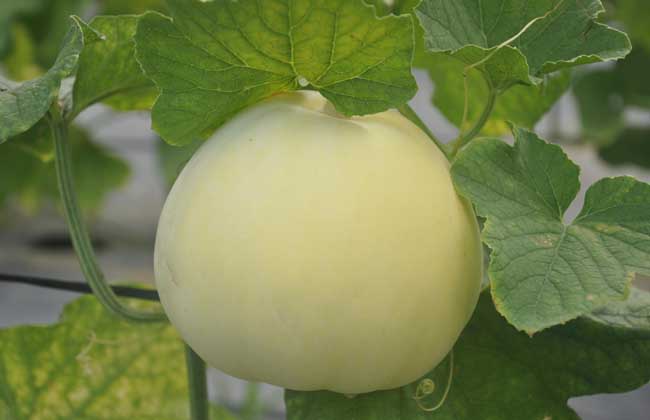
Muskmelon is a summer heat-relieving fruit, also known as gangua, tiangua, and so on. It is the fruit of the muskmelon, an annual vining herbaceous plant of the genus Cucumis in the family Cucurbitaceae. It is widely cultivated in temperate to tropical regions around the world, and its flesh is eaten raw. It is rich in nutrients and very popular among consumers, with extremely high cultivation value. Let us take a look below at muskmelon seed prices and planting methods!
How much is muskmelon seed per jin?
The price of muskmelon seeds is about 60 to 80 yuan per jin, but it varies depending on seed quality, variety, place of origin and market. Muskmelon originated in the tropical desert regions of Africa and is thought to have been introduced to China along with watermelon around the time of the Northern Wei Dynasty, and it began to be widely planted in the Ming Dynasty. It is now commonly cultivated throughout China, and there are very many cultivated varieties; the fruit shape, color, size and taste also vary by variety.
What varieties of muskmelon are there?
1. Xiangfei: Xiangfei is a muskmelon improved from **"Hongxincui". The fruit is spindle-shaped, the rind is yellow-green, and the fruit surface has sparse netting. The fruit weighs about 2 kg, the flesh is thick and pale orange, the sugar content is between 13 and 16%, and it matures about 40 days after flowering, with strong storage and transport tolerance.
2. Chenglu: The fruit of Chenglu is tall and spherical, with coarse, attractive netting. It matures about 55 days after flowering. The fruit weighs 1 to 1.5 kg, the rind is grayish-white-green, the flesh is orange, and the sugar content is generally above 14%. It is not prone to splitting, has strong storage and transport tolerance, and does not drop its stem.
3. Changxiangyu: Changxiangyu grows vigorously and is relatively resistant to Fusarium wilt. The fruit is long oval, with gray-green skin and fine, dense, stable netting. The fruit weighs about 2.5 kg, the flesh is orange-red, the sugar content is about 16 degrees, and the flesh is fine, soft and aromatic. The whole growth period is about 90 days.
Growing Conditions for Muskmelon
1. Soil: The most suitable soil for the growth and development of muskmelon is loam or sandy loam with deep soil layers, rich organic matter, fertility and good aeration. Soil in which the solid, gaseous and liquid phases each account for 1/3 is ideal.
2. Water: Muskmelon is drought-tolerant but not waterlogging-tolerant. However, because its root system is shallow, it has relatively high requirements for soil moisture, while its leaves have a large transpiration rate, so its requirement for air humidity is relatively low. Especially for thick-skinned muskmelon, the relative air humidity is best controlled below 50%.
3. Temperature: The suitable temperature for the growth and development of muskmelon is 18 to 25°C. The suitable temperature for flowering and fruiting is 22 to 25°C. Its adaptability is broader than that of cucumber, and its cold resistance is also very strong.
4. Light: Muskmelon cultivation requires sufficient light. The daily sunshine duration should be more than 10 to 12 hours. If maintained at 14 to 15 hours per day, it grows well.
Sowing Methods for Muskmelon
1. Variety selection: There are many muskmelon varieties, but it is usually necessary to choose varieties with a short growth period, drought resistance, moisture tolerance, disease resistance, and good external and internal quality that meet market consumption needs. At the same time, it is essential to understand the variety and determine its planting method according to the variety.
2. Seed disinfection: Muskmelon seeds can generally be soaked and disinfected with 1% copper sulfate or carbendazim. When direct sowing, aldicarb or 3% padan powder can be used for seed dressing to avoid damage from underground pests.
3. Sowing time: The suitable sowing period for muskmelon is August to October, and no later than November. For spring sowing, February to March can be chosen, but it is best to ensure harvest at the Qingming and Guyu solar terms. Varieties with a long growth period can be sown early, while those with a short growth period can be sown late.
4. Raising seedlings and sowing: For intensive cultivation of muskmelon, nutrient pots or nutrient bags can be used to raise seedlings. Mix fine manure, carbendazim, calcium superphosphate 3 and compound fertilizer into the nutrient soil, add an appropriate amount of water, mix well and pile it to ferment for 5 to 7 days, then fill bags and sow. It is best to sow one seed per bag.
Planting Methods for Muskmelon
1. Ventilation and hardening of seedlings: Muskmelon seedlings grow rapidly. To prevent excessive vegetative growth, water and temperature should be strictly controlled. After emergence, ventilation should be gradually introduced to harden the seedlings. The daytime temperature should be controlled at 20 to 25°C, and the nighttime temperature at about 10°C.
2. Seedling stage management: Fertilizer and water management should be strengthened during the muskmelon seedling stage. Every 5 to 7 days, water the seedlings once with compound fertilizer solution, and apply metalaxyl or metalaxyl-copper oxychloride along with it to prevent root rot. When there are 4 to 5 true leaves, spray once with Bordeaux mixture to prevent powdery mildew and white rust.
3. Pinching and vine training: Muskmelon fruits mainly grow on secondary vines and tertiary vines, so pinching and vine training are necessary to promote fruiting. The six-vine system is generally used. When the vine has 5 to 6 leaves, leave 4 leaves and pinch the growing tip, keep 2 secondary vines, and afterward keep 3 tertiary vines on each secondary vine.
4. Spreading straw and turning fruit: Muskmelon fruits that touch the ground are easily damaged by the larvae of the yellow squash beetle, causing reduced quality or yield. Therefore, straw is spread under the vines when training them. When the fruit has grown to half size, turning it at the right time also helps avoid pests and can make the melon's coloration and flavor uniform.
5. Timely topdressing: After pinching the muskmelon vines, apply 500 kg of dried human manure and 50 to 100 kg of cake fertilizer per mu in a ring 10 cm from the roots. After covering with soil, apply another 100 to 200 kg of plant ash. After each melon harvest, apply 200 to 300 kg of diluted manure and 5 kg of calcium superphosphate per mu.
6. Reasonable irrigation: During the muskmelon seedling stage, control should be the main approach, with appropriate seedling restraint. At the early flowering and fruit-setting stages, combine promotion and control to prevent excessive vegetative growth and fruit abortion. In the middle and late stages, irrigation should be strengthened to meet the needs of high temperatures and vigorous growth of melons and vines. Stop watering at the melon ripening stage to improve quality.