What Is the Price of Watermelon Seeds? A Detailed Guide to Planting Methods
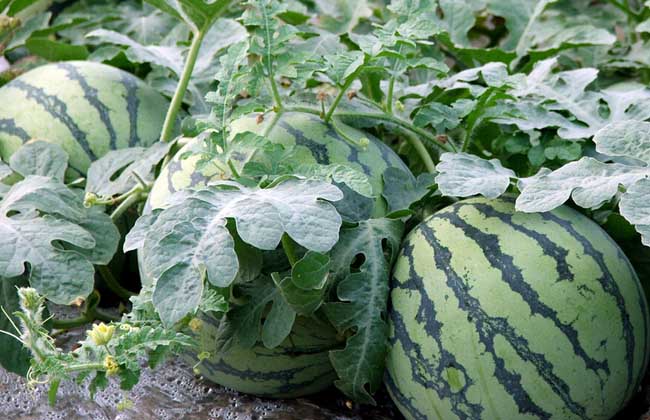
Watermelon, also known as summer melon and cold melon, is an annual trailing vine of the genus Citrullus in the gourd family (Cucurbitaceae). It is rich in nutrients and can be called the "King of Midsummer." It is widely cultivated throughout China and has many varieties, with diverse forms of rind, flesh and seeds. Among them, **, Lanzhou in Gansu, Dezhou in Shandong, Dongtai in Jiangsu and other places are the most famous. Now let us take a look at watermelon seed prices and planting methods!
How much do watermelon seeds cost?
Variety Name Packaging Specification Reference Price Xinong No. 8 100 g/box (about 900 seeds) 95-100 yuan/box Langchao No. 2 50 g/bucket 108-112 yuan/bucket Zaojia Huami 8424 50 g/box (about 1000 seeds) 85-90 yuan/box Jingxin No. 2 100 g/pack 115-135 yuan/pack Zaochun Hongyu No. 2 200 seeds/bag 65-68 yuan/bagNote: There are many varieties of watermelon, and the forms of rind, flesh and seeds are diverse. Seed prices vary with seed quality, variety, place of origin and market, among other factors. The above prices are for reference only; please rely on actual conditions when purchasing.
What varieties of watermelon are there?
1. Early-maturing varieties: From sowing to harvest takes 80-100 days. The fruit matures quickly, taking 25-30 days from female flower opening to maturity. The plants are relatively small and suitable for close planting. Excellent varieties include Jingxin, Zhengza, Zaohua and other small-fruited types.
2. Mid-maturing varieties: From sowing to harvest takes 100-120 days. The fruit matures somewhat later, taking 30-40 days from female flower opening to maturity. The plants are larger and grow vigorously, with large fruit and thick rind, and are relatively tolerant of transport and storage, such as Xinong R.
3. Late-maturing varieties: From sowing to harvest takes more than 120 days. They are less commonly cultivated, with large fruit, high yield and good storage and transport tolerance, such as Hongyou No. 2, Jingfengbao, Fengshou No. 2, Xinhongbao, Jinhuabao, Qihong watermelon and others.
Sowing Methods for Watermelon
1. Seed soaking and sprouting: Before sowing watermelon, sun-dry the seeds for 2 days, then disinfect the seeds, and soak them in 55°C warm water. Wash the treated seeds clean, place them in an incubator at 40°C for 6 hours to initiate germination, then sprout them at a constant 33°C. When the radicle grows to 0.5 cm, they are ready for sowing.
2. Preparing the seedbed: Choose a seedbed site for watermelon that is sheltered from the wind, faces the sun, is high and dry, and convenient to manage. For early-spring seedling raising, use a greenhouse or glasshouse; for autumn-delayed seedling raising, build a shade shed. The nutrient soil should be loose, free of pests and diseases, fertilized with nitrogen, phosphorus and potassium in proportion, and slightly sticky.
3. Sowing at the right time: Early-maturing watermelon varieties are sown from mid-December of the previous year to late March, mid-maturing varieties from April to June, and autumn-delayed varieties in mid-to-late July. Water thoroughly 1 day before sowing. When sowing, place the seeds flat in the nutrient pots, 1 seed per pot, cover with fine soil and then add a plastic film.
4. Temperature management: After sowing watermelon, keep the temperature inside the bed at 28-35°C during the day and 20-25°C at night. After 80% of the seeds break through the soil and emerge, maintain 20-25°C during the day and 15-18°C at night. After the first true leaf appears, maintain 25-28°C during the day, and begin hardening the seedlings 1 week before transplanting.
5. Water management: Generally, do not water again before the watermelon seedlings emerge. During the cotyledon stage, watering should be controlled; after the true leaves unfold, the amount of watering can be increased. In addition, pay attention to removing the film for ventilation to prevent high temperature and high humidity. During the seedling stage of autumn-delayed watermelon, the weather is hot and dry, so attention should be paid to water supply.
Planting Methods for Watermelon
1. Site selection and fertilization: For watermelon planting, choose sandy loam with deep soil, loose texture and convenient drainage and irrigation. Base fertilizer should be mainly organic fertilizer and cake fertilizer, supplemented by inorganic fertilizer, generally accounting for 60-70% of the total fertilizer amount, with a reasonable combination of nitrogen, phosphorus and potassium. Trace fertilizers can be applied to the soil or sprayed as appropriate.
2. Timely planting: For early-maturing watermelon varieties, seedlings can be planted once they have grown 2-3 true leaves at about 1 month of age; for mid-maturing varieties, at 20-25 days of seedling age; and for late-maturing varieties, at 7-10 days of seedling age. Plant 2 rows on wide beds and 1 row on narrow beds, covering with film while transplanting.
3. Pruning and vine pressing: Watermelon generally adopts a three-vine pruning method. When the main vine has 8-9 leaves, keep the main vine and two strong side vines. When the vines reach 50 cm, press them with soil in combination with pruning, then press again every 3-4 nodes, for a total of 2-3 pressings per vine, arranging the vines evenly.
4. Fruit setting and turning: For watermelon, select the 2nd or 3rd female flower on the main vine or the 1st or 2nd female flower on the side vines for fruit setting. In low-temperature or rainy weather, artificial pollination should be used. When the fruit has fully grown, turn it in time, rotating in one direction by about 1/3 each time.
5. Water and fertilizer management: When the young watermelon fruit grows to the size of an egg, apply a fruit-swelling fertilizer according to the plant's growth vigor. Generally, apply 15-20 kg per mu of 45% nitrate-sulfur-based or potassium sulfate-type controlled-release fertilizer. When water is lacking, irrigate at night or early morning when temperatures are lower, and drain field water promptly after rain.
6. Timely harvest: Watermelon should preferably be harvested in the morning. For long-distance transport or storage, harvest at 80% maturity; for sale the same day in nearby suburbs, harvest at 90% maturity. Generally, early-maturing varieties are harvested about 30 days after pollination, mid-maturing varieties about 35 days, and late-maturing varieties about 40 days.
7. Pest and disease control: The main diseases of watermelon include fusarium wilt, anthracnose, viral disease, powdery mildew and phytophthora blight, among others. The main insect pests include cutworms, aphids, red spiders, yellow cucumber beetles, melon maggots and leafminers, among others. Strengthen control during planting and management.