When do persimmons generally ripen and hit the market?
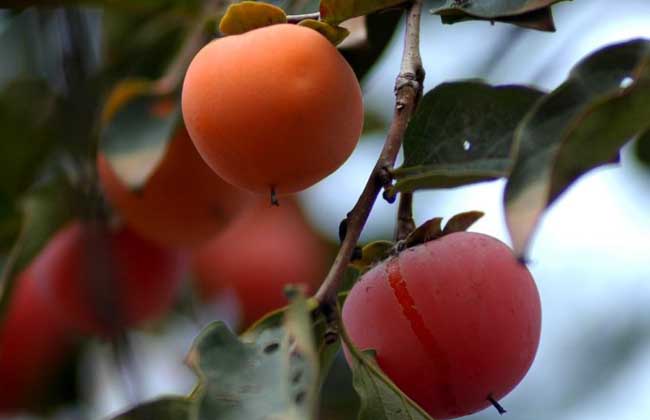
The persimmon, also known as zhu guo, red persimmon, etc., is a perennial deciduous fruit tree of the genus Diospyros in the family Ebenaceae. It originated in the Yangtze River basin of China and areas to its south, and there are many varieties. By color, they can be divided into red persimmon, yellow persimmon, green persimmon, vermilion persimmon, white persimmon, black persimmon, etc.; by fruit shape, they can be divided into round persimmon, long persimmon, square persimmon, gourd persimmon, ox-heart persimmon, etc. Now let's take a look at when persimmons ripen and hit the market!
When do persimmons ripen?
The ripening season of persimmons is around October, but different varieties ripen at different times, and the fruit shapes also vary, such as spherical, flattened peach, nearly conical, square, etc., with colors ranging from light orange-yellow to deep orange-red. Particularly famous varieties include the “world's finest variety” Large Plate Persimmon produced in North China, the Lotus Persimmon and Mirror Persimmon produced in the Hebei and Shandong areas, the Chicken-Heart Yellow Persimmon produced in the Jingyang and Sanyuan areas of Shaanxi, the Pointed Persimmon produced in Fuping, Shaanxi, and the Square Persimmon produced in the Gudang area of Hangzhou, Zhejiang, among others.
What varieties of persimmon are there?
1. Ox-Heart Persimmon: The ox-heart persimmon is named for its resemblance to an ox heart. It blooms in early June, with a flowering period of 7 to 12 days. The fruit is ox-heart shaped, with a nipple-like protrusion at the top. The fruit turns from green to yellow, and when ripe in October the fruit color is orange.
2. Luotian Sweet Persimmon: Luotian sweet persimmon is a Chinese geographical indication product. The fruit is medium-sized, with an average single fruit weight of 100 grams, oblate in shape, with rough skin and an orange-red color. Its quality is above average, and it ripens in Luotian in early to mid-October.
3. Lotus Persimmon: The lotus persimmon tree is tall with a round-headed canopy and strong parthenocarpic ability. The fruit is rectangular, orange-yellow or orange-red, turning orange-red after softening, lotus-shaped, and large. It is best eaten crisp, and the fruit ripens in early to mid-October.
4. Chicken-Heart Yellow: Chicken-heart yellow is a late-maturing variety and belongs to the storage-tolerant varieties. It is named for its fruit color, which is red like flame, and its skin, which is glossy like crystal. Its color is bright red, with 4 to 5 fruits per jin, and it ripens in mid-to-late September and can be eaten as a sweet persimmon.
What are the benefits of eating persimmons?
1. Stops bleeding and cools the blood: Persimmons have the effect of cooling the blood and stopping bleeding. Not only does the persimmon have this effect, but decocting persimmon leaves and persimmon calyx in water and taking it also has a blood-cooling and bleeding-stopping effect.
2. Moistens the lungs and quenches thirst: Persimmons have the effects of clearing heat and moistening the lungs, promoting fluid production and quenching thirst, and strengthening the spleen and resolving phlegm. They can relieve bleeding, dry cough, sore throat, high blood pressure and other conditions.
3. Moistens the intestines and relieves constipation: Persimmons contain organic acids and rich dietary fiber, and have the effect of moistening the intestines and relieving constipation. They can effectively promote the digestion of the stomach and intestines and help relieve constipation.
4. Promotes blood circulation and lowers blood pressure: Persimmons have the effects of promoting blood circulation and lowering blood pressure, helping to lower blood pressure, soften blood vessels, and increase coronary artery flow. They can also promote blood circulation and reduce inflammation and improve cardiovascular function.
5. Relieves and sobers up from alcohol: Persimmons can promote the rapid oxidation of alcohol in the blood and help the body volatilize and expel alcohol from the body. They can not only help sober you up quickly, but also help reduce the harm alcohol does to the body.
What are the contraindications for eating persimmons?
1. Persimmons are cold in nature, so people with a cold stomach should not eat them, and people with chronic gastritis, delayed gastric emptying, indigestion and other conditions of low gastric motility should not eat persimmons.
2. Persimmons are rich in sugars, most of which are sucrose, glucose and fructose. They are easily digested after eating and easily raise blood sugar, so people with diabetes cannot eat them.
3. The tannic acid in persimmons can combine with iron in food, hindering the body's absorption of iron from food. At the same time, the precipitate formed by the combination of the two can cause gastrointestinal discomfort and even colic, so people with anemia should not eat persimmons.
4. Persimmons contain relatively large amounts of tannic acid and pectin. On an empty stomach, these can form hard lumps of varying sizes under the action of gastric acid, forming a “persimmon stone”, which can easily cause nausea, vomiting, gastric ulcers, and even gastric perforation, among other problems.
5. The vast majority of the tannic acid in persimmons is concentrated in the skin. If you eat it together with the skin, it is even more likely to form a gastric persimmon stone, and it may also increase the chance of symptoms such as abdominal pain and nausea.
6. Persimmons contain a large amount of sugars and pectin. Eating a large amount of persimmons can easily erode the teeth and cause cavities, and the large amount of tannic acid affects the body's absorption of trace elements such as calcium and magnesium, which can easily lead to malnutrition.