Yangmei Seed Prices and Planting Methods Explained in Detail
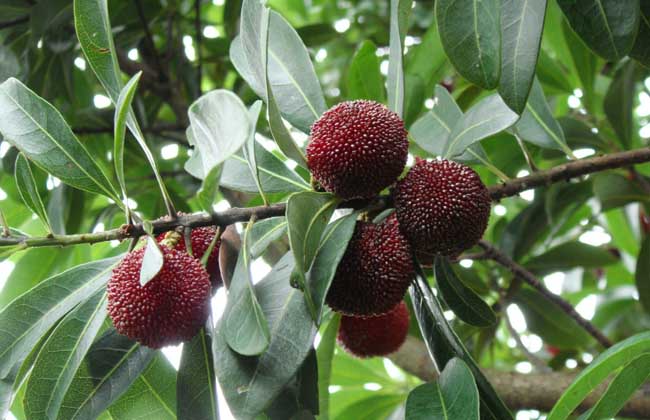
Yangmei, also known as sheng sheng mei, bai di mei, shu mei, etc., is a small tree or shrub plant of the genus Myrica in the family Myricaceae. It is distributed in East China and in regions such as Hunan, Guangdong, Guangxi and Guizhou in China, and has high medicinal and edible value. It can be eaten directly and can also be processed into dried yangmei, jam, candied fruit, wine and so on. Let us take a look together at yangmei seed prices and planting methods!
How much does a jin of yangmei seeds cost?
The price of yangmei seeds is about 15 to 30 yuan per jin, but it varies depending on seed quality, variety, place of origin and market. Yangmei prefers acidic soil, with a distribution similar to that of citrus, loquat, tea trees and moso bamboo, but its cold resistance is stronger than that of citrus and loquat. At present, the cultivated varieties of yangmei in China include Mudong, Heitanmei, Dongkui yangmei and others, among which Dongkui yangmei is the best, with large yield, full fruit and a high planting survival rate. In production, sowing and grafting are mostly used for propagation.
Yangmei sowing methods
1. Nursery site selection: The yangmei nursery site should be chosen in an area with convenient transportation and flat terrain. If it is sloping land, the slope should generally not exceed 5°. The slope aspect should preferably face north or northeast. The soil should preferably be fertile, loose in texture and deep sandy loam.
2. Seed collection: Yangmei seeds should be collected from ripe fruits on robust adult trees. The fruits are spread out and piled up in a place not exposed to direct sunlight. After piling for 4 to 5 days, once the flesh has rotted, rinse them and remove the floating shriveled seeds, then dry the surface and set aside for use.
3. Land preparation and fertilization: Before sowing yangmei, the land should be prepared and deeply plowed, and after plowing it should be exposed to the sun until white. Apply 3000 to 5000 kg of pig or cattle pen manure or compost, 15 to 20 kg of superphosphate and some plant ash per mu. For paddy fields, dig deep drainage ditches around the perimeter; for mountainous land, pay attention to drought prevention and flood control.
4. Sowing method: Before sowing yangmei, soak the seeds in 0.1% potassium permanganate solution or 800 times diluted 40% thiophanate-methyl solution for 10 minutes. Spread the seeds evenly on the seedbed surface. After sowing, gently press the seeds into the soil with a wooden board, then cover with a layer of fine soil and then a thin layer of grass.
5. Seedling stage management: Yangmei is generally sown in mid-to-late October. The seeds germinate in January of the following year and emerge from the soil in mid-February. After emergence, attention should be paid to controlling temperature and humidity, and also to preventing sunscald or damping-off disease. They can usually be transplanted by late July.
Yangmei planting methods
1. Transplanting time: When yangmei seedlings have emerged and reached about 10 cm in height with 4 to 5 leaves, they can be transplanted. Before transplanting, the nursery should be prepared and fertilized, and at the same time 25 kg of lime should be broadcast on the seedbed surface per mu or 600 times diluted thiophanate solution should be sprayed.
2. Transplanting method: Transplant young yangmei seedlings at a row spacing of 30 to 35 cm and a plant spacing of 8 to 10 cm. When transplanting young seedlings, choose an overcast day or the early morning or evening of a sunny day, and water thoroughly to settle the roots. Transplant 12,000 to 14,000 plants per mu.
3. Rational fertilization: Yangmei seedlings must wait until the root system has resumed good growth and 4 to 5 new leaves have grown before they can be watered with diluted human manure and urine (1 dan of water plus 2 spoonfuls of human manure and urine and 0.25 kg of urea). After that, apply 2% ternary compound fertilizer solution or dilute human manure and urine every half month.
4. Tree body management: After yangmei is planted, promptly remove branches on the trunk below 1/2 of the total length. In the second year, select 3 main branches evenly distributed in 3 directions. After the third year, select and retain secondary main branches on the main branches so that the canopy forms a natural open-center shape, with height controlled at 2.5 to 3 m.
5. Soil management: When planting yangmei, weed and loosen the soil at the appropriate time, increase the application of lime, adjust the soil pH, and supplement calcium for the tree. At the same time, intercrop green manure crops such as beans and peanuts in the orchard (avoid planting tall or climbing plants) to increase soil biological cover.
6. Shoot control to promote flowering: When the yangmei canopy reaches 2.0 to 2.5 m in height, use shoot control methods to promote the formation of flower buds and achieve early fruiting and high yield. Branch bending, opening up the canopy, and moderating tree vigor can be used, or from early October to late December, soil-applied paclobutrazol can be used to control shoots and promote flowering.
7. Flower and fruit thinning: For yangmei trees, combine spring pruning to thin out excess flowering branches, especially thin and weak flowering branches. For trees with many flowers in an on-year, a yangmei flower-thinning agent can be sprayed during the flowering period. About 20 days after flower drop, carry out reasonable fruit thinning according to the fruit load of the tree.
Yangmei pest and disease control
1. Yangmei rust disease
[Damage] Affected trees bloom early, and the number of flowers decreases. Newly sprouted buds have yellow spots. When flowers are damaged, they often revert to leaf form and are mostly thick fleshy leaves. The fleshy leaves soon rot and fall off, and most form bald branches and shoot tips.
[Control] Renew old trees and apply topdressing to strengthen the trees. During the yangmei budding period, spray 4 degrees Baume lime sulfur mixture or Bordeaux mixture. During the fruiting period, 600 times diluted 80% zineb or 700 to 800 times diluted 70% thiophanate-methyl can be used.
2. Brown spot disease
[Damage] It damages yangmei leaves and ultimately causes a large amount of leaf drop, with flower buds and small branches dying, greatly affecting tree growth.
[Control] Clear the orchard in winter and strengthen orchard management. Spray 800 times diluted 70% thiophanate-methyl or 1000 times diluted 50% carbendazim once 7 to 10 days before fruit harvest. After harvest, apply 1:2:200 Bordeaux mixture once for control.
3. Pine caterpillar
[Damage] When the larvae first hatch, they gather on new shoots and feed on tender leaves, leaving only the bark. After about 1 week they begin to disperse and cause damage, and their feeding amount increases greatly. In severe cases, they eat all the leaves, leaving only the veins.
[Control] When larvae are found in mid-to-late April, use 1000 times diluted 90% trichlorfon crystal, or 4000 times diluted 20% fenvalerate, or 800 times diluted 50% dichlorvos for control.
4. Large bagworm
[Damage] It damages yangmei leaves and also damages many other fruit trees such as oil tea and coffee.
[Control] During the young larval stage, spray 800 to 1000 times diluted 90% trichlorfon or 1000-1500 times diluted dichlorvos, 1000 times diluted 50% fenitrothion and 1000 times diluted malathion.
5. Inchworm
[Damage] It damages yangmei leaves. After the leaves are damaged, notches are formed.
[Control] During the larval damage period, spray Bacillus thuringiensis preparation and Beauveria bassiana preparation at 200 to 400 million spores per milliliter, or 1000 to 1500 times diluted 25% diflubenzuron suspension for control.
6. Leaf roller moth
[Damage] It damages yangmei leaves.
[Control] During the occurrence period from May to June, Bacillus thuringiensis and insecticides can be used for control. During the damage period of the second-generation larvae from July to August, 1000 times diluted 90% trichlorfon or 1500 times diluted 50% fenitrothion emulsifiable concentrate can be used for control.