Melon Seed Prices and Planting Methods Explained in Detail
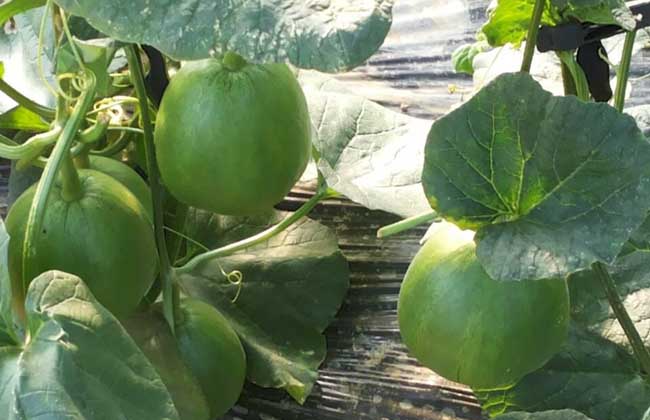
Melon, also known as gangua, xiangua, bailangua, etc., is an annual vining herbaceous plant of the genus Cucumis in the Cucurbitaceae family. Its fruit is an important fruit of midsummer, and it has a long history of cultivation. It is widely cultivated throughout China and has many varieties. The shape, color, size and taste of its fruit also vary by variety. Let us take a look below at melon seed prices and planting methods!
How much is melon seed per jin?
The price of melon seeds is about 50-80 yuan per jin, but prices vary greatly depending on seed quality, variety, place of origin and market. Melons are mostly propagated by seed in production and have many varieties. The suitable sowing period is August to October, and no later than November. For spring sowing, February to March can be chosen, but it is best to ensure harvest around the Qingming and Guyu solar terms. Generally, varieties with a long growth period, such as the American zucchini, can be sown early, while those with a short growth period, such as the early green zucchini, can be sown late.
Growth Habits of Melon
1. Soil: The most suitable soil for melon growth and development is loam or sandy loam with deep soil layers, rich organic matter, fertility and good aeration. Soil in which the solid phase, gas phase and liquid phase each account for 1/3 is ideal.
2. Humidity: Melon is drought-tolerant but not waterlogging-tolerant. However, because its root system is shallow, it has relatively high requirements for soil moisture and relatively low requirements for air humidity. The relative air humidity is best controlled below 50%.
3. Temperature: The suitable temperature for melon growth and development is 18-25°C, and the suitable temperature for flowering and fruiting is 22-25°C. Its adaptability is broader than that of cucumber, and its low-temperature resistance is also very strong.
4. Light: Melon cultivation requires sufficient light, with daily sunshine duration should be more than 10-12 hours. If 14-15 hours per day is maintained regularly, growth is good.
Sowing Methods for Melon
1. Seed selection: Place the melon seeds to be sown on a clean wooden board or tabletop and select them by hand. Remove seeds that are deformed, moldy, damaged or insect-eaten, and keep plump, uniform seeds for later use.
2. Sun-drying seeds: Spread the selected melon seeds evenly on clean paper or a straw mat and dry them in sunny weather with sufficient sunlight, turning them once at intervals so the seeds receive sunlight evenly.
3. Disinfection: Put the sun-dried melon seeds into hot water at 55-60°C and stir gently and continuously in the same direction, maintaining the temperature at 55-60°C for 20-30 minutes. Then remove the seeds and drain the water.
4. Soaking seeds: Put the disinfected and drained melon seeds into a container, pour in warm water at 25-30°C and soak for 5-6 hours. Then pour the seeds into a larger container and rub off the mucus on the seeds. After rubbing clean, wash them clean.
5. Germination: After soaking the melon seeds, shake them hard to remove surface moisture, wrap them in moist cotton cloth, then place them in a plastic bag and keep them at 25-35°C for germination. When the seed radicle grows to 1-2 mm, they can be sown.
6. Seedling raising: After germination, place every 2 melon seeds into a nutritional pot containing nutrient soil and sow them in the fruit field for film-covered seedling raising. When the seeds grow into seedlings, carry out one round of selection, remove the weak seedlings, and then plant them out.
Planting Methods for Melon
1. Timely planting out: The suitable seedling age for melon is 30-35 days, and the suitable planting-out period is when the seedlings grow to 3 true leaves and 1 heart leaf. Its root mass has strong absorption capacity, and it is best on loose sandy soil with thick soil layers and fertile soil. It is also relatively salt-alkali tolerant and can grow on mildly alkaline soil.
2. Pinching and vine training: Melon fruits mainly grow on secondary vines and tertiary vines, so pinching and vine training are needed to promote fruiting. The six-vine style is generally used. When the vine has 5-6 leaves, leave 4 leaves and pinch the tip, keep 2 secondary vines, and afterward keep 3 tertiary vines on each secondary vine.
3. Timely topdressing: After pinching the melon vines, use 500 kg of dried human manure and 50-100 kg of cake fertilizer per mu, apply in a ring 10 cm from the roots, cover with soil, then apply 100-200 kg of plant ash. After each melon harvest, apply 200-300 kg of diluted manure and 5 kg of superphosphate per mu.
4. Reasonable irrigation: During the melon seedling stage, mainly control water and properly restrain seedling growth. During the early flowering and fruit-setting stages, combine promotion and control to prevent excessive vegetative growth and fruit abortion. In the middle and late stages, management should strengthen irrigation to meet the needs of high temperatures and vigorous growth of melons and vines. Stop watering at maturity to improve quality.
5. Artificial pollination: Melon is a monoecious crop with unisexual flowers, and most varieties have bisexual flowers. It is mainly pollinated by insects. When temperatures are low and insects are few in early spring, greenhouse cultivation generally requires artificial pollination.
6. Spreading straw and turning melons: Melon fruits touching the ground are easily harmed by yellow squash beetle larvae, causing quality decline or yield reduction, so straw is spread under the vines when training them. When the melons grow to half size, turn them in a timely manner, which also helps avoid pests and makes the melon coloring and flavor consistent.
Pest and Disease Control of Melon
1. Phytophthora blight
[Damage] When leaves are infected, dark green water-soaked irregular lesions first appear, then expand into soft rot. When dry, the lesions turn brown and easily rupture. When the stem base is infected, spindle-shaped dark green water-soaked sunken lesions first appear, then constrict and rot around the stem base, and finally the plant dies.
[Control] Disinfect seeds before sowing, sterilize nutrient soil, and in the early stage of disease use 64% Shan Du Fan 500 times, 72.2% Previcur 800 times or 58% Ridomil 500 times for spraying, then spray again after 7-10 days.
2. Gummy stem blight
[Damage] When leaves are infected, nearly round lesions first appear, or light brown V-shaped lesions extend inward from the leaf edge. When stems and vines are infected, oval to spindle-shaped lesions first appear. In severe cases, leaves dry up and stems and vines rot.
[Control] In the early stage of disease, spray with 75% chlorothalonil 600 times, or 70% thiophanate-methyl 800 times + 80% Dacotech 800 times. After harvest, promptly remove diseased residues to reduce inoculum sources.
3. Anthracnose
[Damage] When leaves are infected, round to spindle-shaped or irregular water-soaked spots first appear. When petioles or stems and vines are infected, water-soaked pale yellow round spots first appear, slightly sunken, then turn black. When fruits are infected, water-soaked sunken brown lesions first appear.
[Control] Use disease-resistant seeds, disinfect seeds with hot water, and in the early stage of disease spray with 70% thiophanate-methyl 800 times, 75% chlorothalonil 600 times, or 80% carbendazim-fumei 800 times, then spray again after 7-10 days.
4. Melon aphid
[Damage] Adult aphids and nymphs like to suck sap on melon seedling growing points, tender leaves, leaf undersides and tender stems, causing leaves to curl and stop growing. When damage is severe at the adult plant stage, pollination cannot occur, and leaves may even fall off.