Mulberry Seed Prices and Planting Methods Explained in Detail
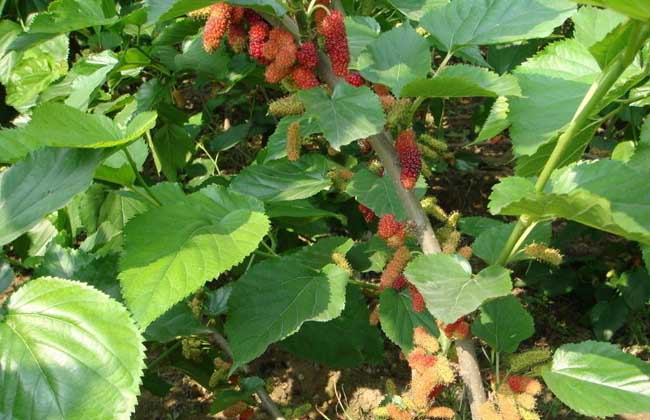
The mulberry is a deciduous tree or shrub of the genus Morus in the family Moraceae, native to central and northern China. It is now cultivated from the northeast to the southwest provinces and regions, and in the northwest as far as **. The leaves are feed for silkworms, the wood can be made into tools, the branches can be woven into baskets, the bark can be used as a papermaking raw material, the mulberries can be eaten or used to brew wine, and the leaves, fruit and root bark can be used as medicine. Let us now take a look at mulberry seed prices and planting methods!
How much is a jin of mulberry seeds?
The price of mulberry seeds is about 30 to 40 yuan per jin, but prices vary greatly depending on seed quality, variety, place of origin and the market. The mulberry prefers a warm, humid climate and tolerates slight shade. It begins to sprout when the temperature rises above 12°C, with an optimal growing temperature of 25 to 30°C; above 40°C growth is inhibited, and below 12°C growth stops. It is drought-tolerant, not waterlogging-tolerant, tolerates poor soil, and has strong adaptability to soil. In production, seed propagation, grafting propagation and cutting propagation are commonly used.
Sowing Methods for Mulberry
1. Sowing time: Mulberry can be sown in spring, summer or autumn; for summer and autumn sowing, fresh seeds of the current year can be used. Harvest ripe purple mulberries, rub off the flesh, wash the seeds, and sow immediately or store them in damp sand.
2. Seed treatment: Before sowing, soak mulberry seeds in 50°C warm water, let it cool naturally, then soak for another 12 hours, place in damp sand to store and sprout, keeping it moist at all times; sow once the seed coat splits and the white shows.
3. Sowing method: When sowing mulberry, open furrows at a row and plant spacing of 20 to 30 cm, with a furrow depth of 1 cm, using 7.5 to 15 kg of seed per sq m, then cover with soil. Seedlings emerge after about 10 days, and are thinned when 3 to 4 cm tall.
Planting Methods for Mulberry
1. Planting time: The planting time for mulberry is from December to March of the following year, transplanting 1000 to 1200 mulberry seedlings per mu. There are two planting patterns: wide-narrow row planting and equal-row planting.
2. Seedling treatment: Sort mulberry seedlings by size and plant them separately. Before planting, cut off withered roots and overly long roots, and soak them briefly in mud slurry, which can improve the survival rate.
3. Planting method: When planting mulberry, the seedlings should be upright and the roots spread out, planted shallowly and pressed firm, watered thoroughly to settle the roots, and covered with plastic film (film width 3 chi for wide-narrow rows, 2 chi for equal rows). After the mulberry buds sprout, check promptly and replant any that have not survived.
4. Stem pruning and bud thinning: After transplanting mulberry, cut off the stem 5 to 7 cun above the ground. When new shoots grow to 4 to 5 cun, keep 2 to 3 strong, well-directed shoots per plant to form vigorous branches; for those with only one bud, pinch off the tip when the bud grows to 4 to 6 cun.
5. Water and fertilizer management: Water mulberry in drought, drain water in rainy weather, shallow-plow and weed promptly. After bud thinning and tip pinching, apply 10 to 15 kg of urea per mu or water with biogas slurry, human manure, etc. The fertilizer amount should be kept at 1/3 of that for a mature mulberry grove.
Management Methods for a Mulberry Grove
1. Tree shaping: In the spring of the year after planting mulberry, prune the branches at about 35 cm above the ground, leaving 2 to 3 stubs per plant; thereafter prune at this cut point each year.
2. Cultivation and weeding: Cultivate mulberry once a year after the silkworm rearing season ends. Weeding depends on weed growth conditions, generally 2 to 3 times a year.
3. Fertilizer management: Mulberry should be fertilized four times a year.
① Spring fertilizer: Apply spring fertilizer when the mulberry buds begin to swell, 20 kg of urea per mu.
② Summer fertilizer: Apply summer fertilizer after spring silkworm rearing ends, 20 kg of urea and 25 kg of special mulberry compound fertilizer per mu.
③ Autumn fertilizer: Apply autumn fertilizer after the early autumn silkworm rearing ends, 5 kg of urea and 10 kg of special mulberry compound fertilizer per mu.
④ Winter fertilizer: Apply winter fertilizer in early December, 1500 to 2000 kg of farmyard manure per mu.
4. Pest and disease control: After the spring buds sprout on mulberry, carry out one pest control treatment with dichlorvos, dimethoate and Sangning. After spring silkworm, summer silkworm and early autumn silkworm rearing end, use dichlorvos, dimethoate, Sangning, carbendazim and thiophanate-methyl respectively for pest and disease control.