How much do mountain peach seeds cost? Detailed planting method
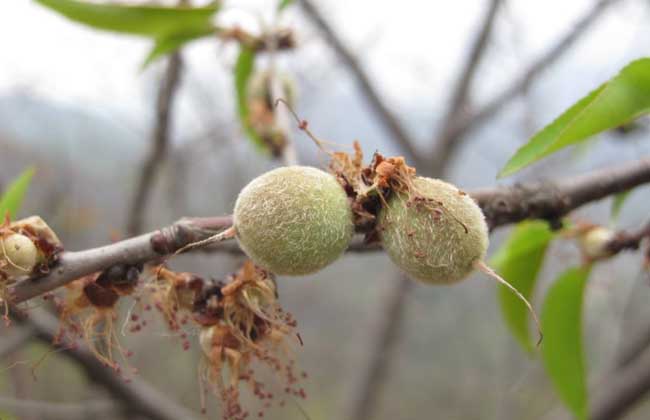
The mountain peach, also known as the mountain wild peach, wild peach, ornamental peach, etc., is a deciduous small tree of the genus Prunus in the rose family. It often grows on hillsides, at the bottom of valley gullies, or in open woodlands and shrub thickets in the wild. In production it is mainly used as a rootstock for fruit trees such as peach, plum, and apricot, and it can also be grown for ornamental purposes. Its wood can be used for various fine woodwork and walking sticks, its pits can be made into toys or prayer beads, and its seed kernels can be pressed for edible oil. Below, let us take a look at mountain peach seed prices and planting methods!
How much do mountain peach seeds cost per jin?
The price of mountain peach seeds is about 6 to 10 yuan per jin, but prices vary depending on seed quality, variety, place of origin, and the market. Many mountain peaches have a high self-fruitfulness rate, and their offspring show little variation, so many old production areas still keep the habit of propagating by seed. However, large-scale commercial cultivation requires highly commercialized yields; if seedling propagation is still used, varieties often become mixed and yield and quality become inconsistent, seriously affecting orchard management and returns. Therefore, in commercial cultivation, grafting propagation is still preferable.
Sowing methods for mountain peach
1. Choosing the seedling bed: The seedling bed for mountain peach should preferably be flat, well-drained, fairly fertile sandy loam or light loam, and should also have irrigation access. Avoid choosing soil that is too heavy or low-lying and waterlogged, and do not choose a spot facing the wind.
2. Land preparation and fertilization: The seedling bed for mountain peach should be deep-plowed and finely harrowed. Generally, autumn plowing is adopted to a depth of about 25 cm. Along with the autumn deep plowing, apply 2500 to 5000 kg of farmyard manure per mu, plow the manure into the soil, then harrow and level it.
3. Seed disinfection: Mountain peach seeds contain many empty grains. First carry out water selection, then remove the empty grains that float up. Then soak the seeds in a 0.3 to 0.5% copper sulfate solution for 1 to 2 hours, or in a 0.5% potassium permanganate solution for 2 hours to disinfect the seeds.
4. Stratification treatment: Before sowing mountain peach, in order to make the seeds germinate quickly and uniformly, it is best to carry out stratification treatment. The commonly used stratification methods include the mixed-snow storage method, the mixed-sand stratification method, and the warm-water soaking stratification method. Once stratification is complete, sowing can begin.
5. Sowing time: Because climatic conditions vary from place to place, the sowing time for mountain peach also differs. Sowing should be done early at the appropriate time according to local climatic conditions. For example, in North China it is mid to late March, in Northwest China it is late March to early April, while in Northeast China mid to late April is preferable.
6. Sowing method: When sowing mountain peach, to ensure seedling yield and quality, the sowing rate should not be too low. When the seed purity is above 90% and the seed germination rate is above 85%, a sowing rate of about 10 kg per mu is appropriate.
7. Post-sowing management: Seeds of mountain peach that have undergone stratification treatment begin to germinate and emerge about 10 days after sowing, and about 20 days is the peak emergence period. To help the seeds germinate and emerge, the soil in the seed layer should be kept moist at all times. Before sowing, the soil must be watered thoroughly to the bottom.
Planting methods for mountain peach
1. Planting method: The planting spacing for mountain peach is 4×5 m or 3×4 m, with 500 to 840 trees planted per hectare. Planting can be done from after leaf fall to before bud break. Continuous cropping must not be used, otherwise young trees will clearly weaken in growth, leaves will lose green color, new roots will turn brown and branch excessively, and trunks will exude gum.
2. Reasonable fertilization: The demand ratio of mountain peach for nitrogen, phosphorus, and potassium is about 1:0.5:1. For young trees, care should be taken to control nitrogen fertilizer application, otherwise excessive vegetative growth is easily caused. After the full fruiting stage, increase nitrogen fertilizer application to strengthen tree vigor.
① Base fertilizer: For mountain peach, base fertilizer is best applied in autumn together with deep plowing. If it must be applied in spring, it should be applied as early as possible, immediately after the soil thaws, otherwise after June the fertilizer effect will cause vigorous new shoot growth.
② Topdressing: Mountain peach is generally topdressed 2 to 3 times a year, mainly with quick-acting fertilizers. Pre-flowering fertilizer is mainly urea, post-flowering fertilizer is mainly phosphorus and potassium fertilizer, fruit-swelling fertilizer is mainly diammonium fertilizer, and post-harvest fertilizer is mainly diammonium fertilizer with a small amount of urea.
3. Tree pruning: Mountain peach has strong growth vigor but a relatively short lifespan, and both its sprouting ability and branching ability are very strong, making it prone to producing second and third order secondary shoots. Improper pruning can lead to poor fruiting, so shaping or pruning mostly uses an open-center tree form without a central leader.
① Pruning in the young tree stage: When shaping and pruning young trees, full use should be made of their characteristics, such as vigorous growth, strong sprouting and branching ability, the ability of early-maturing buds on vigorous branches to form multiple secondary shoots, and early flower bud formation. On the one hand, expand the canopy; on the other hand, develop strong scaffold branches.
② Pruning in the full fruiting stage: The main purpose of pruning in the full fruiting stage is to properly regulate the relationship between growth and fruiting. The pruning method is to heavily cut back the middle and lower parts of the tree or fruiting branch groups, leaving 3 to 5 nodes or 1 to 2 nodes depending on branch vigor, to promote new shoots and form fruiting branches for the next year.
③ Pruning during the growing season: From late April to early May, after buds sprout, select and keep one vigorous shoot at the position where a branch is needed. From early May to early June, according to growth vigor, thickness, and position, remove competing branches, thin and weak branches, densely growing branches, and drooping branches.