What is the price of Japanese raisin tree seeds? Detailed guide to planting methods
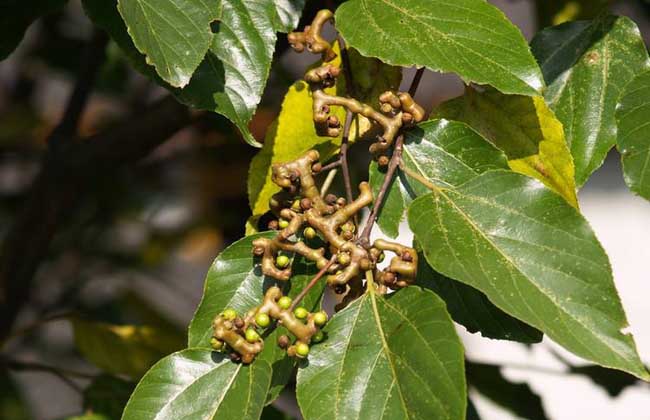
The Japanese raisin tree is also known as chicken-claw vine, golden-hook pear, guaizao'er and so on. It is a deciduous tree in the genus Hovenia of the buckthorn family (Rhamnaceae). Its fruit stalk contains a large amount of glucose and potassium malate, and after frost it tastes sweet. It can be eaten fresh or used to make wine. Its wood is moderately hard with a beautiful grain, and is used for construction, furniture and arts and crafts, etc. Let's take a look below at the price of Japanese raisin tree seeds and its planting methods!
How much is a jin of Japanese raisin tree seeds?
The price of Japanese raisin tree seeds is about 25 to 40 yuan per jin, but prices vary depending on seed quality, variety, place of origin and market. The Japanese raisin tree is distributed throughout the Yellow River basin and Yangtze River basin in China. In production it is mainly propagated by seed, and can also be propagated by layering and root division. Generally it takes 5 to 6 years of planting before it begins to bear fruit. The flowering period is June, and the fruiting period is August to October. With modern dwarfing and branch-bending techniques, fruiting can be advanced to 3 to 4 years.
Growing conditions for the Japanese raisin tree
The Japanese raisin tree has a long history of cultivation and use in China. The tree can reach more than 10 m in height. It has strong adaptability to the environment, is drought-resistant, cold-resistant, and also tolerates relatively poor soil. It likes sunlight, and mostly grows in valleys, stream sides, roadsides or relatively moist hillsides and hills below 1000 m in altitude. It is often cultivated beside courtyards and homes, and often grows mixed with other evergreen and deciduous broadleaf tree species. If the soil is deep, fertile and moist, it can grow rapidly.
How are Japanese raisin tree seeds propagated?
1. Seed collection: Japanese raisin tree seeds are collected when they mature in November. The seed coat is reddish-brown. One fruit contains 3 seeds. The seed coat is leathery, and the embryo is yellow-white and does not readily absorb water.
2. Seed germination: After collection, Japanese raisin tree seeds are germinated by the moist sand stratification method, stored in layers of one layer of seeds and one layer of moist sand, and after 50 to 60 days the radicle begins to protrude.
3. Sowing method: Japanese raisin tree seeds can be sown in holes or in drills. Before sowing, prepare the seedbed (small plot) well, 2 to 3 cm deep, then cover the bed surface with rice straw, water thoroughly, and sow about 10 jin per mu.
4. Seedling management: During the seedling stage, the Japanese raisin tree must be watered and fertilized frequently to promote growth. When 3 to 5 true leaves have grown, thin the seedlings, keeping the strong and removing the weak. When they reach 70 to 100 cm, they can be transplanted.
Planting methods for the Japanese raisin tree
1. Site selection and land preparation: The Japanese raisin tree has strong adaptability and likes to grow in sunny, moist, fertile soil with good drainage, with a neutral pH. After choosing the site, dig a pit 1 m deep and 1 m wide. On slopes, dig fish-scale pits to prevent soil erosion. Put more dead branches and fallen leaves into the pits for planting the trees.
2. Management after planting: Japanese raisin tree seedlings grow slowly, so the management of young trees should be strengthened. Every year when weeds grow in spring and summer, loosen the soil and remove weeds. Water promptly during drought. Apply fertilizer three times, in March of spring, June of summer and November of winter, to promote growth.
3. Shaping and branch bending: In the second year after planting, when the young tree reaches 1 to 1.5 m, bend the main trunk so that it produces secondary branches, then use the same method to bend the branches so they spread in all directions. This allows early fruiting and more fruit, thereby increasing economic income.
4. Pest and disease control: The Japanese raisin tree has relatively strong vitality and good disease resistance. During the seedling stage, leaf blight and aphids are commonly seen. For leaf blight, use a 1:1:400 Bordeaux mixture before and at the beginning of the disease. For aphids, spray with a 40% dimethoate 2000-fold aqueous solution.
5. Harvesting and processing: The Japanese raisin tree is picked in winter after the frost descent in November, when the fruit stalk turns reddish-brown after several frosts. Cut off the fruit branches and store them in a cool place. After 7 to 10 days of after-ripening, they can be sold fresh, or sold after being dried in the shade and pressed for juice.