Peach Pit Seed Prices and Planting Methods Explained in Detail
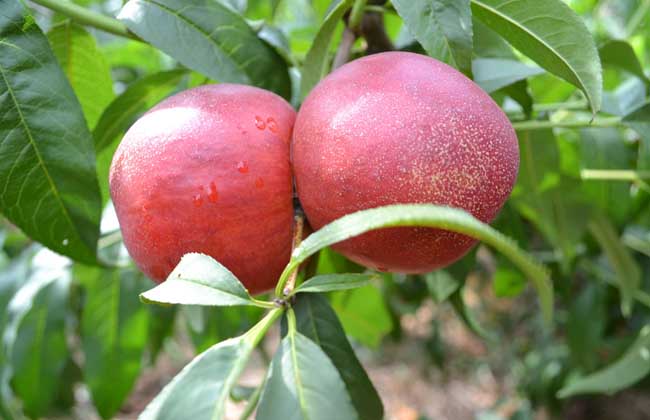
The peach is a deciduous small tree of the genus Prunus in the rose family (Rosaceae), native to China, with a very large number of cultivated varieties grown widely across the country; its flowers are ornamental, and its fruit can be eaten fresh or made into preserved peaches, canned peaches, and the like. It has long been known by the laudatory names "longevity peach" and "immortal peach," and its kernel is edible as well. Let us take a look below at peach pit seed prices and planting methods!
How much does a jin of peach pit seeds cost?
The price of peach pit seeds is about 10 to 15 yuan per jin, but prices vary greatly depending on seed quality, variety, market, and season. The peach tree is native to China and is widely cultivated throughout the country; it has a great many varieties, the more important of which include the nectarine, flat peach, Shouxing peach, and ornamental peach. Among these, the nectarine and flat peach are both grown as fruit trees, while the Shouxing peach and ornamental peach are mainly for ornamental use. In production, grafting is the main method of propagation, though sowing, cuttings, and layering can also be used; for propagation by sowing, the seeding rate is 25 to 30 kg per mu.
Sowing Methods for Peach Trees
After the peaches ripen, harvest the fruit, pile them up and mash them, remove the flesh, and dry them to collect clean seedling seeds, which can then be sown in autumn; before sowing, soak the seeds for 5 to 7 days. Autumn-sown seeds sprout early the following year, with a high germination rate and rapid, vigorous growth. For sowing the following spring, the seedling seeds must be stored in moist sand for more than 120 days; use drilling (row sowing) with a row width of 10 cm and a depth of 1 to 2 cm, cover with 6 cm of soil after sowing, and when the seedlings are 3 cm tall, thin and finalize them at a spacing of 20 to 25 cm between plants.
Planting Methods for Peach Trees
1. Site selection: Peach trees are not strict about soil, but it is best to choose well-drained, loose sandy loam, with a south-facing slope being optimal; however, continuous cropping is taboo, meaning land where peach trees have already been planted cannot be used to plant peach trees again.
2. Deep plowing and soil improvement: Before planting, peach trees must undergo deep plowing and soil improvement; sloping land should be converted into terraced land with a thickened soil layer, and then planting holes or planting trenches should be dug according to the spacing between plants and rows; flat fields and clayey soil must also be improved.
3. Planting time: Peach trees can be planted in both spring and autumn, but autumn planting is best; in autumn the temperature is high and there is plenty of rain, so the roots recover easily after damage, which can reduce the seedling-establishment period the following year and produce uniform sprouting. Planting from October to December is relatively appropriate.
4. Planting density: The planting density of peach trees should be determined according to variety characteristics, terrain, soil conditions, training system, and cultivation method; generally the spacing between plants and rows is 3×4 m or 3×3 m, planting about 56 or 74 trees per mu.
5. Planting method: Before planting peach trees, trim the damaged roots and any overly large main roots, then hold the plant upright, spread the root system out, cover with 5 to 10 cm of soil, firm it with your foot, and then irrigate thoroughly; after the water has seeped down, cover with a layer of fine soil, and a layer of grass may also be added on top.
Pest and Disease Control for Peach Trees
1. Peach leaf curl
[Damage characteristics] Peach leaf curl mainly harms leaves, young branches, and young fruit.
[Control methods] ① In spring, when the peach buds are swelling but have not yet burst, spray with 5 degrees Baume lime-sulfur mixture or 1:1:100 Bordeaux mixture. ② After diseased leaves are found, promptly pick and burn them before the ascus layer forms.
2. Peach scab
[Damage characteristics] Peach scab mainly harms the fruit, and can also harm shoots and leaves. When the fruit is first affected, dark green round spots appear on the fruit surface, which then gradually expand.
[Control methods] ① Before sprouting, spray with 5 degrees Baume lime-sulfur mixture to eradicate or reduce the overwintering source of inoculum on the shoots; from half a month after petal fall until June, spray 0.2 to 0.4 degrees Baume lime-sulfur mixture every half month. ② In winter, in conjunction with pruning, remove diseased branches, or eliminate and reduce the overwintering source of the disease.
3. Peach anthracnose
[Damage characteristics] When young fruit is infected, it turns dark brown, its development stalls, and it shrivels and hardens. When somewhat larger fruit is infected, dark green water-soaked spots first appear on the fruit surface, then expand and become sunken and dark brown.
[Control methods] ① In winter, in conjunction with pruning, clear away diseased branches and diseased fruit to reduce the source of the disease. ② Before germination, spray 5° Baume lime-sulfur mixture; from the time the fruit is the size of a bean, spray a 600-fold solution of an organic sulfur preparation, or a 1000-fold solution of 70% thiophanate-methyl wettable powder.
4. Peach tree canker (Valsa canker)
[Damage characteristics] Peach tree canker mainly harms the trunk and large branches, causing tree death; when the disease is severe, gum oozes all over the tree, the bark tissue rots, and it is moist with a smell of distiller's grains, after which it shrinks and dries, densely covered with small black dots.
[Control methods] ① Build up tree vigor and strengthen fertilizer and water management. ② Promptly scrape off the diseased spots down to the xylem, and after scraping apply 40% asomate or 50% thiram, either of which is acceptable. ③ Promptly burn the diseased and dead branches sawed off each year; they must not be piled up near the orchard.
5. Peach gummosis
[Damage characteristics] Peach gummosis is an important disease of branches and trunks. In spring and summer, on the new shoots of the current year, centered on the lenticels, diseased spots of varying size bulge out and exude colorless, translucent soft gum; in severe cases the bark splits, the branches and trunk die, and the tree body weakens.
[Control methods] ① Strengthen soil improvement, apply more organic fertilizer, and protect the branches and trunk well. ② First scrape off the gumming areas on the tree body, then apply 5 degrees Baume lime-sulfur mixture or quicklime powder, and after 1 to 2 days brush on a 20- to 30-fold solution of 70% thiophanate-methyl or 50% carbendazim.