What is the price of kiwi seeds? A detailed guide to growing methods
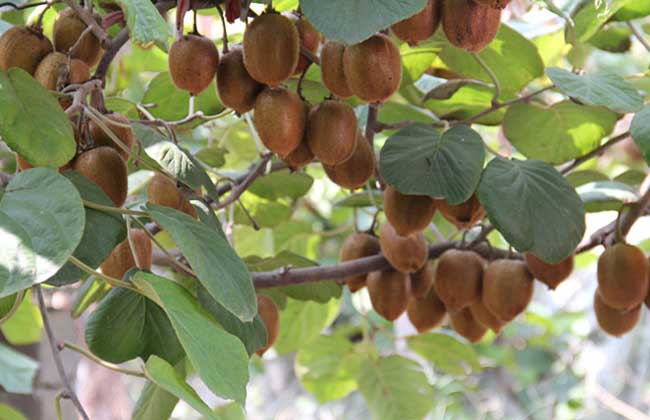
Kiwifruit is also known as qiyiguo, fox peach, monkey pear and so on. It is a large deciduous woody vine of the genus Actinidia in the family Actinidiaceae. Its place of origin is the Xiangxi region of Hunan Province in China, and Shaanxi at the northern foot of the Qinling Mountains is the region with the richest kiwifruit resources in China. The history of artificial cultivation among the people reaches more than a thousand years. Now let us take a look at kiwifruit seed prices and growing methods!
How much is a jin of kiwifruit seeds?
The price of kiwifruit seeds is about 40 to 50 yuan per jin, but prices vary depending on seed quality, variety, place of origin, market and so on. Seedlings raised by sowing kiwifruit seeds are called seedling trees. Seedling trees are of great significance for introduction and cultivation in non-producing areas and non-natural distribution areas. Direct propagation by seed can achieve the purpose of introduction and domestication, and can also be used to breed new varieties. In production, they are mostly used to propagate rootstock, providing the material basis for grafting excellent clonal strong seedlings.
What environment does growing kiwifruit require?
1. Climate: Kiwifruit tolerates semi-shade and likes cool, humid environments. It fears drought, waterlogging and wind. It is cold-tolerant but not tolerant of late spring frost. It is best to choose areas with a mild climate, sufficient light, abundant rainfall, relatively even precipitation during the growing season, high air humidity, and few early and late frost injuries and freezing injuries.
2. Soil: For kiwifruit growth, deep and fertile soil with good aeration, a groundwater level below 1 m, high organic matter content, and a slightly acidic sandy soil with a pH of 5.5 to 6.5 is suitable. Strongly acidic or alkaline soil needs to be improved before cultivation.
3. Light: Kiwifruit likes light but fears sunburn, and has a very strong ability to use scattered light. Even growing wrapped around and attached to a large tree is no problem at all, but it cannot be too shaded. If it lacks light severely, the branches will die. In plain terms, it likes sunlight but fears high temperatures.
4. Temperature: Kiwifruit likes warmth. In fact, temperature is the main factor limiting the distribution, growth and development of kiwifruit. Each species has a suitable temperature range. Beyond this range, growth is poor or it cannot survive, but most species require a warm and humid climate.
5. Fertilizer: Kiwifruit likes fertilizer. Once it lacks inorganic nutrients, it shows yellowing, small leaves, stopped growth and other phenomena, but the fleshy root system is also very sensitive to soil salt concentration. In production, the method of applying fertilizer in small amounts many times is required, which can meet the nutrient demand without causing fertilizer damage.
6. Water: Kiwifruit likes water but fears waterlogging. However, the root system of kiwifruit is a fleshy root with strong respiration and requires more oxygen in the soil, that is, it needs the necessary soil aeration. Therefore, according to the balance between soil water and air, it should not be watered too much.
How are kiwifruit seeds planted?
1. Seed collection: Collect ripe fruit from early September to mid-October. After they ripen and soften, squeeze out the fruit together with the seeds, put them into a gauze bag and rub so that the seeds separate from the pulp. Then rinse repeatedly with clean water, and place the washed seeds indoors to dry in the shade.
2. Sand storage treatment: Soak the seeds in warm water at 40 to 50°C for 2 hours, then soak them in cold water for a day and a night, then store them in sand for 50 to 60 days before sowing. During sand storage, kiwifruit seeds fear drying and moisture, so check and turn them frequently to prevent mildew.
2. Timely sowing: The sowing period for kiwifruit is generally from late March to early April. Finely level the soil on the seedbed, then water it thoroughly with a slow stream. After the water seeps in, scatter the seeds on the seedbed, cover with a layer of fine sandy soil, then press gently to level, and cover with grass on top to maintain moisture.
3. Seedbed management: After sowing kiwifruit, pay attention to spraying water frequently to keep the soil moist. After emergence, ventilate and harden the seedlings to prevent lodging. When the seedlings grow to 2 to 3 true leaves and 4 to 5 true leaves, thin them out in stages. The thinned seedlings can be transplanted.
High-yield cultivation techniques for kiwifruit
1. Orchard site selection: The kiwifruit root system is fragile, fearing both waterlogging and high-temperature drought. New shoots fear strong wind as well as late spring cold or low-temperature freezing injury. It is suitable for planting in sub-high mountain areas. A site with deep soil, fertile soil, loose texture, good drainage and convenient transportation should be chosen to establish the orchard.
2. Seed selection and seedling raising: There are many kiwifruit varieties, such as Hongyang, Qingcheng No. 1, Chuanmi No. 2, Miliang No. 1 and so on. Suitable varieties should be selected according to the geographical environment. Seedling raising methods mainly include rootstock seedling cultivation and grafted seedling cultivation, and their seedling raising methods differ.
3. Young seedling planting: Kiwifruit is planted from October to the end of February of the following year. Choose seedlings that are disease-free, pest-free, robust in growth, and have well-developed and intact root systems, with a female-to-male ratio of 10:1. When planting, spread the roots separately and evenly on the soil mound, with the roots slanting straight. After the roots are placed, fill with fine soil and firm it.
4. Trellis erection and wire pulling: The trellis methods used for kiwifruit include T-shaped trellis, hedge trellis, tripod trellis, large greenhouse trellis and so on. A flat-topped large greenhouse trellis is mostly used. Existing small-diameter trees can be used on site as living posts, plus some replaceable bamboo and wood posts, with concrete posts used at key positions.
5. Topdressing and watering: Before planting kiwifruit, 2.5 kg of fruit-tree fertilizer can be applied once per plant in the pit or trench. Young trees use the method of applying fertilizer in small amounts many times. Afterward, fertilizer is generally applied 3 times each year, 1 time as base fertilizer and 2 times as topdressing, mainly with quick-acting fertilizer, with a nitrogen-phosphorus-potassium ratio of 4:2:1.
6. Pruning and fruit thinning: Kiwifruit pruning is divided into winter pruning, summer pruning and male plant pruning. Winter pruning is carried out from after leaf fall to 1 month before early spring budding. Summer pruning is mainly carried out from mid-May to early July. Fruit thinning is generally carried out 1 month after flowering, keeping the middle fruit and thinning the side fruit.
7. Timely harvesting: Harvesting kiwifruit too early or too late will affect the quality and flavor of the fruit. Harvesting should be done on a windless sunny day. It is not suitable to harvest on rainy days, after rain, or on mornings when dew has not dried. The best picking time is before 10 a.m., when the temperature has not yet risen.
Kiwifruit pest and disease control techniques
1. Ripe rot
[Symptoms of damage] When kiwifruit ripens, on one side of the harvested fruit there appears a spot resembling a thumb pressure mark. The edge of the diseased spot is dark green or water-soaked, and in the middle there is often milky white conical rot. Within a few days it can extend deep to the middle of the flesh and even cause the whole fruit to rot.
[Control methods] From two weeks after flower drop to the fruit expansion stage, spray the canopy with 50% carbendazim 800-fold solution or 1:0.5:200 Bordeaux mixture, or 80% thiophanate-methyl wettable powder 1000-fold solution 2 to 3 times, with a spraying interval of about 20 days.