A Detailed Introduction to Fig Seedling Prices and Planting Methods
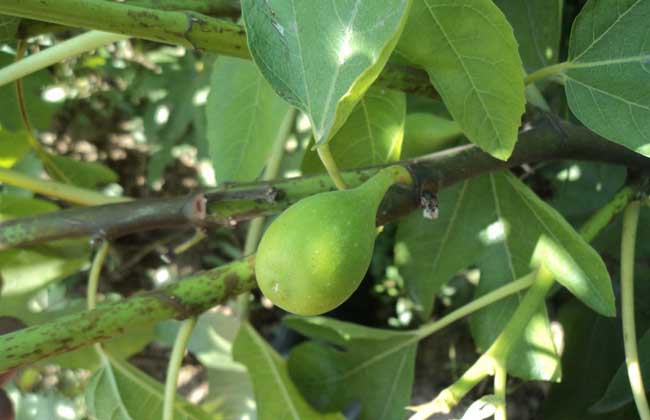
The fig is the fruit of a deciduous shrub in the mulberry family (Moraceae) and the genus Ficus, also known as Wenxian fruit, milk-berry, Pinxian fruit, and so on. It originated along the coast of the Mediterranean and was introduced into China from Persia as early as the Tang Dynasty. It is now cultivated in both the north and the south, especially in the **south. Its cultivation value is very high and its benefits are very obvious. Let us take a look together below at fig seedling prices and planting methods!
How much does a fig seedling cost?
The price of fig seedlings is about 2 to 4 yuan each, but it varies depending on the variety, specification, place of origin, and purchase quantity of the fig seedlings. There are currently about eight hundred known fig varieties, the vast majority of which are evergreen varieties; only those growing in temperate regions are deciduous varieties. They like a warm and humid climate, tolerate poor soil, resist drought, and do not tolerate cold or waterlogging. They are best cultivated on sunny sandy loam or clay loam with deep soil, loose and fertile texture, and good drainage. They are cultivated in both the north and south of our country, especially in the **south.
What varieties of figs are there?
1. Brunswick: A dual-purpose variety for summer and autumn crops, with few summer fruits and mainly autumn fruits. The summer fruit is oval, and the autumn fruit is inversely conical or inversely ovate, with an average single fruit weight of 50 to 60 grams. The peel is yellowish brown and the flesh is reddish brown. The tree vigor is moderate, the tree posture is semi-spreading, the tree body is dwarfed, the branching is weak, and the ability to bear fruit continuously is strong. The yield is not high, and it is cold-resistant and highly salt-tolerant.
2. Qingpi: A dual-purpose variety for summer and autumn crops, mainly autumn fruits. The autumn fruit is inversely conical, with a single fruit weight of 60 to 80 grams. When ripe, it is light green, and the fruit apex does not split, but there are cracks on the fruit shoulder. The flesh is purplish red. The tree vigor is strong, the tree posture is semi-spreading, the branches are thick and strong, and there are fewer branches. Cold tolerance is moderate, disease resistance is strong, and salt tolerance is relatively strong.
3. Penglai Persimmon: A variety dedicated to autumn fruits, with very few summer fruits. The autumn fruit is inversely conical or ovate, with a round and slightly flat apex that splits easily. The single fruit weight is 60 to 70 grams, the peel is thick and purplish red, and the flesh is bright red. It is relatively sweet, but the texture is coarse and it has no aroma. The tree vigor is extremely strong, the tree posture is upright, and the crown is tall and grows vigorously. The branches are sparse, long, and thick, and cold tolerance is good.
Propagation Methods for Figs
1. Cutting propagation: For fig cuttings, in mid to late March, select robust branches and insert them obliquely into the soil for two-thirds of their length, leaving the rest exposed above the soil. Fill and compact the soil, water to keep the soil moist, and roots will form in about 1 month. After 1 year of cultivation, they can be transplanted.
2. Division propagation: For figs, carry out division planting in February to March. When planting, dig holes at a row spacing of 3×3 m and plant. Before planting, prune to remove dense branches or dead branches. It is best to plant before the sap flows or before leaf expansion.
3. Layering propagation: Layering propagation of figs is relatively simple and follows the same operation method as layering for ordinary flowers and plants. However, because the propagation coefficient is small, it is mostly used when cutting and division propagation are difficult or when larger new plants need to be propagated.
Planting Methods for Figs
1. Timely planting: Figs can be grown in pots or cultivated on barren slopes, in fields, and in courtyards. The planting density should be appropriately increased, and after the tree body grows larger, thinning can be done appropriately. Use a mixed fertilizer containing phosphorus and potassium as base fertilizer. Transplant and plant after leaf fall in autumn, and avoid the flowering and fruiting period.
2. Reasonable fertilization: If the base fertilizer is insufficient during the growing period of young fig trees, fertilizer should be applied. Apply about 5 kg of decomposed miscellaneous fertilizer per plant at a distance of 40 cm from the main root. For mature trees, apply 15 kg of decomposed farmyard manure per plant. Topdressing is best applied during the vigorous new shoot growth period and the rapid fruit expansion period.
3. Drainage and irrigation: Figs are relatively drought-tolerant and not waterlogging-tolerant. The water demand is relatively large during new shoot growth and fruit expansion, but long-term waterlogging or heavily waterlogged environments can easily cause flower drop, fruit drop, leaf drop, and even death. Therefore, attention should also be paid to drainage and water removal.
4. Training and pruning: The technical requirements for pruning and training figs are not high. Generally, the multi-main-branch natural open-center training method is used, but 3 to 5 main branches should be retained for the whole plant, with no side branches, and the main branch groups directly grow on the main branches.
5. Timely harvesting: Figs begin to mature successively from mid-July to November. Picking is generally best done in the morning or evening on sunny days. Pick when a small hole at the top of the ripe fruit has slightly opened and the peel shows the color proper to the variety.
6. Pest and disease control: Figs suffer relatively few pests and diseases. During the fruit growth period, they are easily harmed by mulberry longhorn beetles, and when the fruit is ripe, they are easily damaged by birds. In addition to manually catching mulberry longhorn beetles and driving away birds, insect eggs can be eliminated manually or with chemicals, and scarecrows and other methods can also be used to drive away birds.