From potting to bursting with blooms: pay attention to these care details for roses
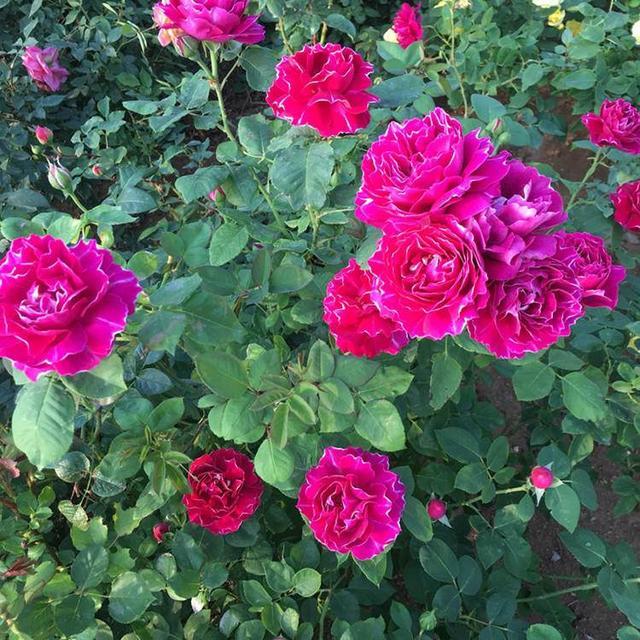
Roses are loved by everyone because they bloom profusely and brilliantly. But watching other people's roses go from small seedlings to bursting with blooms, it seems like a simple thing. In fact, when growing roses, from potting to bursting with blooms, there are many details we need to "pay attention to."
1. Potting season
For the potting time of roses, grafted and cutting-propagated small seedlings are potted in April, while 1-2 year old medium and large seedlings must be potted or sleeve-potted after dormancy and before bud break (November to January).
2. Choosing seedlings
Growing roses well is not as good as choosing them well. Gardeners should choose seedlings that are well developed, have a vigorous root system, and have thick, pest- and disease-free branches. This way, they are easier to grow.
3. Preparing potting soil
When preparing potting soil for roses, attention should be paid to drainage, aeration, water retention, fertilizer retention, and the combination of various nutrients. Potting soil formulas include: (1) 5 parts garden soil, 2 parts leaf mold, 2 parts decomposed cow manure, 1 part sandy soil, plus a small amount of rapeseed cake, bone meal, potassium sulfate, etc. (2) 1 part clay, 1 part sandy soil, 1 part decomposed compost, plus an appropriate amount of rapeseed cake, bone meal, and potassium sulfate.
4. Key points of fertilizing
When caring for roses, especially potted roses, in addition to applying about 25 grams of horse hoof slices and the like as a base fertilizer in spring, as the rose leaves grow out and the flowers open, during the vigorous growth stage apply a special organic liquid fertilizer for roses rich in nitrogen, phosphorus, and potassium once about every 7 days, diluted 500 times, and pour it directly at the roots.
During the rainy season, because applying liquid fertilizer is inconvenient, gardeners should best switch to granular chicken manure organic fertilizer, with an amount of about 5 grams per pot, sprinkling it on the surface of the potting soil away from the stems of the plants, and then covering it with soil. Topdressing should stop in winter.
5. Choosing pots and potting
For choosing pots for roses, miniature rose cuttings can use pots with a diameter of 5-7 cm, ordinary rose cuttings use pots with a diameter of about 14 cm, and grafted seedlings use pots of 20-24 cm. For 1-2 year old large seedlings, use pots of 26-30 cm.
For potting rose cuttings and grafted seedlings, it is not necessary to trim the roots, but the overly tender shoot tips and flower buds must be trimmed off. For ground-planted seedlings over one year old moved into pots, heavy pruning is necessary: cut off excess and overly long thick roots, retain the fibrous roots, keep 2-3 thick main stems, keep 2-3 strong buds on each main stem, cut off all the rest, and then pot them.