Background and details of the establishment of the Orchid Award
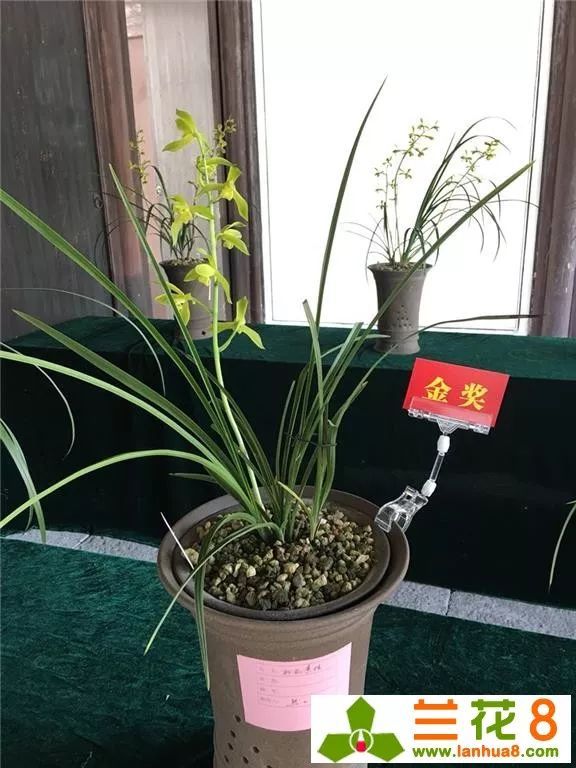
Promote Chinese orchid culture and spread orchid knowledge
1. New variety awards:
(1) It is suggested that they be set up separately for floral art, foliage art and special awards
New floral art award: mainly a comprehensive score for aspects such as flower shape, flower color, peculiarities (multiple lips, multiple petals, butterfly transformation, double rims, clustered flowers, branching and others), fragrance type, stalk height and number of blooms.
New foliage art award: mainly a comprehensive assessment of the orchid's leaf shape (spiral, dragon-line, gloss, length and width, softness and hardness, thickness, arching and drooping, etc.), leaf color (red, yellow, purple, green, etc.) and foliage art (double rims, silk, transparency, spots, crystal, etc.).
Special award: for those with both floral art and foliage art, or newly discovered excellent orchid varieties with special aesthetic advantages, a special award may be granted. In the selection rules for the above awards, it is suggested that an impression score be set up to reflect the judges' overall feeling about the orchid being evaluated.
(2) Considering that various orchids are not necessarily comparable when being judged for awards, it is suggested that the species in botany be used as the basic unit for participation in selection. First, it should be carried out among terrestrial orchids such as Cymbidium goeringii, Cymbidium faberi, Cymbidium ensifolium, Cymbidium sinense, Chun Jian, Lian Ban and Cymbidium kanran; when conditions permit, the types of tropical orchids should be gradually increased, such as Mian Er Lan, Paphiopedilum, Da Xue Lan, Cymbidium hookerianum and Tai Lan.
(3) In addition to displaying the actual orchid, participants should also provide background information on the orchid, such as the place of discovery, time of discovery, biological characteristics, variety characteristics, existing quantity and other objectively described information, as one of the bases for judging the award. In order to avoid misunderstandings and confusion of varieties, new varieties must be given standardized variety names. For example, they should not duplicate names, should not be similar, should not be obscure and hard to understand, and should represent the aesthetic characteristics of the orchid variety, special commemorative significance or beautiful implications.
(4) To reflect the characteristics of this award, it is suggested that the following situations not be taken as selection targets for the new variety award:
A. Traditional varieties.
b. Varieties that have already won medals at an orchid expo.
c. Varieties that have participated in three sessions and have never won a medal.
2. Cultivation award:
Mainly to reward those with remarkable results in orchid cultivation. In addition to evaluating the actual orchid, it is also necessary to examine the application of new materials, exchanged opinions and new methods in orchid cultivation. Therefore, exhibitors should provide information on orchid cultivation. Considering differences in varieties and environments, it is suggested that the cultivation award be set up separately by species and by national administrative region.
3. Audience award: based on the number of votes from visiting audience members, the orchids most loved by the audience are selected.
4. Scientific research award: in orchid scientific research, such as orchid breeding, tissue culture technology, optimized cultivation (control of light, temperature and humidity) and other basic research areas.
5. Paper and treatise award: reward the authors of 1-2 excellent papers and 1-2 excellent treatises of the year.
6. Organization award: used to reward orchid associations with a large number of exhibits and many medals won.
Orchid Bar, your good teacher on the road of growing orchids