This wild grass was once a life-saving herb for farmers in mountainous areas, and now it has become a rare commodity at 12 yuan per jin
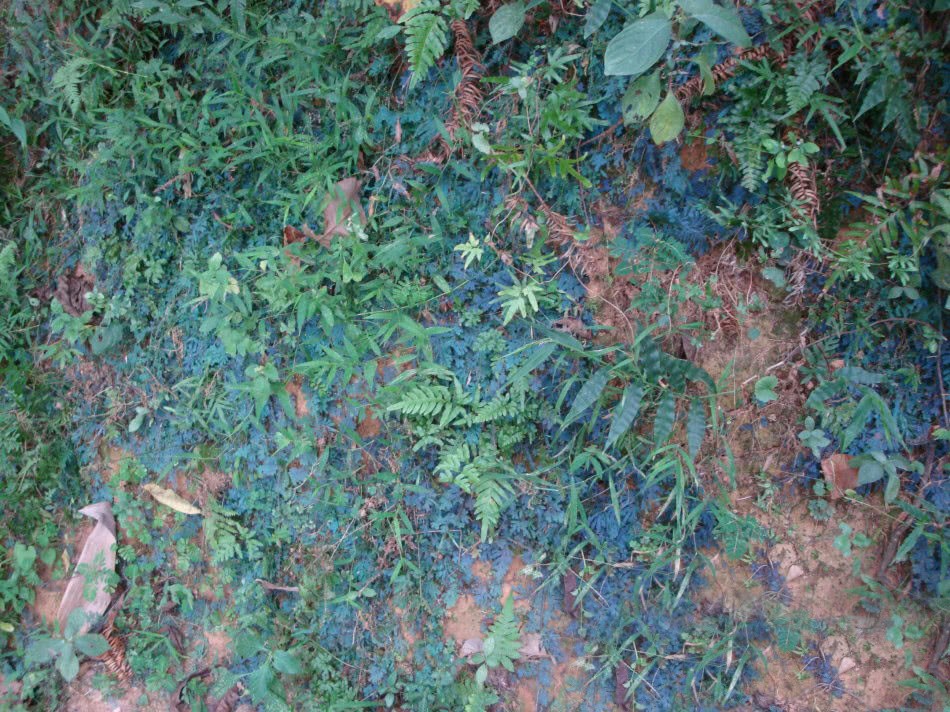
In the rural areas of the past, farmer friends in mountainous regions all "lived off the mountains and lived off the water." In the mountains there were many very useful resources, such as wild vegetables, wild grasses, wild mushrooms, and wild fruits that could fill the stomach, as well as wild grasses and tree bark that could treat illnesses. They were all very useful, and in the past, the living conditions and medical conditions in rural mountainous areas were not as good as they are now. At that time people often did not have enough to eat and had no money to see a doctor, so these wild vegetables and wild grasses became the life-saving vegetables and life-saving herbs of farmer friends in mountainous areas. Below, the author will introduce one such plant.
Our country is vast in territory and rich in resources, with numerous wild plant resources. Especially in rural mountainous areas, there are countless wild grasses. Among these wild grasses, some look very ordinary and inconspicuous, but their value is very high, and Selaginella uncinata is one of them.
It can be said that when many people first see Selaginella uncinata, they do not pay attention to it, because it always grows in mountain forests overgrown with weeds, and it creeps along the ground, so if you are not careful you will step right over it and ignore it.
In fact, despite Selaginella uncinata being so inconspicuous, its value is indeed very high. Especially for farmer friends in mountainous areas before the 1990s, Selaginella uncinata could be said to be a treasure, because it has very good medicinal value.
In fact, as early as ancient times, Selaginella uncinata was a commonly used Chinese herbal medicine. In the Gangmu Shiyi it is recorded: "Its grass has a single stem forming lobes, with fine leaves clustered together, and the leaves have emerald spots." And in the Zhiwu Ming Shi Tukao it is likewise recorded: "Selaginella uncinata grows among mountain rocks, with green stems and small leaves, green and lovely. The Qunfang Pu records it, and people often plant it on stone displays and in damp shady places for enjoyment. Jiangxi folk doctors call it dragon whisker, and southern Yunnan calls it sword cypress, and both say it can relax muscles and activate collaterals."
So what value does Selaginella uncinata actually have that made farmer friends in mountainous areas of the past treat it as a life-saving herb?
According to the Zhonghua Bencao, the whole plant of Selaginella uncinata can be used as medicine. It has the effects of clearing heat and detoxifying, draining dampness and unblocking collaterals, resolving phlegm and stopping cough, and stopping bleeding. It can be used to treat jaundice, dysentery, high fever with convulsions, cholecystitis, edema, diarrhea, vomiting blood, traumatic bleeding, snake bites, dog bites, bloody stool, rheumatic joint pain, breast abscess, burns, scalds, and many other symptoms.
And Selaginella uncinata has many uses among some ethnic minorities, such as the Yi, Miao, Zhuang, and Yao peoples, and is also deeply loved by local people.
Because of regional differences, Selaginella uncinata also has different names. The alternate names the author knows include dragon whisker, blue grass, sword cypress, blue ground cypress, ground cypress leaf, stretched-foot grass, green velvet grass, and rotten-skin snake, among others.
Selaginella uncinata mainly grows in damp shady weeds by streams under valley forests, on wet stones, or in stone crevices, and is rarely cultivated artificially. Therefore, it is also very precious now. According to information the author checked online, Selaginella uncinata used as Chinese herbal medicine now costs about 12 yuan per jin, which can also be considered a rare commodity.
Dear friends, do you know about "Selaginella uncinata"? You are welcome to leave a message and exchange ideas!