Clivia miniata just loves this stuff. Add a random drop of it, and the leaves stand upright like a folding fan, and the flowers get big too.
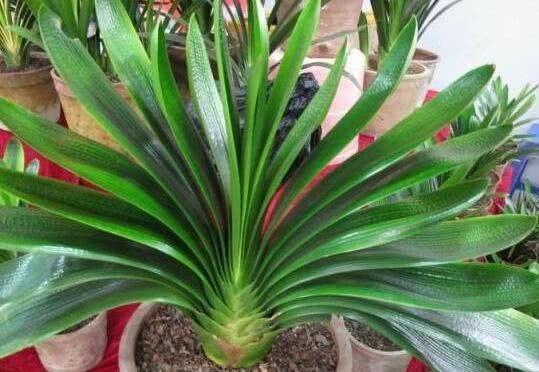
Clivia miniata is a potted flower that flower lovers all adore. Its leaf shape is elegant; even if it does not bloom, it is grown just for the foliage, and many flower lovers are super fond of it, not to mention that its flowers are also very beautiful and very elegant. But there are always flower lovers leaving comments saying that the clivia they grow is alive, but as for how it grows, well, heh heh, it simply does not grow at all, let alone bloom. Actually, wanting to grow clivia well is not hard either. You just need to use a bit of this, because clivia just loves this "thing." Add a random drop of it, and the leaves stand upright like a "folding fan," and the flowers get big too!
What exactly is this thing?
Actually, it is sesame oil. Flower lovers all know that clivia is a fertilizer-loving plant, and it especially loves oily fertilizers, so just give it a bit of sesame oil to eat. The effect is absolutely terrific. The method of use is as follows:
1. Flower lovers can dig a few small holes around the edge of the clivia pot, drip a few drops into each small hole, cover with soil, and you are done. It is just that willful, just that simple.
2. When watering the flowers, drip a few drops into the water, stir thoroughly a few times with chopsticks so the oil fully blends into the water for the clivia, and then you can water it.
However, it should be noted that when using sesame oil to grow clivia, it can be used at most 2-3 times, especially the kind buried in the soil. It must not be used too much, because the decomposition of oil takes time, and the fertilizer effect generally can only be seen after 2-3 months. Flower lovers should not be impatient. Slowly you will find that your clivia's leaves are glossy and upright, like a big folding fan, and quite shiny, and the flowers that bloom during the flowering period are also big.
Flower lovers, look at this flower bud. Isn't it very delightful and very beautiful?
Sesame oil can also be used to wipe the leaves. Just find a soft cloth, drip a few drops of oil into it, then put the soft cloth into water, stir and soak for about 15 minutes, take it out and wring it until it is damp but not dripping, and then it can be used for wiping. The leaves immediately become glossy, and they are not easy to attract dust.
Of course, if you want clivia to grow well, other aspects of care also need attention. Let's take a look together, shall we?
Soil
A loose, fertile neutral or slightly acidic humus soil should be used. The cultivation soil can be mixed from 65% humus soil, 20% clean sand, and 15% fine furnace ash. The relative humidity of the soil should be around 40%. If the soil becomes compacted and drainage is poor, it will cause root rot. When changing the soil in spring, it is best to buy special soil for clivia to plant it.
When changing the pot, add superphosphate to the cultivation soil and mix it evenly with the soil as a base fertilizer. When transplanting, first make holes with bamboo chopsticks, insert the fleshy roots into the soil, with the depth just enough to bury the rhizome while exposing the seed ball, and at the same time make sure the leaves all face the same direction.
Watering
Clivia miniata likes a moist soil environment. But if watered too much, the potting soil becomes too wet, the air in the soil is squeezed out, the root system has difficulty breathing, and over time root rot will appear. Flower lovers are advised to do this:
Take a saline bottle (other bottles or jars that can hold water are also fine) and an infusion tube, use a dropper setup like the one for saline infusion, and drip water onto the root neck, then let it seep and spread into the soil to be absorbed by the clivia plant. Just adjust the drip amount according to the size of the clivia plant. The drip method also has the advantage of not destroying the soil structure and being beneficial to growth.
Light
Clivia miniata tends to bloom under short-day conditions. Exposure to scorching sun, and direct summer sunlight, will cause sunburn disease and inhibit growth. From May to September each year, it should be cultivated under a shade shed or in a semi-shady environment without direct sunlight. But in winter, the longer the sunlight exposure, the better. When blooming, weak light can prolong the flowering period.
Pay attention to direction. Clivia has phototropism. During care, the direction of the flower pot should be turned as the sun's position changes, so that the direction in which the leaves extend is parallel to the direction of the incident sunlight. In this way, the clivia you grow can be "like a fan when viewed from the front, a single line when viewed from the side," with neat and beautiful leaves.
That is all for today's sharing.