For gardenia and camellia, you don't need to make your own fertilizer; using this to feed them makes new leaves grow fast and produces more flowers
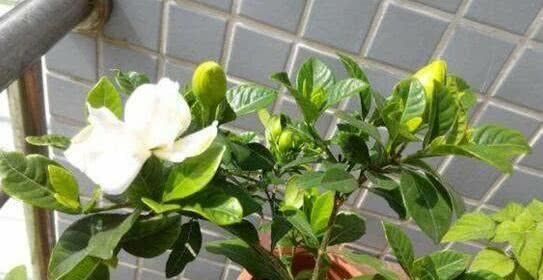
As people's living standards improve, more and more people have fallen in love with growing flowers, but more and more people also don't know how to grow them, so all kinds of flower-growing methods and homemade fertilizers have sprung up online. But to be fair, homemade fertilizer is troublesome and smells bad, and nowadays people have a fast-paced life and a lot of pressure, so they simply have no time to make it. That smell also isn't suitable for flower lovers in apartment buildings, because it doesn't just bother you, it bothers the neighbors too. So many flower lovers have commented that homemade fertilizer, while good, isn't suitable for us to use. So today we won't be sharing any homemade fertilizer.
Today we'll mainly talk about how to fertilize gardenia and camellia. If you don't make your own fertilizer, how can you make them grow fast and bloom more? Today, let's call on these 2 things to help.
Let's go through it in two steps
The first step is during their growing period, when both gardenia and camellia need nitrogen fertilizer, so at this time we can add a few granules of urea to the water when watering, making urea water
Dilute urea with clean water at 1:100; for a 1-liter plastic bottle, 3~5 granules is enough. Shake well until dissolved, then pour it onto the soil.
Generally, 2-3 times a month is enough. The time to use it is when winter gives way to spring. After using it, both gardenia and camellia shoot out lots of new little leaves, which is truly a joy to see.
The second step is when the spring buds have grown out fully and are entering the process of lignification. At this time they both go through a brief dormant period. We can fertilize at this point, but once the flowering period arrives we can apply more phosphorus and potassium fertilizer and apply no or little nitrogen fertilizer. This can both control leggy branch growth and promote and shorten the time for flower bud differentiation, which is more helpful for flower bud formation.
At this time we can water them with a dilute nitrogen-phosphorus-potassium fertilizer or monopotassium phosphate solution, generally twice a month. To promote more blooming, brighter flower color and a longer flowering period, after the flower buds form, you can apply an extra 0.2% monopotassium phosphate solution 1~2 times to increase the potassium content.
These fertilizers can all be bought from flower shops, and flower lovers can use them with confidence according to the instructions
It should be noted that both gardenia and camellia like acidic soil, so when watering you can add a little vinegar or citric acid to increase the soil's acidity. The water temperature must also be strictly controlled when watering; the water temperature should be close to room temperature. Don't use very cold or hot water. Let it sit for a while before use, and use it once its temperature is close to room temperature.
To make them bloom more, pruning and light also need attention
Camellia
The best time to prune camellia is generally about one month before the new buds sprout. During the growing period, also be sure to promptly cut off diseased branches. To ensure good growth order, you can pinch off the terminal buds of unpruned branches to let them branch out in all directions, increasing their ornamental value.
Camellia should be placed in a warm, humid place with ventilation and light. In spring it needs plenty of light; in summer be careful to shade it, avoiding direct sunlight and west-facing sun exposure. If it's placed on a balcony, it can easily be scorched to death if you're not careful.
Gardenia
Gardenia forms flower buds in April, so between April and May, apart from cutting off a few messy branches and leaves, the main focus should generally be protecting the buds; it blooms in June, and spent flowers should be promptly cut off to encourage new shoots to sprout. When the new shoots grow to 2-3 nodes, carry out the 1st pinching,
and appropriately remove some axillary buds; in August, pinch the second flush of branches to develop the canopy, and you'll get a plant with a beautiful tree shape.
Gardenia likes light, but be careful not to expose it to too much sun. When the midday temperature is too high, shade it, otherwise the leaves will turn yellow. It likes water; you can water it once every 2-3 days, but be careful not to let water accumulate. Flower lovers can use loose, breathable nutrient soil; after watering, the water will immediately flow out from the bottom without accumulating.
That's all for today's sharing