Can oil peonies be grown in Diqing Prefecture? With propagation techniques for ornamental peony seedlings
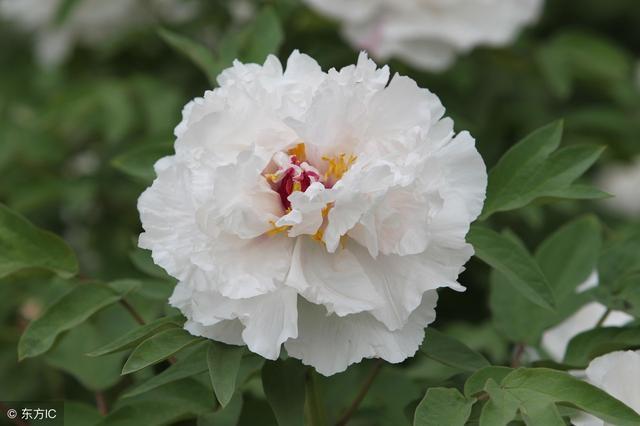
Ornamental peony seedling propagation techniques for Diqing Prefecture. Can oil peonies be grown in Diqing Prefecture?
1 Site selection and land preparation
1 1. .1 1 Site selection
The peony is a valuable ornamental and medicinal plant. The peony root system is fleshy; because it prefers cool conditions and fears heat, likes high and dry sites and dislikes low and damp ones, the cultivation site should be chosen on a sunny, high, dry, easily drained plot, and continuous cropping should be avoided. A deep, fertile sandy loam soil is best; heavy clay, saline-alkaline and low-lying plots should be avoided.
1 1. .2 2 Land preparation for seed propagation
About 20 d before deep ploughing of the soil, first give one thorough watering; after the water has infiltrated, apply fertilizer: 2.25 t·hm -2 of cake fertilizer or 30 t·hm -2 of decomposed farmyard manure, and 750 kg·hm -2 of compound fertilizer as base fertilizer, while applying 15 kg of phoxim granules and 5 kg of tuqunling per 667 m 2 as soil insecticides and fungicides; then deep plough 25-30 cm, harrow fine and level, and use small raised beds 10-15 cm high and 80-100 cm wide, leaving a 30 cm ditch between two beds.
1 1. .3 3 Land preparation for the planting seedbed
30-60 d before planting out large areas of peonies, fertilize and deep plough the soil, applying 3 t·hm -2 of cake fertilizer or 35 t·hm -2 of decomposed farmyard manure, and 750 kg·hm -2 of compound fertilizer as base fertilizer. Apply 3-4 kg of 3% isofenphos-methyl granules and 4-5 kg of tuqunling per 667 m 2 , mix into medicated soil and scatter it over the seedling ground, deep plough 30-40 cm, and rotary harrow so that the chemical mixes with the soil.
2 Cultivation of seedling plants
2 2. .1 1 Seed selection and seed treatment
Peony seeds generally mature at the end of July and beginning of August; pick the follicles when they are the yellow of a ripe banana skin, dry them in the shade on a drying yard, turning them often; when the fruit gradually turns from yellow-green to brown and then black and splits dry with the seeds falling out, they can be sown (if they cannot be sown in time, they can be stored in damp sand). Before sowing, select plump seeds by water flotation, soak the seeds in 40-50 warm water for 48 h, or in water at room temperature for 3-4 d, changing the water once a day, and in the last water change add a 1000-fold dilution of 50% carbendazim wettable powder and soak for 2 h to disinfect and sterilize the seeds.
2 2. .2 2 Sowing and raising seedlings
Sow from late August to early September; open furrows 5 cm deep at a row spacing of 8 cm, scatter the seeds evenly into the furrows with 1-2 cm between seeds, cover with soil level with the surface and press lightly; alternatively broadcast the seeds on the bed surface and then cover with 3-5 cm of soil. Then cover with plastic film, and cover the film with another 6 cm of soil to keep warm and moist. The seeding rate is 1500-2250 kg·hm -2 . After sowing, in that same year they only grow roots and do not sprout; they must pass through a period of low temperature to break the epicotyl dormancy, and then sprout and emerge as seedlings in the spring of the 2nd year.
2 2. .3 3 Field management of seedling plants
30-40 d after sowing, young roots 0.5 cm long can grow, and after 90 d the young roots reach 7-10 cm. Around the winter solstice, let water into the furrows to favour root growth. After the rains of the following spring, remove the soil and the film from the plastic film. Around the Awakening of Insects, the young seedlings have basically all emerged. If it is dry, water to promote sprouting; if there is continuous drought from late May to mid June, water thoroughly once every 7-10 d, and loosen the soil and hoe weeds in good time, applying fertilizer together with watering, mainly quick-acting fertilizer, 3 applications being suitable; foliar spraying with a 0.3% potassium dihydrogen phosphate solution can also be done.
To cultivate large seedlings, divide and replant the small seedlings in autumn, or remove every other row of the original seedlings, and thereafter apply fertilizer once each spring and autumn, applying about 22.5 t ·hm -2 of decomposed farmyard manure or 3.75 t ·hm -2 of cake fertilizer; under normal rainfall in Heze, generally do not water, but water in cases of exceptional drought, drain accumulated water in good time to prevent waterlogging, and pay attention to pest and disease control. After 2-
3 a of cultivation, the seedlings can be used as grafting rootstock.
3 Cultivation of grafted seedlings
3 3. .1 1 Selection of rootstock and scion
In Heze, 2-3 year old 'Fengdan' seedling peonies with a ground diameter of more than 1.5 cm are generally used as rootstock. Using seedling peonies as rootstock has the advantages of producing many divisions, a long lifespan, a well-developed root system and strong stress resistance. For the peony scion, use 1-year-old adventitious shoots from vigorous plants, which have strong vitality and survive easily after grafting; new shoots growing from older upper branches can also be used. The scion is 6-10 cm long, with a vigorous terminal bud and 1-2 small lateral buds; the scion should be grafted as soon as it is cut and must not be kept long.
3 3. .2 2 Grafting time and methods
Grafting time is the key factor affecting survival. Peonies are grafted in autumn, generally from late July to early September, with early August being best. According to the grafting site, it is divided into root grafting, branch grafting and bud grafting; when the rootstock is thick, inlay grafting can be used, when rootstock and scion are similar in thickness, cleft grafting is used, and when the rootstock is thinner, cut grafting is used.
According to the state of the rootstock at grafting, it can be divided into field grafting and dug-up grafting. In field grafting, cut the rootstock flat 6-7 cm above the ground, trim the flat cut, make 1 vertical cut on the cut surface about 3 cm long, make two symmetrical slanting cuts on the lower part of the chosen scion so that one side is thinner, making it wedge-shaped, with smooth cuts 2-3 cm long, then insert the prepared scion into the rootstock so that the cambium layers of both align, then bind well with hemp twine; after grafting, earth up and bury in place, and remove the earth in the spring of the 2nd year. Because the root system of the rootstock is undamaged, this method gives vigorous growth after survival, but the operation is relatively difficult. In dug-up grafting, the seedling rootstock is dug out and grafted indoors, and this is mostly used in production. Make two symmetrical slanting cuts on the lower part of the chosen scion, taking care to make the cuts smooth, 2-3 cm long, with the cross-section triangular, slightly thicker on the outside and slightly thinner on the inside, then trim the top of the root rootstock flat, make a straight cut at 1/3 of one side of the rootstock, of a length similar to the scion cut surface, then insert the scion into the slit so that the cambium layers of both are in close contact, then bind with hemp rope and smear the cut with prepared thin mud slurry. When using peony roots as rootstock with this method, dry the peony roots in the shade for 2-3 d until soft, which makes grafting easier. The grafted seedlings should be planted immediately in a prepared seedbed; the lower soil of the seedbed should be slightly moist and the surface soil slightly dry, to prevent infection of the grafted seedling wounds. Open furrows and plant at a row spacing of 50 cm, with a plant spacing of about 5 cm, at a depth such that the graft interface is 2-3 cm above the ground, with the rootstock roots spreading naturally, then firm the soil, with the covering soil about 10 cm higher than the scion, to prevent drought and severe cold; remove the covering soil when it is warmer in the spring of the following year, exposing the scion to favour sprouting; take care not to water before the wound has healed; growth in that year reaches up to 12 cm.
3 3. .3 3 Field management of grafted seedlings
Before flowering (before April 20), loosen the soil 2-3 times, and thereafter twice a month. Apply fertilizer 2-3 times a year, in spring and autumn, applying 22.5-30 t ·hm -2 of decomposed organic fertilizer or 3-4.5 t ·hm -2 of cake fertilizer over the whole year; water in case of drought during the growing season, and pay attention to pest and disease control. Earth up for overwintering: peonies are relatively cold-resistant, but to avoid man-made damage, the plants are earthed up for overwintering. At the end of October each year, dig soil from around the plants to earth up the plants; 1-2 year old plants are buried entirely in the soil, 3-4 year old
plants are earthed up to 2/3 of plant height, and those over 5 years old are earthed up only at the base. Generally, after 3-4 a of cultivation they can flower.
4 Pest and disease control
Peony diseases include grey mould, brown spot, leaf spot, violet root rot and anthracnose. Strengthen cultivation management, plant at a reasonable density, drain in good time, do not practise continuous cropping, and at planting soak the seedlings in a 1000-fold dilution of 50% carbendazim wettable powder for sterilization. To reduce pathogens, in autumn clear away the dead branches and fallen leaves of diseased plants, and when disease occurs in spring remove diseased buds and leaves and bury them deep. Before sprouting, spray a 1700-fold dilution of 50% carbendazim wettable powder or 3 degrees Baume lime-sulfur mixture to kill pathogens on the plants; from May to July spray a 1000-fold dilution of 50% carbendazim wettable powder or a 1600-fold dilution of 65% mancozeb, once every 7-10 d, for 3-4 consecutive sprays; after disease occurs in other seasons, also use this method for spraying control. For violet root rot control, choose a well-drained plot and before planting smear the roots with a 0.2% quintozene solution; a 50% carben-
dazim wettable powder 1000-fold dilution for soaking the roots also gives good results. For peony root-knot nematodes, apply 1-2 mL of 40% isofenphos-methyl or 1.8% abamectin per plant, diluted to a 0.33%-0.2% solution, and drench the roots, with a control effect of over 85%; for wireworms, mole crickets and cutworms, drench the roots with a 1000-fold dilution of 50% phoxim emulsifiable concentrate or a 2000-fold dilution of 40% isofenphos-methyl, or scatter poison
bait to trap and kill them.
Can oil peonies be grown in Diqing Prefecture? For oil and medicinal peonies grown in Diqing Prefecture, buy Fengdan seedlings. Jishan Huayao contact WeChat: 18374545223