Forsythia Propagation and Cultivation Techniques and Pest and Disease Control Methods
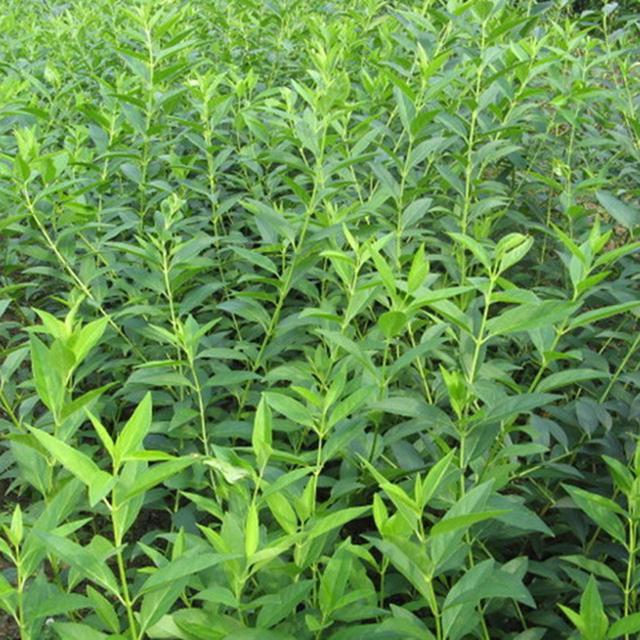
Forsythia Propagation and Pest and Disease Control Cultivation Techniques
Forsythia belongs to the shrub family, also known as Lianqiao, and is an economic shrub planting variety. Forsythia likes light and has strong cold resistance. Both poor and fertile soils are suitable for its growth. Generally during the growth process, the incidence of pests and diseases is low, its sprouting ability is strong, and its pollution resistance is strong. The fruit of forsythia is a traditional Chinese medicine that can reduce inflammation and detoxify. Its flowers generally open in early spring, and the flowering period is long. During the flowering period, the branches are covered with golden-yellow flowers, giving it strong ornamental value. Forsythia is suitable for planting around residences, under hedges, and along roadsides. This article mainly introduces forsythia seedling raising and cultivation techniques to provide reference for growers.
1 Seedling Raising
Forsythia has strong sprouting ability and is not strict about soil requirements. Because it likes light, wild forsythia generally grows on sunny slopes or semi-shaded and semi-sunny slopes. There are several methods of forsythia seedling raising, including sowing, division, cutting, and layering. At present, sowing-based seedling raising is mainly used.
1.1 Plot Selection
Although forsythia is not strict about the soil for growth, when raising seedlings, flat and fertile soil should be selected. The soil should have good drainage and irrigation conditions, because too much sandy soil will cause poor seedling growth. After the plot is selected, the land should be prepared. Land preparation should be carried out in autumn. Along with land preparation, organic fertilizer should be applied, after which deep plowing should be carried out to remove weeds and debris.
1.2 Seed Collection
After forsythia matures in autumn, harvesting should be carried out before the autumn Frost's Descent. Harvesting mainly targets yellow, bright, cracked fruits. The fruits are beaten to obtain seeds. After that, seeds that are plump, healthy, and free of pests and diseases are selected from mother trees. After selection, the seeds are stored in a cool place for seedling raising.
1.3 Seed Treatment
Forsythia seeds have dormancy, so seed treatment is required in spring. Before germination promotion, the seeds are generally soaked in a comparative solution of gibberellin and alcohol, with the purpose of waking the dormant seeds. In March, the seeds are subjected to germination promotion. The selected seeds are soaked in warm water for about 3 hours, then removed and drained, placed in sand, and kept in
a north-wind and sunny place. Note that they should be turned every day. When about one-third of the seeds have cracked open, they can be sown.
1.4 Sowing
After forsythia seeds germinate, furrows should be opened in the sowing plot before sowing, then fine sand and seeds should be scattered into the furrows together. After covering with soil, press it firm and cover with straw curtains to prevent drying. After covering with soil, spray herbicide to kill young weeds, but do not water within 10 hours after the seeds are planted. After the seedlings grow to about 5 cm, thin them to establish the stand, selecting large and strong seedlings. At the same time, combine weeding with watering, and keep the spacing between seedling plants at about 5 cm, which is optimal. One month after planting, apply fertilizer and weed while watering. When the seedlings grow to 15 cm, thin them again and strengthen field management and weeding management.
1.5 Transplanting
After forsythia seedlings are raised, transplanting is generally carried out in the spring of the second year. If forsythia is planted in continuous patches, when the seeds mature in autumn and naturally fall to the ground, many small seedlings will grow. When the number of seedlings raised is not large, this natural seedling raising method can be used. When transplanting, the seedlings need to be dug out together with the root soil. Before planting, dig planting holes with a diameter of about 30 cm, and the distance between planting holes should be about 150 cm. Place 5 kg of compound fertilizer into each planting hole, and transplant the forsythia seedlings into the holes. Then fill with soil. When filling halfway, lift the seedling upward a little to promote the spreading of the seedling roots, then fill the soil fully and tread it firm. If the soil after transplanting is relatively dry, water it promptly.
1.6 Cutting Propagation
Forsythia cutting propagation is generally chosen in summer, with rainy days being optimal. When cutting, select lignified branches about 3 years old that are healthy and free of pests and diseases, and cut them into cuttings about 20 cm long. Keep about 3 buds and 2 leaves on each cutting to help the cutting absorb water and carry out photosynthesis. After the cuttings are prepared, cut them at an angle to help them root. Tie 50 cuttings into a bundle, soak them in rooting powder solution, take them out and let them cool, then carry out cutting. After covering with soil, press it firm. What must be noted in cutting propagation is the suitable temperature. A temperature of about 13°C is most suitable, but it must not be higher than 27°C. Although forsythia has strong growth ability, when roots form on the bark portion or adventitious buds root, mixed tree types may be produced. If light is not timely, it will affect the growth cycle of forsythia roots and reduce their rooting rate. Therefore, after cutting propagation, temperature and light must be well controlled. If the sunlight is relatively strong, shading treatment can be carried out after forsythia cutting, but the light transmittance of the shade net should preferably be about 60. After the roots of the cut forsythia grow out, the shade net can be removed. Generally, shading is needed from 10 a.m. to 4 p.m. every day. Forsythia cutting is generally carried out in an environment with high temperature and humidity. After cutting, infection and rot are likely to occur, so carbendazim is needed for disinfection treatment to prevent mold from forming before the forsythia wounds heal. After the forsythia cutting wounds heal, foliar urea fertilization treatment is needed about once every 7 days. After rooting, spraying with a mixed solution of urea and monopotassium phosphate is needed to promote healthy root growth and improve the lignification degree of the seedlings.
1.7 Layering Propagation
Forsythia layering propagation can generally be carried out in spring and autumn. When carried out in spring, longer forsythia branches should be selected, bent down and buried directly in the soil, then watered to keep the soil moist. Generally, the branches can root 60 days after layering. When carried out in autumn, the front end of the branch should be cut off, and after temporary planting, layering and field planting should be carried out in the spring of the second year.
1.8 Division Propagation
Forsythia division propagation is generally chosen from after leaf fall in autumn to before leaf development in spring. During division propagation, the forsythia plant can be dug out with one branch above ground and roots below ground. After field planting, new plants sprouting around mother plants more than 4 years old need to be dug out separately for field planting.
1.9 Field Management
During the forsythia seedling period, when the seedlings grow to 20 cm, weeding, loosening the soil, and fertilization can be carried out. When thinning, leave 2 plants per hole, and water in a timely manner. When the seedlings grow to about 30 cm, farmyard manure needs to be applied to promote seedling growth. When the seedlings grow to 70 cm, the top shoots need to be cut off to promote the development of side branches and cultivate the side branches into main branches. After forsythia has grown, pruning should be carried out to promote ventilation and light, and to promote early fruiting and early fruit ripening.
2 Cultivation Techniques
2.1 Plot Selection
The plot for cultivating forsythia should be prepared in advance. Generally, gently sloping hilly plots are selected, and land preparation is carried out using slope-separated belts with a spacing of 3 m and a length of 70 cm. After transplanting, raw soil or stone pieces should be used as backfill ridges, and cooked soil should be used for backfilling, so that the ridge height is 25 cm, width 30 cm, and thickness 30 cm.
2.2 Transplanting
Forsythia transplanting is generally chosen between autumn and spring, after leaf fall. In order to improve the survival rate of transplanting, forsythia can first be subjected to truncation treatment. Then before transplanting, dip the forsythia roots with soil into rooting powder or mix them with mud slurry. After transplanting, tread the soil layer firm and press it in layers, so that the seedling roots are relatively upright and easy to grow and spread.
2.3 Tending Management
2.3.1 Intertillage and Weeding. After forsythia transplanting, loosening the soil and weeding should be carried out once every winter, while combining with fertilization, mainly cake fertilizer and farmyard manure. During the growth period, forsythia seedlings can be intercropped and subjected to low-stem treatment in the early stage, while combining watering and fertilization.
2.3.2 Reasonable Fertilization. After forsythia field planting, fertilization should be carried out at 3 years. This fertilization is mainly urea, with the amount controlled at 225 kg per mu; fertilization should also be carried out after 5 years of field planting. This fertilization is mainly a mixture of nitrogen fertilizer, phosphate fertilizer, and potassium fertilizer, with the amount controlled at 600 kg per mu.
2.3.3 Irrigation and Drainage. After forsythia transplanting, watering should be carried out during dry periods. If the irrigation conditions of the plot are poor, soil moisture conservation work should be carried out. After forsythia transplanting, if it is the rainy season, drainage treatment should be carried out by digging drainage ditches to remove accumulated water.
2.3.4 Shaping and Pruning. In the first winter after forsythia transplanting, after the leaves have fallen, pruning treatment should be carried out at a point about 70 cm from the ground on the main branches. In the second summer, pinching treatment should be carried out to promote the development of forsythia side branches. After pruning, about 4 strong branches should be kept on the main branches for cultivating secondary main branches. After forsythia has grown for several years, pruning and shaping can basically form a shape that is round outside and hollow inside with good light transmission. This tree shape is suitable for forsythia photosynthesis and is beneficial to nutrient absorption. After that, dead branches must be pruned every winter. At the same time, crossing branches and diseased branches should be cut off, and aging, perennial, and fruiting branch groups should be shortened to promote the main trunk to produce new strong branches, restore forsythia growth, and increase the fruiting rate.
2.4 Pest and Disease Control
The main pest and disease during forsythia growth is leaf spot disease. This disease is caused by fungal infection. When severe, the entire leaf will wither and die. High temperature and a closed environment are the main reasons for the occurrence of leaf spot disease. Leaf spot disease generally occurs in late May, with about July being the peak period. The main control measures are to prune diseased branches in a timely manner and prune overly dense branches so that forsythia has good light transmission. At the same time, strengthen the management of fertilizer and water, pay attention to the application of nitrogen fertilizer, and keep nutrition balanced during forsythia growth. After May, during the period when leaf spot disease is likely to occur, whitewashing the main trunk can be carried out for prevention in advance. The main insect pest during forsythia growth is the mole cricket. Mole crickets must be controlled during both the forsythia seedling stage and the emergence stage. Poor control will affect the survival rate of seedlings. When mole crickets occur, they mainly gnaw the tender stems and rhizomes of forsythia. In severe cases, they cause seedling death and can lead to missing rows. Another insect pest is the stem borer. Stem borers mainly bore into the woody part of the forsythia main trunk and damage the pith, and in severe cases can cause forsythia to fail to bloom and bear fruit.
2.5 Harvesting
Forsythia is divided into green forsythia and yellow forsythia. The green fruits harvested in September are generally green forsythia, while the yellow fruits harvested after October are generally yellow forsythia. After harvesting, the processing of forsythia should be protected from rain to avoid quality reduction.
3 Conclusion
Scientific and reasonable design is needed during forsythia seedling raising and planting, with ventilation and light, and reasonable fertilization and irrigation, to ensure a high survival rate of forsythia during the seedling stage, good growth after transplanting, and freedom from pest and disease damage.