Key Technical Points for Large-Scale Open-Field Cutting Propagation of Tea Plants in Hubei
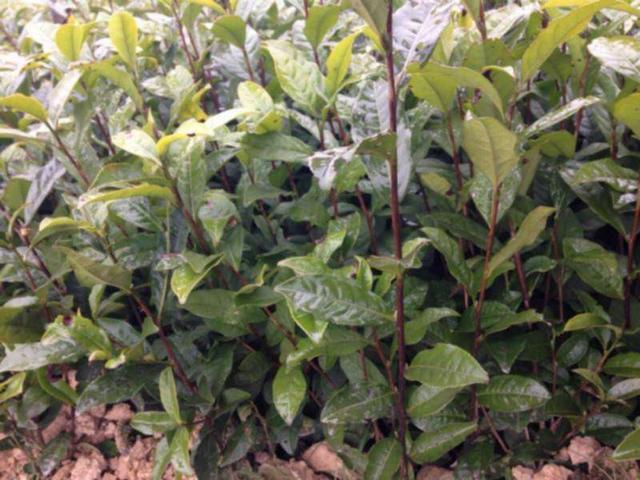
Large-Scale Open-Field Cutting Propagation Technology for Tea Plants in Hubei
In Wufeng Tujia Autonomous County, Hubei Province, through the efforts of several generations of tea science and technology personnel, superior tea cultivars such as Echa No. 7, Wufeng 212, and Wufeng 310 have been successively bred. In order to rapidly promote superior tea cultivars throughout the county, autumn open-field large-scale cutting propagation for seedling raising was carried out for 3 consecutive years, with an annual scale reaching 3.33 hm 2 , cumulatively providing more than 30 million high-quality tea seedlings to society. The successful seedling-raising experience is now summarized to provide useful reference for open-field cutting propagation of tea plants in similar ecological regions.
I. Preparation Before Cutting
1. Site Selection for the Seedling-Raising Base
The area where the seedling-raising base is located has a short frost-free period, and the extreme minimum temperature in winter is not lower than -3 degrees C. Select concentrated contiguous flat land with sufficient water sources nearby and convenient drainage and irrigation; relatively broad low-mountain river valley banks on both sides are most suitable.
2. Shoot Cultivation of Superior Tea Cultivars
After spring famous tea picking is completed, select a 4-10 year old superior cultivar mother garden with irrigation conditions, carry out timely deep pruning in late April, pruning to the position of summer shoots produced in the previous year, and before May 1 open a 15-20 cm deep trench 20-30 cm from the tea plant root crown for fertilizer burial. Apply 750 kg of tea-specific fertilizer, 450 kg of 45% potassium sulfate compound fertilizer, and 300 kg of urea per hectare, apply evenly, and irrigate promptly. During the tea shoot cultivation period, pay attention to the control of aphids, tea geometrid moths, and tea green leafhoppers. Begin topping successively 10 d before cutting, removing the young one bud and two or three leaves at the tip of the tea shoot; the axillary buds of the tea shoots to be harvested are required to be plump, unbranched, robust, and brownish-red, with a diameter of 4-8 mm.
3. Preparation of the Cutting Nursery
Select the nursery land well, clear weeds, stones, and other debris, scatter 750 kg of compound fertilizer per hectare, deep plow at least 15 cm, harrow fine, open trenches and make beds in 150 cm strips, with the bed surface oriented north-south, bed surface width 120 cm, and the upper width of the bed trench 30 cm. Beds longer than 30 m must have waist trenches, ensuring that bed trenches, waist trenches, surrounding trenches, and flood drainage trenches form a complete 4-trench system, with bed height about 10 cm, and level the bed surface for later use.
4. Spreading Yellow Subsoil on the Bed Surface
Select wasteland or forest land where Masson pine and rhododendron grow normally, remove the surface layer, dig out yellow subsoil, crush and sieve it, then spread it evenly on the prepared bed surface; the bed surface is required to be flat and firm, with an effective width of 110 cm and a thickness of 8 cm, water it to settle for later use.
5. Construction of the Shade Shed
Use high-shed shading with black special netting with a shading rate of 70%. The miscellaneous wood posts supporting the shade net are 250 cm long, buried 50 cm in the ground, and 600 posts are needed per hectare; the edge posts must be reinforced firmly with inclined short wooden stakes and tensioning. Stretch No. 12 iron wire lengthwise and crosswise at the top of the posts, lay the shade net on top, and also enclose the nursery around the perimeter with shade netting.
6. Laying of the Irrigation System
Lay a simple sprinkler irrigation system in the nursery, with sprinkler heads arranged with slight overlap according to their working radius, leaving no dead corners, ensuring that the entire nursery can be sprayed
with water; the sprinkler heads must be 80 cm above the shade net.
The above preparation work must be completed before September 1 each year.
II. Short-Cutting Propagation
During cutting, the cutting, transport, and storage of shoots from mother garden tea plants must be arranged in a coordinated way to ensure that the shoots cut from the mother plant remain fresh and are not squeezed or heated. On sunny days, avoid cutting shoots during the 10:00-16:00 period; scatter the shoots in a cool, moist place, preferably cutting them into short cuttings the same day, and at the latest they must be fully processed the next day. Remove diseased and insect-damaged leaves, mechanically damaged leaves, and deformed leaves. The total length of the tea short cuttings inserted into the bed surface must not exceed 4 cm, with one intact leaf; cut flat at the upper end 5 mm from the tea bud at the leaf axil, and cut obliquely at the lower end about 3 cm from the petiole at the point of attachment on the shoot in the same direction as the leaf surface; flower buds accompanying the axillary buds must be pinched off. Before cutting, water the bed surface first; during cutting, the bed surface moisture should be such that it does not stick to the finger when touched. Insert row by row at a plant spacing of 2.5 cm and a row spacing of 8 cm, hold the tea stem above the tea bud with thumb and index finger, and insert vertically (for cultivars with oblique leaves) or tilted forward (for cultivars with flat leaves) into the bed surface, so that the petiole is about to contact
the bed surface; the angle between the leaf and the bed surface should be more than 30 degrees, and the leaf must not lie flat on the soil surface. Leaf surfaces should all face south; adjacent cuttings in the same row may partially overlap in an imbricate arrangement, while leaves of front and back rows must not overlap, ensuring that the axillary bud eyes are exposed. After cutting is completed for the day, spray water. After cutting is completed in each plot, promptly spray protective fungicides such as chlorothalonil. Field cutting must be completed before October 1 each year, which can ensure that before the Beginning of Winter solar term in early November, almost all lower ends of the tea short cuttings have formed strong nodular callus tissue, and some have even grown white young roots of 1-4 cm.
III. Management After Cutting
1. Water Management
The first watering after cutting must be thorough; afterward, on sunny days after 15:00, spray an appropriate amount of water, and do not water on cloudy and rainy days. Because the entire nursery uses high sheds and is covered by shade netting, the microclimate is very humid, and together with the mild weather of October, this is very conducive to the formation of callus tissue at the lower end of the cuttings.
2. Overwintering Management
Cover the bed surface with plastic film to prevent frost and freezing during overwintering. In mid-December each year, when the daily average temperature drops below 5 degrees C, the bed surface must be covered with plastic film on a raised frame. Prepare bamboo arches 210 cm long and 2 cm wide, sharpen both ends and insert them into the edges of the bed surface, cover with plastic film on top, pull the film edges tight, and press them firmly with soil all around. Before covering with film, thoroughly clear emerging weed seedlings, water sufficiently, and spray the whole garden once with fungicides such as lime sulfur mixture. Pay attention to weather forecasts, and gather up the shade net before snowfall to prevent accumulated snow from collapsing the high shed. Frequently inspect the film in the nursery to prevent it from being opened by cold wind, and clear the surrounding trenches and flood drainage trenches.
3. Spring Management
After the Beginning of Spring, temperatures rise slowly and sometimes fluctuate; on sunny days, spray water as appropriate to keep the bed trenches moist, and generally redeploy the shade net in mid-March. After the Spring Equinox, remove the covering film; by this time the tea buds have long since germinated and produced 3-5 young leaves. Promptly apply a mixed solution of 0.5% urea and 0.3% potassium sulfate compound fertilizer, once each in late March, mid-April, and early May. Use a small water pump to irrigate it onto the bed surface, with a dosage of 15.0-22.5 t per hectare.
4. Summer Management
On sunny days, spray an appropriate amount of water to keep the bed surface moderately dry and wet. Inspect daily to prevent leaf-eating pests and aphids, use chlorothalonil for disease prevention, and thiophanate-methyl for leaf spot disease. Use a small water pump to irrigate a mixed solution of 0.8% urea plus 0.5% potassium sulfate compound fertilizer. This concentration of the mixed solution can remove some young weed seedlings and promote tea seedling growth. Apply once each in late May, mid-June, and early July. Stop topdressing in August. To cultivate strong seedlings, cut off the portion of tea seedlings in the nursery more than 20 cm above the bed surface, which can suppress dominant seedlings, allow shorter tea seedlings to obtain more sunlight, promote their growth, and thereby increase the rate of tea seedlings suitable for leaving the nursery.
5. Autumn Management
In mid-September, choose a cloudy day to remove the shade net for hardening the seedlings, control water appropriately, and inspect the nursery to strictly prevent disease and insect damage. Keep the surrounding net around the nursery until the tea seedlings leave the nursery.
IV. Seedlings Leaving the Nursery
In late October and November, seedlings can be lifted with soil nearby to establish new tea gardens. One day before lifting seedlings, water the nursery appropriately. During the entire process of lifting and transporting seedlings, prevent sun exposure and wind drying; do not squeeze them when loading the vehicle; after arriving at the destination, promptly place them in small bundles in a cool place, sprinkle water to maintain moisture, and plant them promptly. Many years of practice show that bare-root tea seedlings are not suitable for long-distance transport.