How to care for jasmine in summer? The complete guide to jasmine care tips
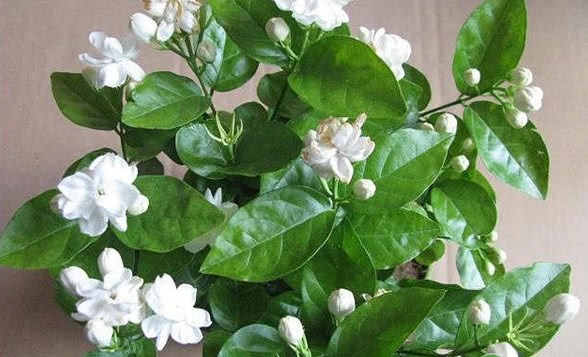
When it comes to the flowers blooming at their best right now, jasmine is certainly one of them, with emerald-green leaves and pure white blossoms; with good care it can bloom from May to November. So how do you care for jasmine? Below, see the great jasmine care tips brought to you by the editor!
1. What to do when jasmine leaves turn yellow and drop?
There are generally 3 reasons jasmine leaves turn yellow:
1. Improper watering
When watered too much, the jasmine roots do not get enough air, so the young leaves lose their gloss and gradually turn yellow and wither, while the old leaves change little; when watered too little, not enough water is absorbed, and the old leaves gradually drop from top to bottom.
Solution:How often to water depends on how dry or moist the potting soil is and on the weather. Keep the potting soil moist but not soggy, and after rain, pour off any standing water promptly to prevent root rot.
2. Improper fertilizing
When there is too much fertilizer, the jasmine's new leaves turn brown, and the old leaves gradually wither and drop; when there is too little fertilizer, the leaves do not get enough nutrients and turn yellow.
Solution:When there is too much fertilizer, repot with fresh soil in time; when there is too little fertilizer, apply a top dressing in time. Fertilize according to the principle of light, frequent applications.
3. Soil on the alkaline side
Jasmine likes a slightly acidic growing environment. If the potting soil of growers in the north is on the alkaline side, it can also cause yellow leaves and leaf drop.
Solution:To adjust the soil's acidity or alkalinity, you can dilute vinegar with water at 1000 times and pour it into the soil, or you can add water to fruit peels and fruit cores, compost them into fertilizer, and then water the flowers with it.
2. What to do when jasmine drops its flower buds?
There are generally 2 reasons jasmine drops its flower buds and flower buds:
1. Adjusting to a new environment
A newly bought jasmine needs to use a lot of nutrients to adjust to its new environment, so at this time it can only sacrifice its flower buds to save nutrients.
Solution:Pinch off all the flower buds, then prune some of the vigorous branches and leaves, then place it in a cool, ventilated spot to recover for a week before returning to normal care.
2. Insufficient light
Jasmine loves light and needs plenty of sunlight as it grows. Insufficient light causes the branches and leaves to grow leggy, and either the buds drop before the flowers open or the flowers are few and small.
Solution:First prune the leggy branches and leaves, then place the pot on a sunny south-facing balcony or windowsill for care, as long as it is not exposed to harsh direct sun.
3. What to do when jasmine roots rot?
1. Prune the rotten roots
After discovering root rot, take the jasmine out of the pot, gently shake off the soil, rinse it clean with water, then cut off the rotted roots.
2. Sterilize and disinfect
Soak the pruned roots in a potassium permanganate or carbendazim solution for 2~3 hours, then let them dry in a cool, ventilated spot.
3. Repot and transplant
Line the bottom of the prepared pot with a layer of crushed stone or coal cinders, then fill in soil and transplant. For the soil, a loose mix of leaf mold and sandy soil can be used.
4. How to care for jasmine in summer?
1. Watering
When the temperature is high, jasmine evaporates water very quickly. Water once each morning and evening to keep the potting soil moist but not waterlogged. If the air is dry, also spray water or mist frequently.
2. Light
If you want jasmine to bloom abundantly, you must make sure it gets plenty of light. As long as it is not exposed to harsh direct sun at noon, the more light it gets at other times, the better it blooms.
3. Fertilizing
Summer is the peak blooming period for jasmine. To ensure blooming, apply a top dressing of rotted cake fertilizer water or compound fertilizer once every week. Only with plenty of fertilizer and water can it bloom abundantly and large. Note that you must not fertilize when the potting soil is dry.
4. Pruning
Jasmine grows fast in summer, so prune overly dense, tangled branches in time. When pruning, keep 10~15cm at the base to encourage new shoots to sprout. After the flowers fade, promptly cut off the flowering branches to reduce nutrient consumption and ensure the next bloom.
5. Pest and disease control
1. Red spider mites
In summer, if ventilation is poor, jasmine is most prone to red spider mites. Red spider mites harm the tender leaves at the tips, causing yellow patches on the leaves, and in severe cases the leaves wither and drop.
Solution:When infection is found, first cut off the diseased leaves and clear away dead branches and fallen leaves, then spray. When spraying, pay attention to 2 points:
(1) Red spider mites have strong reproductive capacity and easily develop pesticide resistance, so you must rotate the pesticides used. Options include 25% azocyclotin wettable powder at 1000~2000 times dilution, 20% dicofol at 1000~1500 times dilution, 5% flufenoxuron emulsifiable concentrate at 500~1000 times dilution, etc.
(2) To wipe out red spider mites, it is best not to use dichlorvos or dimethoate. These two pesticides have too strong an odor, which lingers for many days, is bad for human health, and they are not specific remedies either.
2. Anthracnose
Anthracnose generally occurs on the leaves, starting as small yellow-green spots that gradually expand into grayish-white or grayish-brown round spots.
Solution:When infection is found, first remove the diseased leaves, then spray a little 70% thiophanate-methyl at 600~800 times dilution, once every 7~10 days, for 3 times in a row.
If the spots are relatively severe, spray 50% thiophanate-methyl, 75% chlorothalonil wettable powder at 800~1000 times dilution, or 50% carbendazim at 1000 times dilution.
3. Southern blight
Southern blight is the most serious disease of jasmine. It mainly occurs at the base of the stem near the ground, where white mycelium appears on the surface, the bottom gradually rots, and in severe cases the whole plant withers and dies.
Solution:In the early stage of the disease, spray a little 50% amobam at 1000 times dilution on the diseased area and the surrounding soil, once every 7~10 days, to inhibit the spread of the disease.
When the disease is severe, you must pull it out roots and all, remove the diseased plants, destroy them in a centralized way, and use 86.2% copper-based fungicide at 800~1200 times dilution, 50% amobam at 500 times dilution, or apply lime powder to drench the soil for disinfection.
The above is the complete guide to jasmine care tips. The fresh, pure white jasmine can give people a cool, ornamental feeling in summer, so if you want the flowers to bloom well, you must care for your jasmine patiently and attentively!