When this flower blooms, red blossoms cover the balcony
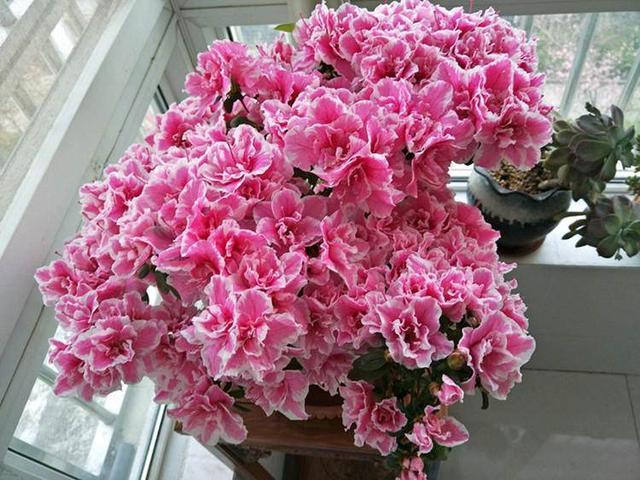
When the cuckoo bird calls endlessly, it is also the time when azaleas are in full bloom. Every azalea flower is ethereal and subtle, poetic and picturesque, so beautiful that one cannot bear to leave. Plant one pot on the balcony, and when it blooms, red flowers will spread all over the balcony, bright and eye-catching.
So, what issues do flower lovers need to pay attention to if they want to grow azaleas well?
1. Soil
Azaleas prefer fertile and well-drained sandy soil and tolerate poor soil, but must absolutely avoid alkaline soil. Generally, repot once every two years of cultivation to add new nutrient soil.
2. Temperature
Azaleas prefer a warm, slightly dry and sunny environment. The suitable growth temperature is 18~24°C from March to July, and 13~18°C from September to March of the following year. In winter, the temperature should not be lower than 10°C. In winter, they should be moved indoors, and the room temperature should be kept above 5°C. If the room temperature is kept at 15~20°C, they can continue blooming continuously. After early spring, they can be moved outdoors for care.
3. Fertilizing
Azaleas relatively like fertilizer, but require light fertilizer applied frequently. Generally, diluted organic liquid fertilizer is used, diluted and mixed with water for irrigation, once a week. From early spring until the buds show color, apply once every 10 days at a concentration of 500 times, for a total of 2-3 times, to encourage old leaves to turn green and new roots to sprout. Generally, no fertilizer is applied during the flowering period. After the flowers fade, in order to encourage branch and leaf growth, apply fertilizer 5~6 times from mid-May to early July. If it rains continuously, dry fertilizer can be applied. Stop fertilizing in winter.
4. Light
Azaleas are light-loving plants, and during the growing period they must have sufficient sunlight so that the leaves can be dark green and glossy and the flower colors can be vivid. If grown in shade for a long time, the leaves will turn yellow and fall off.
5. Water
In azalea care, avoid wetness and fear waterlogging. Do not water the potting soil too much, as excessive moisture affects growth and development. Especially for plants overwintering indoors, watering should be strictly controlled, and it is better to keep them on the dry side, otherwise they are very prone to freezing damage. For open-field cultivation, pay attention to timely drainage after summer showers to maintain a moist environment.
In autumn, as the weather gradually turns cooler, this is the adaptation period for azalea growth. To prevent autumn shoots from sprouting and to enhance cold resistance for overwintering, the amount of watering should be reduced appropriately, generally watering once every other day in the early morning, just keeping it moist. In winter, azaleas have entered the dormant period and do not need much water, generally watering once every 4~5 days, preferably around noon on sunny and warm days. The specific amount can be adjusted according to the dryness of the potting soil.
6. Pruning
For 2~4 year old azalea seedlings, in order to accelerate the formation of the framework, flower buds are often removed, and pinching is done frequently to encourage side branches to sprout. After growing into a large plant, they are generally allowed to grow naturally, and shaping is only done after flowering, mainly by pruning out leggy branches, diseased and weak branches, deformed branches and damaged branches. After pruning, apply a protective agent to the wounds so they heal quickly.