Several Practical Tips for Growing Orchids in Hot Weather
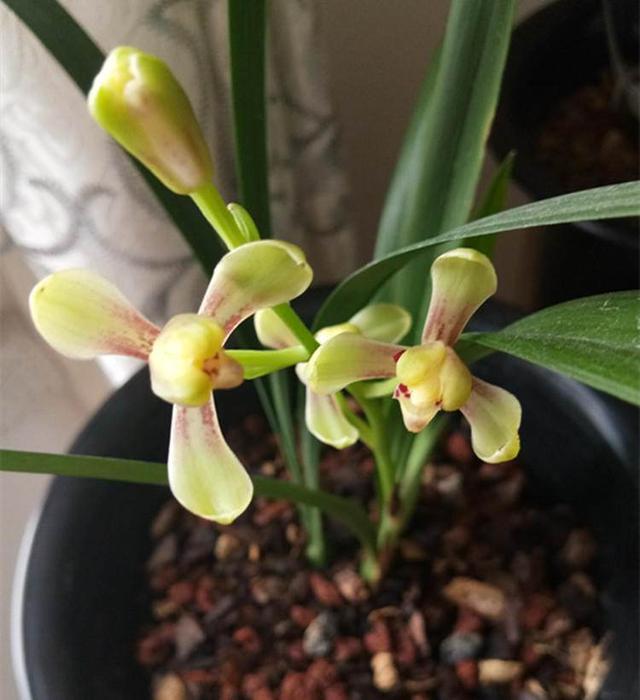
Every year in July, most cities across the country sit between 30 and 35°C, and a few areas may even see short spells of 35 to 40°C hot weather. Such temperatures generally last until the end of August, and even in early September there can be an "autumn tiger" with temperatures above 30°C. So when growing orchids in the heat, how can you make a good thing even better? You need to make good use of these few tricks.
In fact, when hobby growers grow orchids in hot weather, making good use of a few tricks to fertilize orchids properly during the hot season can make the orchids even better.
1. Fertilizing methods in the hot season
Orchids need nutrient supplementation during the hot season, and this varies with temperature, so fertilizing skillfully in this season is the key. From late June to early September each year, although it is the hot season, the temperature changes every day, cool in the morning and evening and high during the day. The hot season is also a period of frequent thunderstorms, so we can choose to fertilize in the evening or on cool rainy days, seizing every opportunity.
Because the weather in this season is highly changeable, in order to prevent unpredictable high temperatures from arriving the day after fertilizing, you must firmly remember to increase the amount of water used for dilution, for example, normally use a 500-fold solution of orchid-specific organic liquid fertilizer, but now use an 800-fold solution; normally once every 7 days, but now once every half month is enough.
2. Fertilizer selection in the hot season
There is a lot of care involved in choosing the type of fertilizer. Considering that the conversion function of orchid plants weakens in high temperatures, but their absorption function does not weaken with the arrival of high temperatures; on the contrary, with increased transpiration, absorption becomes stronger, so you can choose fertilizers that are easy to absorb directly, such as orchid-specific organic liquid fertilizer.
This kind of fertilizer is a quick-acting organic fertilizer that can begin to be absorbed and used within 1 hour of application, and the remaining organic fertilizer after 10 hours is unlikely to cause fertilizer burn. When we topdress in the evening or on a cool cloudy day, there is already enough safe time. However, note that the concentration must not be too high.
If hobby growers like to make their own organic fertilizer, since its nutrient content is hard to determine, it is not recommended for use in the hot season. Granular organic fertilizers and inorganic fertilizers are also not recommended in the hot season because their release is relatively concentrated.
3. What to fertilize in the hot season
In the hot season, the target of fertilization must be clear. Weak plants and diseased plants have poor root systems and poor conversion and absorption functions themselves, so fertilization should be done with caution. For orchids repotted that year in organic potting medium, since the medium is rich in organic components, decomposition accelerates in the hot season and releases enough to meet the orchid's nutrient needs, so there is no need to fertilize.
The main targets for fertilization are robust plants, and orchids that have not been repotted with new medium for more than a year or that are grown soilless. Skillful fertilization at this time can achieve the goal of strengthening plants by autumn, and will also play a positive role in raising strong second-generation and third-generation shoots. In addition, using summer fertilizer well on orchids of flowering age can promote the growth of flower buds.