4 common problems roses are prone to during the plum rain season and how to treat them in time
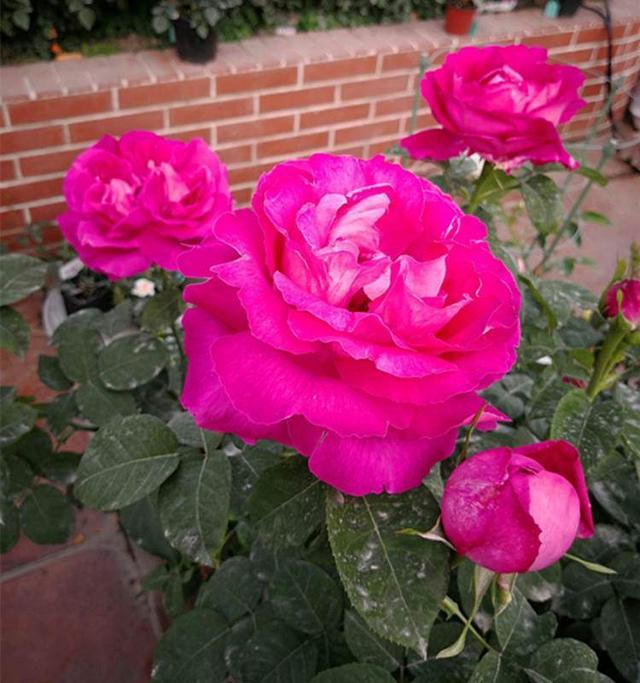
During this period, after the roses bloom, they will face the plum rain season with continuous rain and insufficient light, followed by the high-temperature, dry weather of blazing sun and the relentless lingering summer heat. So for roses, from late May to early September, there is a constantly continuing, very hard-to-endure season. During this plum rain season, there are 4 common problems that flower lovers need to treat in time.
1. Treat summer heat
During the plum rain season, flower lovers need to move rose pots under the eaves and other places where rain cannot reach, and place bricks or similar items under the bottom of the pots to prevent excessive moisture. In the midsummer season, it is necessary to prevent summer heat. To prevent the potting soil from becoming too dry, bricks can be placed in a circle around the pot or the pot can be raised to block the introduction of summer heat. When watering, the surrounding bricks can also be watered.
2. Treat watering
During the plum rain season, flower lovers easily forget to water. But still pay attention to observation: if the surface of the rose potting soil has dried out, it needs sufficient watering; if most of the rose leaves turn yellow, it means the whole plant is short of water. After entering August, with continuous high-temperature and dry weather, it is also necessary to water once in the morning and once in the evening.
3. Treat fertilizing
When fertilizing roses during the plum rain season, the spring method can be continued: apply a rose-specific organic liquid fertilizer once a week, diluted 500 times, and pour it onto the roots. In order to grow new shoots in September and produce good autumn flowers, fertilization needs to be adjusted as much as possible to topdressing in mid-August.
4. Treat pests and diseases
Black spot disease occurs frequently during the plum rain season. After infection, spots begin to appear on the leaves and spread to the whole plant, causing the leaves to turn yellow and fall off and weakening the plant's strength. At this time, flower lovers need to spray preventive chemicals and place the plants under the eaves and other places where rain cannot reach. They should also increase the distance between flower pots to ensure ventilation.
If symptoms are found, chemicals need to be used in time, for 3 consecutive days, sprayed 3 times each day. If exposed to rain, the infection will spread, so spraying should be done when there is no rain to avoid spread as much as possible. In addition, in midsummer, balcony cultivation is also prone to spider mites, which can be controlled with specialized chemicals. When spraying during the plum rain season, if insecticidal chemicals are mixed in, a large-scale outbreak in midsummer can be effectively avoided.
Image from flower lover: Zizaixiaoyao Ni