Three Major Reasons Succulents Cannot Survive Summer
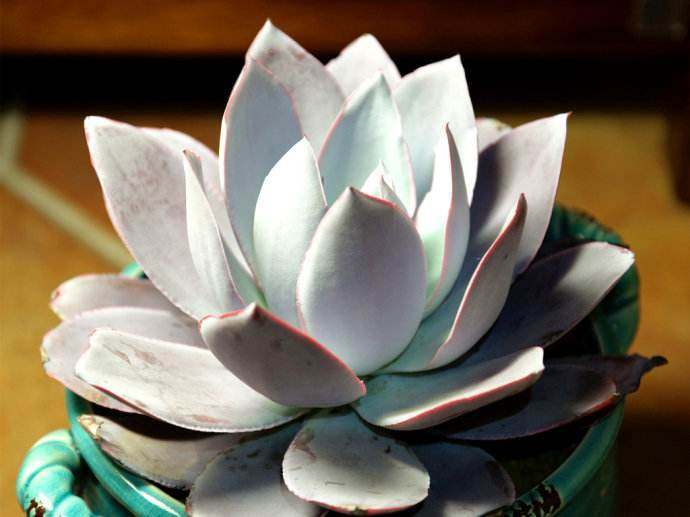
Succulents have always been deeply loved by plant enthusiasts in the Chongqing area. As for the reason, I personally think it is actually because with the construction of high-rise buildings, people have gradually begun to yearn for fresh natural scenery, but since they have no time to go outdoors often to get close to nature, they choose to keep some plants at home.
Summer has always been the nightmare of every novice succulent lover, because in this difficult season for succulents, beginners are bound to end up with empty pots. It is precisely because I once had such a painful experience that today I will share the following experiences with succulents and some wrong cultivation methods.
I. Wrong Watering Methods
1. Watering at noon when the temperature is highest (the temperature is too high, the water will quickly evaporate and form steam, and at this point the pot becomes a steam chamber, which then suffocates and damages the plant roots)
2. Watering every day (in summer, some succulent lovers think that succulents need a large amount of water in a high-temperature environment, but in fact it is just the opposite).
II. Pest and Disease Prevention
1. Fungus (if succulents are kept in a stuffy, hot and humid environment for a long time, they are prone to black rot infection. Solution: in a well-ventilated environment, regularly spray a fungicidal solution for prevention)
2. Pests (the pest most easily contracted in summer is the scale insect, and it is also very difficult to treat with chemicals, so it can only be removed manually. Therefore, before plants are infected with black rot, we must prevent it in advance.
III. Points to Note
1. Except in summer, succulents need at least 5 hours of direct light every day
2. Choose the correct watering method according to different varieties and different seasons, specifically judging by the dry and wet state of the potting soil, but if succulents are in the dormant period in summer, then water can be cut off or reduced
3. When choosing a planting medium, it is best to give priority to a granular potting soil with good drainage.
Special granular soil for succulents not only contains a variety of water-retaining granular media, but also has stable air permeability, rich nutrients and a good water-retaining effect. Of course, whether it is a newly transplanted or newly planted young succulent, or an adult plant or old-stem succulent, this granular soil can be used.
High-quality natural volcanic rock granules have excellent soil improvement ability and effects of air permeability, water retention and slow-release fertilizer retention. They can not only be used for the cultivation of adult and old-stem succulents, but can also be used as a top dressing (volcanic rock contains a variety of different mineral elements, is very hard in texture, has no worry of pulverizing in the short term, and has no problem of carrying bacteria or insect eggs).
Finally, there is one more issue to note: when choosing a pot for succulents, be sure to pick one with holes in the bottom to maintain air circulation for the succulent roots.