Climatic Factors Affecting the Growth of Dendrobium chrysotoxum and Its Cultivation Techniques
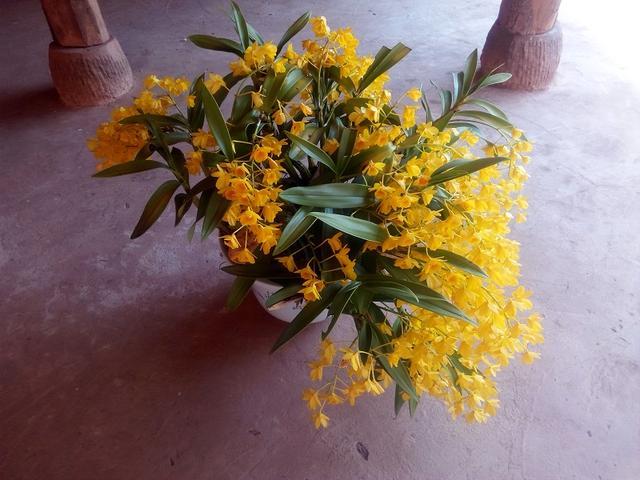
Climatic Factors Affecting the Growth of Dendrobium chrysotoxum and Its Cultivation Techniques
Yunnan Province is the best producing area for Dendrobium chrysotoxum, and temperature has the greatest influence on its quality; in low-altitude areas, erianin is more easily enriched in Dendrobium chrysotoxum. Studies have shown that under light conditions with a transmittance of 50%, the growth characteristics and phenotype of Dendrobium chrysotoxum are the most excellent, and its polysaccharide content is the highest, reaching 6.338%, but the contents of total amino acids, cysteine, arginine, asparagine, lysine, total phenols, and erianin are the highest under the condition of 10% transmittance. At the same time, when the transmittance exceeds 82%, the stem diameter and chlorophyll content of Dendrobium chrysotoxum show negative increases, which is not conducive to the growth of Dendrobium chrysotoxum. This indicates that under a weak-light environment, Dendrobium chrysotoxum can regulate the synthesis pathway of chlorophyll content in the plant body, maintain photosynthesis, and meet growth needs. Therefore, in July of that year, during the period with higher light intensity, a high-density shade net with 10% transmittance should be used, while in winter, when the light environment is weaker, a low-density shade net with 50% transmittance can fully exert the growth effect and active ingredients of Dendrobium chrysotoxum. Dendrobium is a warmth-loving plant, and the germination of new tillering stems of Dendrobium is related to temperature. Compared with wild Dendrobium chrysotoxum, under cultivated conditions, Dendrobium chrysotoxum shows more phenomena of one mother plant bearing two shoots and another reserve bud dormant for many years on some old plants germinating and sending out shoots [Jishan Huayao]. Studies have shown that under low-temperature conditions, the number of sprouts increases, but excessively low temperatures delay sprouting, causing delayed initial growth and development of new stems and poor maturation of pseudobulbs. The effects of light intensity and temperature are mutually interacting, and the growth of Dendrobium requires higher light intensity within a higher temperature range to supply the plant's growth.
Cultivation of Dendrobium chrysotoxum
Large-scale artificial cultivation of Dendrobium chrysotoxum requires research on its cultivation substrate. Choose a cultivation substrate with good aeration and good water and fertilizer retention, such as aged bark and moss, which are derived from plant decomposition, contain rich organic nutrients and mineral elements, and are loose in texture, suitable for the attachment and growth of Dendrobium chrysotoxum roots, conforming to its most primitive habitat, and can significantly promote the growth of Dendrobium chrysotoxum [Jishan Huayao]. Research by Wang Yan et al. found that Dendrobium chrysotoxum performs best in a mixed substrate of orchid stone:bark at 1:1, with a maximum photosynthetic rate of 6 μmol·m-2·s-1, while sphagnum moss is not suitable as a cultivation substrate for Dendrobium chrysotoxum because its excessively high water absorption performance keeps it constantly moist, making it easy for pathogens to invade, causing some plants to rot and die. Therefore, mixed substrate is an ideal substrate for Dendrobium cultivation. Pine bark is also often used as a cultivation substrate for tissue-cultured seedlings. Substrates composed of stones, gravel, and crushed bricks are also relatively suitable substrates for Dendrobium chrysotoxum in tropical regions, while stone beds are very suitable for the attachment and growth of Dendrobium chrysotoxum roots in hot summer areas, with large flowering amounts and high stem yield. Gao Yan et al., in a pot experiment on Dendrobium chrysotoxum, used a substrate configured with eucalyptus bark shavings:peat:composted mugwort (7:2:1) by volume for planting, and in simulated wild cultivation found that cow dung is a better fertilizer substrate.
At present, the yield of Dendrobium chrysotoxum is relatively small and cannot meet the needs of clinical use and new drug development. A suitable cultivation method is an important way to improve the quality and yield of Dendrobium chrysotoxum, and its survival rate, growth, and content of medicinal components have a certain correlation with the cultivation method. Since Dendrobium chrysotoxum began large-scale cultivation more than ten years ago, the cultivation methods have mainly consisted of two types: greenhouse ground beds, understory ground beds, elevated seedling beds, tree attachment, and flower pots, and almost all of its cultivated provenance comes from wild seedlings. Sun Yongyu et al. proposed a simple facility stone-bed cultivation technique for Dendrobium chrysotoxum. In recent years, there has also been much exploration of cultivation methods for Dendrobium chrysotoxum. In experiments on three cultivation methods of Dendrobium chrysotoxum, namely trough cultivation, living-body cultivation, and simulated wild cultivation, it was found that trough cultivation is easy to manage, living-body cultivation has limitations in the selection of host plants, and simulated wild cultivation is simple to manage but limited by the primitive habitat suitable for the growth of Dendrobium chrysotoxum. In experiments on simulated wild living trees, log three-dimensional cultivation, and pots, it was found that pot cultivation and original log cultivation are closest to facility cultivation, simpler than simulated wild cultivation, and easy to manage. In addition, Dendrobium chrysotoxum produced by log three-dimensional cultivation better meets green food standards. In the process of simulated wild planting of Dendrobium chrysotoxum, its best host plants are evergreen tree species with lush crowns, rough bark, and more grooves, and mango and longan, as common economic forest trees in the Pu'er area, have become better host plants for simulated wild planting of Dendrobium chrysotoxum.