How to Grow Lithops? Even Beginners Can Grow Refined and Cute Lithops
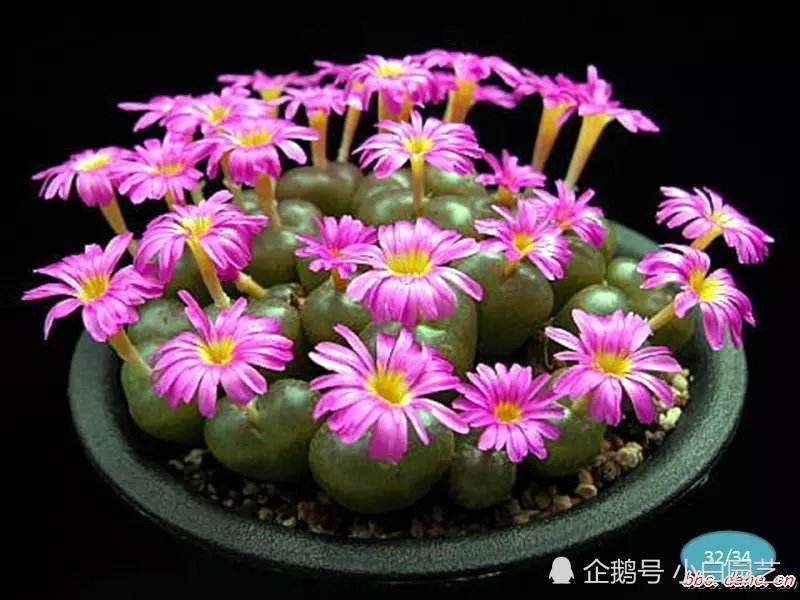
Lithops, also known as "stone jade", are described as "living stones". Because of their unique form and colorful appearance, they have become very popular ornamental plants. Today we bring you the cultivation methods for Lithops.
Lithops Cultivation Methods
1. Soil Conditions
1. Potting Soil
Lithops are not very demanding about environmental conditions, and cultivation and management are relatively easy. The potting soil can be made by mixing 4 parts leaf mold, 3 parts calcareous material (shell powder, eggshell powder, aged lime wall scrapings, etc.) and 3 parts river sand. These can all be bought on the market; just ask clearly before purchasing.
2. Container
The bottom of the container needs to have holes, and the depth is generally 5-7 cm
Besides having requirements for soil, they also have requirements for water. It is not like what is spread online - that there are no stones that died of drought, only stones that died from watering - this is unscientific.
2. Lithops' Water Requirements
During the growing season, Lithops need more water, but they must not be overwatered, as moss easily grows and overwatering will affect the normal growth of the spherical leaves. In the south, water about once every 2 or 3 days in autumn. Besides water requirements, Lithops also have relatively high sunlight requirements. Next, let's take a look together.
3. Lithops' Sunlight Requirements
1. Summer
In summer, keeping Lithops in a semi-shaded place will make the leaf color more beautiful.
2. Spring and Autumn
In the two seasons of spring and autumn, since the temperature is not very high, they should be given direct sunlight to help them accumulate nutrients.
3. Winter
In winter, keep them indoors in a place with bright light. Overall, sunlight must not be too abundant, but it also must not be too weak.
4. Temperature Control
Temperature: The optimal growing temperature for Lithops is 15°C-25°C. They fear high temperatures and stuffiness, and enter a dormant state when the summer heat exceeds 33°C. They are not suited to cold or frost; during the transition from winter to spring, the temperature needs to be kept above 10°C. They also enter a dormant state when the winter temperature drops below 7°C. If the ambient temperature approaches 4°C, they will die from frostbite.
5. Fertilizer Requirements
Fertilizing: Lithops need fertilizing once every half month, but liquid fertilizer must never stain the leaves of Lithops. Pause fertilizing after flowering in autumn.
6. Pest Prevention for Lithops
Lithops are thick and succulent with a high water content, and are very prone to rotting due to bacterial infection. Therefore, attention should be paid to good ventilation, avoiding water accumulation in the potting soil, and frequently spraying sterilizing drugs such as carbendazim and thiophanate-methyl. Spraying once a month normally can prevent this.
7. Lithops Flowers
3-4 year old Lithops bloom in autumn from the gap in the middle of the opposite leaves, with yellow, white, pink and other colored flowers. Most open in the afternoon, close in the evening, and open again the next afternoon for 3-7 days. When blooming, the flowers almost cover the entire plant. After different plants are pollinated, the flowers fade and bear fruit, from which very tiny seeds can be harvested. If you cultivate Lithops well, they will bloom beautiful flowers.
That is all for today's introduction to Lithops cultivation methods. In fact, growing Lithops is not difficult; the key is to be attentive, so friends who love flowers, be sure to treat these living stones with care.