How to choose a good bonsai? An explanation of bonsai selection methods
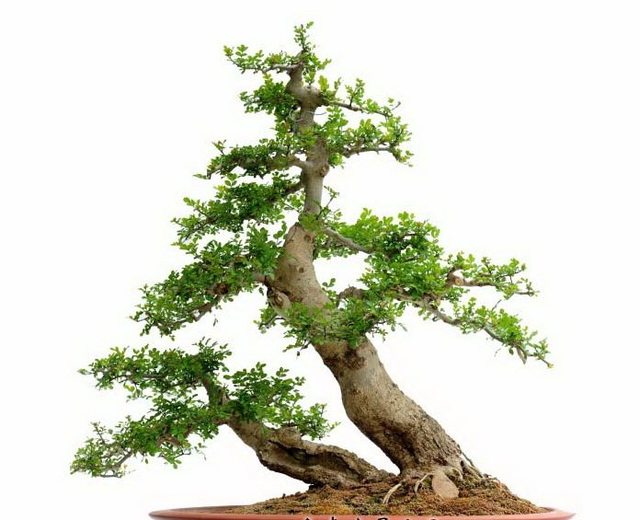
For a bonsai to qualify as a work of art, it must of course meet certain conditions. From the conventional appreciation perspective, taking natural beauty as the premise, attention should focus on the following aspects: 1. Root spread The foremost condition of a fine bonsai is the root spread. Whether the root spread is beautiful or not has a decisive influence on the artistic value and appreciation value of the work. The beautiful root spread referred to in bonsai means the roots at ground level below the trunk base, extending in all directions, sometimes curving, sometimes hidden in the soil, clinging tightly to the ground surface, so as to keep the bonsai tree from swaying in any way. What is often called the "four-sided root spread" is precisely the most beautiful root spread.
2. Trunk base Under normal growth conditions, the place where the trunk extends toward the treetop meets the root area of the tree should, except in a few cases, generally be a natural trunk base. Specifically, it is the thick trunk section of about three cun in length starting from the root spread. Trees used to make bonsai originally grew in mountain forests and beside rivers and streams, exposed to wind and rain, so their trunks will inevitably develop some curvature, especially trees growing on sheer cliffs, whose trunks sometimes curve to an extreme degree, yet the trunk base is unaffected by external forces. Generally, the trunk of a bonsai tree is upright; sometimes, to meet the needs of the tree style, when changing the curvature of the trunk base, there should be an appropriate degree, and it is best if there is no obvious sense of incongruity with nature, because the trunk base, like the root spread, is one of the indispensable important conditions for displaying the beauty of a bonsai.
3. Trunk If a bonsai is compared to a person, then the trunk is the body of the bonsai and the basic condition for shaping the tree style. In a naturally normal large tree, the closer the trunk is to the root, the thicker it is, and the closer to the treetop, the thinner it is. This naturally tapered round trunk, thick below and thin above, is the most ideal. Whether a thick and large trunk is more beautiful or a thin and slender one is more elegant varies greatly according to individual differences in appreciation. However, whether the trunk should be thick or thin should depend on the structure of the overall tree style and must be coordinated with the root spread, trunk base, branches and leaves. Regardless of the thickness of the trunk, as long as it can match and harmonize with the overall tree posture, it can naturally bring out a sense of balanced beauty. Generally speaking, the thickness of the trunk should be coordinated with the age of the tree being represented, so that the profound beauty of the bonsai can be displayed.
4. Branches Branches, like the trunk, are also one of the constituent elements of the bonsai tree style. The greatest role of branches is to provide the beauty of form of the bonsai tree, while also making up for the shortcomings of the trunk. Good branches must be appropriately thick and thin and grow normally (meaning strong tree vigor). After the trunk grows its first branch, as it grows, a second branch, third branch, and so on grow in sequence at intervals, and at the same time many small branches grow from these branches. Only when the main branches and small branches match each other and the branch nodes transition naturally can a flawless tree style be created by pruning.
5. Bark character The bark is like a person's skin. There are many kinds: coarse bark that splits and peels in vertical strips, tortoise-shell bark in a tortoise-shell pattern, and rock-like bark overlapping like rock... Looking at these barks alone, there is no beauty to speak of, but when set off against the trunk, root spread and overall tree posture, they can display a charming atmosphere of antique simplicity and rugged strength.
6. Leaf character The shape, nature and size of bonsai leaves are collectively called leaf character. Leaves are indispensable to a bonsai tree. This is because a bonsai tree often produces different impressions depending on whether the leaf character is good or not, especially for deciduous trees of the miscellaneous wood type: when spring arrives, new buds begin to emerge on the branches, then the leaves open, and by autumn the leaves gradually turn yellow and finally fall off. Many colored-leaf species change leaf color continuously. From the seasonal changes of the leaves, people can clearly experience the shift of the four seasons and feel the splendor of natural elegance. A bonsai can be called a miniature of a large tree in nature; in other words, it displays once again, within a limited pot, the beautiful old trees and famous trees of mountain forests and the wild, along with their natural charm. Therefore, the size of the trunk, the size of the leaves, and whether the tree style is neat or not all have a great deal to do with whether there is visual harmony.
Follow Love Wood Bonsai, and play with bonsai together with Love Wood
Give it a like, share it, and more bonsai knowledge will be shared with you.