Growing Kalanchoe in summer: remember these four words, new branches grow fast, and it blooms explosively in winter
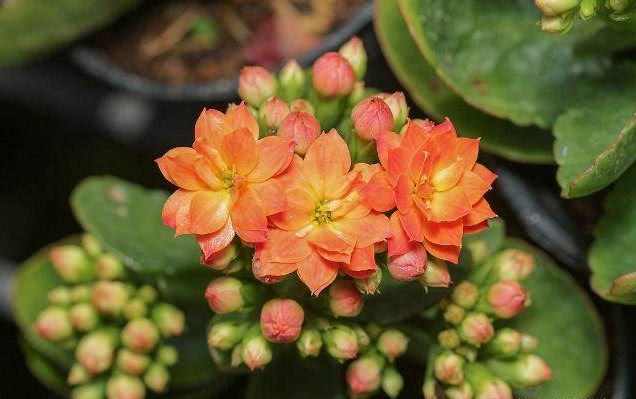
In summer, Kalanchoe enters dormancy or semi-dormancy because of the high temperatures. Do flower lovers get anxious when they see its leaves drooping and not growing? Yaoyao felt exactly the same when she first started growing Kalanchoe. Every time she saw the leaves droop, she wished she could give it all her own good food and drink, but as she kept growing them she came to understand: in summer, Kalanchoe must be grown like this:
Pruning
If you want Kalanchoe to bloom abundantly in winter, you have to be ruthless in summer! Kalanchoe can be pruned any time before July. If you still haven't pruned your Kalanchoe after this year's bloom, don't hesitate, hurry up and cut! First, cut the spent flower branches: snip right at the point two pairs of leaves below the spent flowers. Second, cut the leaves: all leaves that block airflow over the pot surface, leaves growing too densely, incomplete or damaged leaves, and leaves with dry or yellow tips, cut them all off. Third, cut the branches: all branches that are too crowded on the inner side, diseased branches and weak branches, cut them all off. After pruning, the Kalanchoe will shrink to a fraction of its size. Don't worry about cutting it badly; before long, new shoots will sprout below every cut. These new shoots are all capable of blooming in winter. The harder you cut, the more new shoots burst out, and the denser the flowers will be in winter!
Light
Don't put a pruned Kalanchoe under strong light; just place it in a semi-shaded spot or a place with bright, indirect light and good airflow. Summer light is very strong; too much sun makes Kalanchoe go completely dormant and stop growing new shoots, or dries out the new shoots, resulting in fewer flowers in winter. Put it in a cool, well-ventilated place so the new shoots sprout and grow as quickly as possible. Even if the new shoots grow slowly, as long as there are some, there is hope. Some flower lovers find their Kalanchoe doesn't grow new shoots after pruning. On one hand, the plant may have been grown for several years and become old, so new shoots sprout slowly. On the other hand, the light is too strong and has suppressed the sprouting of new shoots!
Fertilizing
One week after pruning Kalanchoe, if the temperature isn't very high (below 32 degrees), give it some appropriate nitrogen fertilizer, diluted thinly, once or twice. The new shoots will sprout abundantly and evenly, and in winter the flowers will bloom in perfect unison, making everyone envious! But note: if the temperature is too high, wait before fertilizing. When the temperature is above 35 degrees, you absolutely must not fertilize!
Watering
In summer, Kalanchoe must have controlled watering. With branches cut and leaves cut, even if new shoots can sprout, the new shoots won't use much water. Without controlled watering, the roots will rot in no time. Control watering appropriately and keep the potting soil on the drier side, nurturing the shoots and the roots. Once both roots and shoots are well cared for, as soon as the weather cools in autumn, new branches will grow vigorously, all carrying flower buds.
The biggest taboos when growing Kalanchoe in summer are: 1. Not pruning, treating everything the same and ending up with a messy pot where you can't tell leaves from branches, so once dormancy sets in, everything goes limp. 2. Watering as soon as the leaves look soft, always thinking more water means healthier, when in fact more water means a quicker death. 3. Putting it in the sun, knowing only that Kalanchoe likes light but not that it fears sun; sunbathing it in midsummer turns it yellow and even kills it. 4. Fertilizing: as soon as Kalanchoe stops growing, assuming it lacks fertilizer, then rotating through all kinds of fertilizers whether it's summer or winter, sending the Kalanchoe to its grave early.
When growing Kalanchoe in summer, remember four words: light (travel light, prune away the clutter), mild (keep care mild, avoid too much fertilizer), dry (keep the potting soil slightly dry to safely pass the summer), wind (ventilation, ventilation, and more ventilation). As long as you do these four words well, just wait for the pot to burst with flowers in winter!
?