Detailed Explanation of High-Yield Cultivation Techniques for Ehime No. 28 Tangerine Hybrid
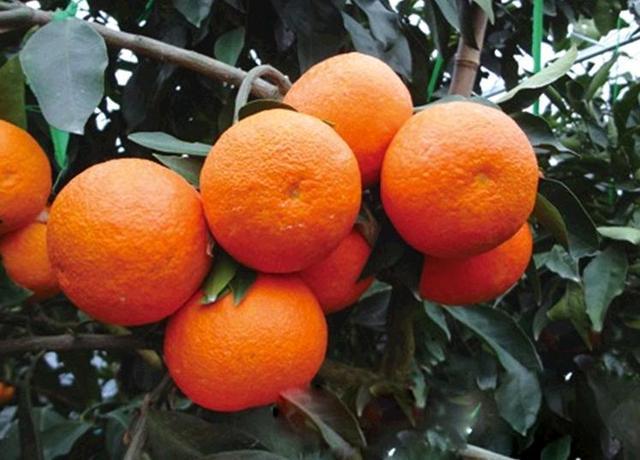
Ehime No. 28 Tangerine Hybrid and Its High-Yield Cultivation Techniques
The flesh of Ehime No. 28 tangerine hybrid has good taste, excellent quality and good commercial characteristics. Although its production input is basically the same as that of ordinary Satsuma mandarin, its selling price is about 10 times that of the latter. In recent years, its average output value per mu has been 30,000 yuan, and the average net income per mu has been 27,000 yuan, showing very considerable economic benefits.
I. Introduction to Ehime No. 28 Tangerine Hybrid
1. Main Characteristics and Traits of the Variety
Ehime No. 28 tangerine hybrid is a mid-to-late maturing hybrid citrus variety bred by the Yangxin County Xinxing Tangerine Hybrid Professional Cooperative. This variety has more flower bud differentiation, mainly fruiting on spring shoots and early autumn shoots. The fruit matures in early to mid-November, with an average single fruit weight of 160 g. The fruit is flat-topped and high-oblate, with smooth, orange-yellow skin. The flesh is orange-yellow, with thin segment walls, tender and gritless, and seedless or with only a few seeds in some fruits.
2. Rootstock
In production, trifoliate orange (also known as hardy orange) is mainly used as the rootstock, and grafting propagation is carried out in spring or autumn. For seedlings grafted in spring of the same year, they are transplanted and established from mid-February to early March of the following year, when the seedlings are 50-60 cm tall; for seedlings grafted in autumn of the same year, they are transplanted and established from mid-February to early March of the third year, when the seedlings are 80-100 cm tall. After planting, the trees begin to bear fruit in the third year and enter full fruiting period in the sixth year, with a yield per mu of 2,500-3,000 kg during the full fruiting period. They can also be propagated by top grafting for variety replacement on other citrus trees.
II. High-Yield Cultivation Techniques
1. Selection of Cultivation Base
Select plots with no pollution, sufficient sunlight, convenient transportation and irrigation and drainage, a soil layer depth of more than 1 m, a groundwater level below 1.5 m, loose and fertile soil, and slightly acidic or neutral soil as the cultivation base. When cultivating on hilly and mountainous land, choose gently sloping land with a gradient below 30°.
2. Digging Planting Holes and Applying Base Fertilizer
From late January to late February, dig planting holes with a length, width and depth of 1 m each in the cultivation site at a spacing of 3 m between plants and rows (when the soil in the cultivation site is loose and fertile, the length, width and depth of the planting holes can all be reduced to 0.8 m). When digging the holes, the surface soil and subsoil should be piled separately. After the planting holes are dug, while backfilling soil, apply 60 kg of decomposed livestock manure such as pig manure, cow manure and sheep manure per hole (or 30 kg of decomposed poultry manure such as chicken manure, duck manure and goose manure, or 3 kg of decomposed rapeseed cake, or 3 kg of decomposed peanut cake, or 3 kg of decomposed cottonseed cake, or 1.5 kg of decomposed soybean cake) + 2 kg of calcium magnesium phosphate fertilizer (or superphosphate) as base fertilizer. Apply it layer by layer evenly into the middle and lower part of the planting hole according to one layer of fertilizer, one layer of surface soil, then another layer of fertilizer, another layer of surface soil, and so on. When backfilling to 2/3 of the height, no more fertilizer is applied, that is, only subsoil is backfilled in the upper part without base fertilizer. After backfilling is completed, the soil in the planting hole will be about 15 cm higher than the original ground surface. After the soil settles, dig holes again for transplanting and establishment. On hilly and mountainous land, planting holes should be dug along contour lines. Generally, 66-74 planting holes are needed per mu of cultivation base.
3. Transplanting and Establishment
From mid-February to early March, dig out robust grafted seedlings and dig new planting holes 15-20 cm deep in the middle of the cultivation holes, planting 1 plant per hole. The planting depth should be such that the graft union of the seedling is about 5 cm above the ground surface. When grafted seedlings need long-distance transport, first soak their root systems in clean water for 2 hours, then coat them with mud slurry. When transplanting, plant them upright and straight, spread the root system as naturally as possible, and do not let it contact the base fertilizer directly. The soil filled around the roots should be fine and crumbly; after planting, gently lift the seedling by hand so that there are no gaps between the roots and soil and they are closely combined, then firm the soil with the foot; water thoroughly with settling water in time, then cover with a layer of dry fine soil. Do not apply any fertilizer before the seedlings survive.
4. Management of Young Trees
① Prevent soil drought and hardening. From planting of grafted seedlings to survival, strictly prevent soil drought and hardening. During long periods without rainfall, water in time to resist drought, and after heavy rainfall or watering, cultivate and loosen the soil in time to prevent hardening.
② Prevent waterlogging. For flat cultivation bases, dig perimeter ditches, waist ditches and bed ditches for drainage. The depths of perimeter ditches and waist ditches are 40-50 cm respectively, and the depth of bed ditches is 20-25 cm; usually keep the drainage ditches unobstructed so that after rain stops there is no waterlogging on the ground and no standing water after snow melts.
③ Weeding. Within 3 years after planting of grafted seedlings, weeding is the most important cultivation management task, and weeds must not grow more vigorously than the seedlings; at least 1 weeding should be carried out in spring, summer and autumn each year, especially thoroughly removing weeds around the seedlings.
④ Apply nitrogen fertilizer to promote seedling growth. In early to mid-June of the planting year and in early to mid-March and early to mid-June of the second and third years, while watering to resist drought, use 5-6 kg of urea per mu each time, mix with water and splash it onto the soil within 25 cm around the seedlings to promote rapid growth of the seedlings.
⑤ Training and pruning. In the planting year, after spring shoots stop growing, top the trunk and select 4 vigorous spring shoots within the upper 25 cm that are evenly distributed in the east, west, south and north directions, and cut them back to 12-15 cm as main branches to be trained, while removing all other spring shoots; after summer shoots stop growing, for summer shoots growing on each main branch, select 2-3 robust summer shoots with even orientation distribution and cut them back to 8-12 cm as first secondary main branches to be trained, while removing all other summer shoots. For early autumn shoots and mid-autumn shoots sprouting in August-September, when they grow 8-12 leaves, keep 7-10 leaves and pinch off the tips. Late autumn shoots sprouting in October and later should all be removed as early as possible to avoid consuming nutrients. Within two years after planting, if flower buds or flowers grow, remove them as early as possible. In the third year after planting, if the plant growth is weak, all flower buds or flowers should still be removed as early as possible to continue cultivating the tree body and canopy; if the plant growth is normal, it can be allowed to bear fruit normally.
⑥ Intercropping. To improve land utilization, before the rows of Ehime No. 28 tangerine hybrid close, appropriately intercrop short-statured crops such as soybean, mung bean and peanut that do not affect its growth on land outside the vertical projection of the tree canopy in the cultivation base, so as to control weed growth and increase economic income.
5. Management of Mature Trees
① Fertilization. a. Soil fertilization. In the sixth year after planting, Ehime No. 28 tangerine hybrid will enter the full fruiting period and has a relatively large fertilizer requirement. Therefore, starting from the sixth year, soil fertilization should be carried out 2 times each year thereafter. The first time is in late June, applying 30-40 kg of decomposed livestock manure such as pig manure, cow manure and sheep manure per plant (or 15-20 kg of decomposed poultry manure such as chicken manure, duck manure and goose manure, or 1.5-2 kg of decomposed rapeseed cake, or 1.5-2 kg of decomposed peanut cake, or 1.5-2 kg of decomposed cottonseed cake, or 0.75-1 kg of decomposed soybean cake) + 0.75-1 kg of ternary compound fertilizer (15-15-15). The second time is applied in late November after all fruits are harvested. The fertilizer types are the same as the first time, but the amount is 2/3 of the first time. Both fertilizations should be buried in ring-shaped ditches 30 cm wide and 20 cm deep dug along the outer side of the vertical projection of the tree canopy. In the fourth and fifth years after planting, when the yield per mu is 800-1,500 kg, the fertilization amount is 1/3-1/2 of the above amount. b. Foliar topdressing. In addition to the above two soil fertilizations each year, according to plant growth and fruit load, during the fruiting period, combined with pest and disease control, foliar topdressing can be carried out 2-3 times as appropriate with 0.3%-0.5% urea + 0.2%-0.3% potassium dihydrogen phosphate, with an interval of 7-10 days each time. In addition, when cleaning the orchard in winter, broadcast 120-150 kg of quicklime powder per mu for disinfection and to supplement calcium.
② Irrigation and drainage. During fruit expansion, Ehime No. 28 tangerine hybrid is very sensitive to water supply, and drought and water shortage will cause small fruit and sour taste. When there is a long drought without rain, or when leaves wilt in the afternoon and can recover to normal the next morning, it indicates that the soil is dry and short of water, and irrigation should be carried out in time to resist drought. Irrigation is best carried out before 10 a.m. For flat cultivation bases, drainage ditches should be kept unobstructed so that water can be drained in time during heavy rainfall.
③ Pruning. a. Pre-bud pruning in spring. The first pruning should be carried out before spring shoot sprouting each year, that is, before March 10. First, cut back and shorten upright large branches and vigorous growing branch groups on the outer part of the canopy, control plant height below 2.5 m, and promote fullness of inner branches; when pruning, the pruning amount is 1/5-1/4 of the shoot length. Second, remove overly dense branches, crossing branches and whorled branches, and promptly pinch off new shoots sprouting from cut-back sites to cultivate inner fruiting branch groups. Third, saw off dead stumps and remove dead branches and branches seriously damaged by pests and diseases; the wounds left by pruning large branches should be slanted and smooth, and disinfected with lime sulfur mixture or quicklime water to prevent pathogen invasion. The removed stumps and branches should be promptly carried out of the cultivation base, dried as firewood and burned. b. Pruning to promote shoots before autumn. This is carried out in mid-to-late July. This pruning mainly cuts back and shortens spring shoots, summer shoots and non-fruiting branches on the outer part of the canopy, generally removing 1/3-1/2 of the total length of such branches and retaining 6-8 leaves; second, remove scattered late summer shoots to promote neat sprouting of autumn shoots and cultivate more fruiting mother branches.
④ Flower and fruit retention and fruit thinning. Ehime No. 28 tangerine hybrid in the full fruiting period, like ordinary citrus, has an alternating cycle of on-years and off-years. In off-years, attention should be paid to retaining flowers and fruits, that is, when the number of fallen flowers reaches 2/3, spray the canopy once with 100-150 mg/kg Guangzengsu 802, and spray again after an interval of 5-7 days, to improve yield and quality. In on-years, fruit thinning should be carried out reasonably to avoid small fruit and poor taste, and to avoid weakening tree vigor and stress resistance. Generally, the leaf-to-fruit ratio of Ehime No. 28 tangerine hybrid is suitably 20-25:1. During the full fruiting period, each plant only needs to bear 250-300 fruits, with a yield of 40-45 kg per plant. Excess fruits should be gradually thinned from mid-July to mid-August. The targets for thinning are thin and small fruits, deformed fruits, pest- and disease-damaged fruits, overly dense fruits, and outer "upward-facing fruits."
⑤ Cold protection. Ehime No. 28 tangerine hybrid will suffer freezing injury when the temperature is below -9°C, so winter cold protection work should be done well in production. a. Timely control pests and diseases such as red spider mite and anthracnose to enhance the cold tolerance of the plants. b. In mid-to-late November when the weather is clear, use quicklime slurry + a small amount of yellow mud to whitewash the lower part of the trunk, with a whitewashing height of 60 cm. c. In mid-to-late November, use relatively loose loam or sandy loam to earth up around the tree base for cold protection, with an earthing height of 25-30 cm; the earth can be opened again in late February of the following year. d. When the nighttime temperature in winter drops below -4°C, evenly set up 6-10 places per mu with rice straw bundles, weed bundles and sawdust piles, light them and smoke them throughout the night. e. When the winter temperature drops below -9°C, a large plastic bag can be put over each canopy in advance for cold protection.
6. Pest and Disease Control
① Diseases. a. Citrus canker. In the early stage of the disease, pesticides such as agricultural streptomycin, jinhumeisu, thiodiazole-copper, copper hydroxide, copper abietate, lime sulfur mixture and Bordeaux mixture can be used alternately for spray control. b. Scab. In the early stage of the disease, pesticides such as thiophanate-methyl, Bordeaux mixture, thiophanate-methyl·diethofencarb, carbendazim·diethofencarb, copper hydroxide, mancozeb, thiodiazole-copper and copper abietate can be used alternately for spray control. c. Anthracnose. In the early stage of the disease, pesticides such as thiram·zinc, thiophanate-methyl, zineb, mancozeb, amobam and carbendazim can be used alternately for spray control. d. Sooty mold. To control this disease, first control pests such as citrus blackfly and scale insects well, and second, in the early stage of the disease, pesticides such as lime sulfur mixture, carbendazim, Bordeaux mixture and thiophanate-methyl can be used alternately for spray control.
② Insect pests. a. Red spider mite. Pesticides such as hexythiazox, propargite, abamectin, lime sulfur mixture, pyridaben, spirodiclofen, malathion and phosmet can be used alternately for spray control in time. b. Citrus blackfly. Pesticides such as chlorpyrifos, trichlorfon, imidacloprid, buprofezin, abamectin and malathion can be used alternately for spray control in time. c. Arrowhead scale. Pesticides such as methidathion, chlorpyrifos and buprofezin can be used alternately for spray control in time. d. Citrus rust mite. Pesticides such as pyridaben, propargite, sodium abietate, deltamethrin, abamectin, fenpyroximate, lufenuron and lime sulfur mixture can be used alternately for spray control in time. e. Leafminer. Pesticides such as dimehypo, carbaryl, phosmet, amitraz and fenpropathrin can be used alternately for spray control in time. f. Longhorn beetles. Pesticides such as fipronil, deltamethrin, beta-cypermethrin, fenpropathrin, trichlorfon, fenitrothion, phoxim, methidathion, chlorpyrifos and imidacloprid can be used alternately for spray control in time.
7. Harvesting
When the fruit matures in early to mid-November, choose a sunny or cloudy day after the dew has dried and use scissors to harvest in batches, taking care to handle the fruit gently; for long-distance sales, harvest can be carried out when the orange-yellow coloration of the fruit reaches 80%, and excessive squeezing and vibration should be avoided during transport.