How to dwarf and densely plant moringa trees? Standardized cultivation techniques in Meixian
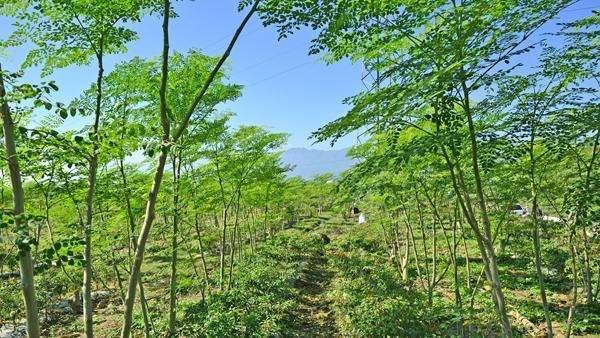
Standardized cultivation techniques for dwarfed and densely planted moringa trees in Meixian
1 Current status of planting development
Meixian District, Meizhou City, Guangdong Province, is located in the northeast of Guangdong Province, between 23°55′ and 24°48′ north latitude and 115°47′ and 116°33′ east longitude, with an average annual temperature of 21.3°C, average rainfall of 1,528.5 mm, and average annual relative humidity of 78%. It has a subtropical monsoon climate, with abundant sunshine, rich heat, ample rainfall, rain and heat in the same season, and dry and cold in the same season, but it is prone to both drought and flooding. The main disastrous weather includes: low-temperature overcast rain in spring, late spring cold; the Dragon Boat water in May to June and typhoon rain between summer and autumn; cold dew wind in autumn and frost in winter, etc.
Meizhou has good air quality and widely distributed selenium-rich soil, making it very suitable for growing moringa trees. Since 2000, the Meizhou Academy of Agricultural Sciences and Meizhou Huading Xinwei Moringa Technology Co., Ltd. have introduced and planted moringa trees, and have successively promoted planting in Chengjiang Town, Shuiche Town, Songkou Town, Baidu Town, Meijiang District and other places in Meixian District for more than 10 years, using the model of enterprise + research institution + base + farmers to promote the three planting methods of tea-style cultivation, vegetable-style cultivation, and seed-production-style cultivation to drive the broad masses of farmers to develop planting.
In recent years, Guangdong Hongji Agriculture and Forestry Biological Co., Ltd. has planted 13.33 ha of moringa trees in vegetable-style cultivation in Huzhou Village, Chengjiang Town, Meixian District, and successfully developed products such as moringa chicken, moringa noodles, moringa wine, moringa dried tofu skin, moringa seeds, and moringa tea. At present, moringa deep-processed products are still in short supply. Through more than 10 years of cultivation and planting in Meixian District, the broad masses of growers have achieved relatively good economic, ecological, and social benefits; at the same time, they have also accumulated experience in standardized cultivation techniques for dwarfed and dense planting, effectively promoting the moringa industry to develop in the direction of organization, scale, standardization, mechanization, branding, and marketization, and cultivating pollution-free, green, and organic safe food.
2 Biological characteristics of moringa trees
Moringa tree (Moringa oleifera) is a plant of the genus Moringa in the family Moringaceae, also known as the drumstick tree. The branches and leaves of the moringa tree are beautiful, and the flowers are yellow-white and fragrant, and it is usually used as an ornamental tree. It is both a perennial tropical deciduous tree and a distinctive medicinal and edible plant.
Moringa trees can live up to 20 years. Their suitable growth temperature is 25 to 35°C. With shade, they can endure high temperatures of 48°C, and they can also tolerate slight frost. Severe cold can kill the aboveground parts of moringa, but after severe cold, new buds will sprout again and grow into plants. It is a perennial fast-growing tree with a very long taproot, and the root has a pungent taste. It is easy to grow, resistant to barren soil, strongly drought-resistant, and strongly resistant to pests and diseases. It has a large growth volume, with tree height reaching 10 to 12 m and trunk diameter reaching more than 20 to 40 cm. The main trunk is upright, and it does not begin to sprout main branches until it reaches 1.5 to 2 m. The extension of the main branches has no certain pattern, and its crown is very much like an umbrella, with weak typhoon resistance. At the tips of the branches, 2 to 3 rows of pinnately compound leaves interweave and form, 20 to 70 cm long, with leaflets 1 to 2 cm long. The flowers are white or cream-yellow, fragrant, with inflorescences 10 to 25 cm long, petal width 2.5 cm, 5 sepals, 5 petals, 5 stamens, and 5 degenerated pistils. The pods have 3 valves, 20 to 60 cm long, dehiscing into 3 when dry, with each pod containing 12 to 35 seeds. The seeds are round and brown, with 3 papery white wings on them, and the fruiting period is June to December.
The roots, stems, leaves, flowers, and seeds of moringa are all edible. The leaves are eaten as vegetables, the roots are used to make soup, and the seeds can be pressed for oil. They have health-care, medicinal, and cosmetic effects. It is understood that moringa is rich in 20 amino acids, 8 of which are essential amino acids for the human body that currently cannot be artificially synthesized. It has the characteristics of "high protein, zero cholesterol" and can prevent and treat many diseases. It is regarded by the international food organization as an ideal food substitute for realizing the human dream of health and longevity. In 2012, the National Ministry of Health included the moringa tree in the "China New Resource Food" catalogue.
3 Standardized cultivation techniques for dwarfed and dense planting
3.1 Land selection
Select tropical or subtropical areas with rainfall of 250 to 3,000 mm, leeward and sunny, with convenient transportation, and with mountainous land, paddy fields, dry land, or vegetable fields on slopes below 25°, with deep soil layers, loose and fertile soil, and good drainage and irrigation, such as loam, sandy loam, red loam, or slightly alkaline soil. It is most suitable in sandy soil with a pH value of 5 to 9.
3.2 Seed selection
It is advisable to select round brown or light brown seed grains that are free from mold, free from insect damage, plump, and dry; after shelling, they are almond-shaped seeds. Generally, the seeding rate per 667 sq m is 42 to 45 g.
3.3 Seedling raising
The first is sowing and seedling raising, directly sowing seeds into the holes, sowing 2 to 3 seeds per hole, covering with soil 1.5 to 2 cm, germinating 10 to 12 d after sowing, and after emergence selecting 1 robust seedling. The second is cutting propagation. Select stems with terminal buds, or branches 4 to 15 cm thick and 100 to 150 cm long for cuttings. When cutting, 1/3 of the cutting should be buried in the hole, covered with soil, and covered with grass to retain moisture, which easily promotes root growth and gives a high survival rate.
3.4 Planting time
In the Meizhou area, planting can be done in all three seasons of spring, summer, and autumn, and planting before the buds move in spring is the best.
3.5 Dwarfing and dense planting
Different moringa planting methods are determined according to the different plant parts harvested from moringa. The number planted per 667 sq m also differs with different planting methods. For vegetable-style cultivation, the plant-row spacing is 1.5 m x 2.5 m, with about 178 plants per 667 sq m; for tea-style cultivation, the plant-row spacing is 2.5 m x 2.5 m, with about 107 plants per 667 sq m; for seed-style cultivation, the plant-row spacing is 2 m x 2.5 m, with about 133 plants per 667 sq m.
3.6 Planting method
Seedling transplanting uses nutrient cups for raising seedlings, and the young roots must be protected during transplanting. A strip-style planting method with deep furrows and high beds is adopted. Before preparing the beds, apply base fertilizer well. Dig planting holes of 50 cm x 50 cm x 50 cm, apply 20 to 30 kg of decomposed organic fertilizer and 0.2 to 0.5 kg of superphosphate or calcium magnesium phosphate fertilizer per hole and mix well with soil, backfill soil to about 10 cm above the ground, and then prepare the beds after applying the base fertilizer. Dig a hole in the center of the bed, with a depth slightly higher than the main root of the moringa seedling, place the moringa seedling in the center of the hole, straighten the seedling, cultivate soil, firm it, cover with soil 5 to 10 cm above the ground, water thoroughly after planting to set the roots, and cover with grass to retain moisture.
3.7 Field management
3.7.1 Management of young trees After moringa transplanting survives, frequently apply thin fertilizer water, keep the soil moist, often inspect for red spider mites, butterfly larvae, root rot, powdery mildew and other pests and diseases, and timely select corresponding pesticides for integrated control.
3.7.2 Management of mature trees (1) Rational fertilization: First, 1 month before harvesting pods, apply 0.3 to 0.5 g of compound fertilizer, 2 to 3 g of organic fertilizer, or 5 to 6 g of burnt soil ash in holes or trenches around the plant, and drench with decomposed dilute manure water or biogas water. Second, before spring buds move in spring, in November to December, in conjunction with clearing ditches and clearing the orchard, apply 0.5 to 0.6 g of compound fertilizer per plant to promote shoot growth and root growth.
(2) Water management: The moringa root system has a long taproot and strong drought resistance, and does not need much water. Cover the area around the tree disk with weeds to lower temperature and retain moisture. In dry seasons, irrigate appropriately. In the rainy season of May to June, pay attention to draining accumulated water to prevent root rot.
(3) Cold and freeze protection: From the Start of Winter to the Spring Equinox in Meixian District, Meizhou, Guangdong, the climate is low-temperature and overcast with rain, and because the temperature at the tree root below 5°C can freeze it to death. Therefore, the root area of the moringa tree needs to be covered with a layer of rice straw, and the stem part should be wrapped and whitewashed. After frost, spray water to thaw the frost, and prune frozen branches as well as dead branches, crossing branches, diseased and insect-damaged branches, etc.
3.7.3 Rational pruning in densely planted orchards Moringa trees grow easily and generally grow above 7 m. For those mainly harvesting fresh leaves, determine the trunk at a plant height of about 0.5 m, with 3 to 4 m height being suitable, and prune back to within 1 m each winter, leaving 2 to 3 branches to promote branching and the sprouting of fresh leaves. For those mainly harvesting seeds, determine the trunk at about 1.5 m to promote more branching and cultivate an umbrella-shaped crown.
3.8 Integrated control of pests and diseases
The main pests and diseases of moringa trees are butterfly larvae, red spider mites, leaf miners and inchworms, root rot, powdery mildew, etc. (1) Physical control. Remove by hand or prune diseased branches and leaves, clear them out of the orchard or bury them deeply, and strengthen management to promote the re-sprouting of new buds. (2) Chemical control. Butterfly larvae, leaf miners and inchworms: generally feed on tender moringa leaves and tender shoots in the morning, evening, and on cloudy days. During the new shoot stage, when the larvae are at a young instar, use pesticides, and can choose 2.5% decis 3,000 to 5,000 times, or 20% fenvalerate 3,000 to 5,000 times liquid and other commonly used insecticides for spraying. Red spider mites: gather on the back of tender leaves and suck sap. The front of the damaged leaves is initially gray-white, then gradually turns yellow, and severely damaged leaves dry up and fall off. Can choose 1.8% abamectin 2,000 times, or 5% nissorun emulsifiable concentrate 2,000 times liquid for spraying. Spray once every about 7 to 10 d, for 2 to 3 consecutive times. Root rot: root rot easily occurs when there is accumulated water or too much water at the seedling stage. Powdery mildew: mainly harms tender leaves, and can choose agents such as triadimefon and thiophanate-methyl for control.
3.9 Harvesting
Moringa shoots, leaves, fruits, etc. are all edible, and the plant parts to be harvested are selected according to the required use.
3.9.1 Mainly harvesting tender shoots Moringa trees planted in the same year can be harvested in the same year. When the plant is about 1 m tall and the main stem diameter reaches 2 m, wait until the tender shoots grow to 30 to 40 cm, then pick at 20 cm at the lignified part. That is, alternately pick 50% of the tender shoots of the whole plant, and leave the remaining 50% of tender shoots to continue growing without pruning. Or harvest all tender shoots about 30 cm or more, and prune once after every 3 harvests. After harvesting shoots, the plant must retain appropriate leaves to ensure that it can carry out normal photosynthesis for production. Under conditions of sufficient nutrition, it can generally be harvested about once every 25 d in the rainy season and about once every 40 d in the dry season.
3.9.2 Mainly harvesting leaves Harvest when the main stem diameter of the plant reaches 3 cm, the effective branch diameter reaches about 2 cm, and the leaves are dark green. When harvesting, directly pick the entire compound leaf by hand from the base of the compound leaf petiole, or combine harvesting with pruning by first cutting off 2/3 to 3/4 of the branch length with branch scissors, and then picking leaves from the cut branches. Generally, it can be harvested once every 90 d, 4 times per year.
3.9.3 Mainly harvesting fruits Each year after June, vegetable-use fruits can be harvested: to eat the tender seed kernels inside the moringa capsules, harvest should be carried out when the seed kernels inside the capsules have finished expanding. When the fruit skin is observed to be light green and the capsules are semi-lignified, harvest the fruits by hand. From September to November, harvest fruits for seed production: for mature moringa capsules, the fruit skin is yellow-brown, and they can be harvested when the fruit skin tends to dry up.
3.9.4 Fresh-keeping or drying (1) Fresh-keeping: the harvested tender shoots should be promptly sealed with cling film and stored in a low-temperature (5°C) refrigerated environment. Generally, the fresh-keeping period can reach about 5 d. (2) Drying: after harvesting tender shoots and tender leaves, avoid piling them for a long time. Leaves piled for a long time easily heat up, turn yellow, and produce a wine smell. Leaves piled too long, if blanched with hot water, turn yellow-brown, seriously affecting quality. They should be promptly spread out to cool and dry. On sunny days, the harvested leaves can be spread directly on the drying yard and will dry naturally after 3 to 4 d. If it rains, the harvested leaves should be promptly placed in a hot-air drying oven to dry, with the temperature inside the oven adjusted to 50°C; after drying for 4 to 5 d, they can be bagged and stored.
3.9.5 Storage The harvested vegetable-use capsules can be stored at room temperature for 1 to 2 d. If placed in a low-temperature (5°C) refrigerated environment, the storage period can reach 5 to 7 d. For capsules used for seed production, the fruit skin should be removed promptly after harvest, and the seeds should be naturally air-dried at room temperature and then placed in plastic mesh bags with good air permeability. The storage time should preferably be 1 year; a longer time will affect the seed germination rate.