Detailed Guide to Seedling Raising and Large Seedling Breeding Management Techniques of Taxus wallichiana var. mairei
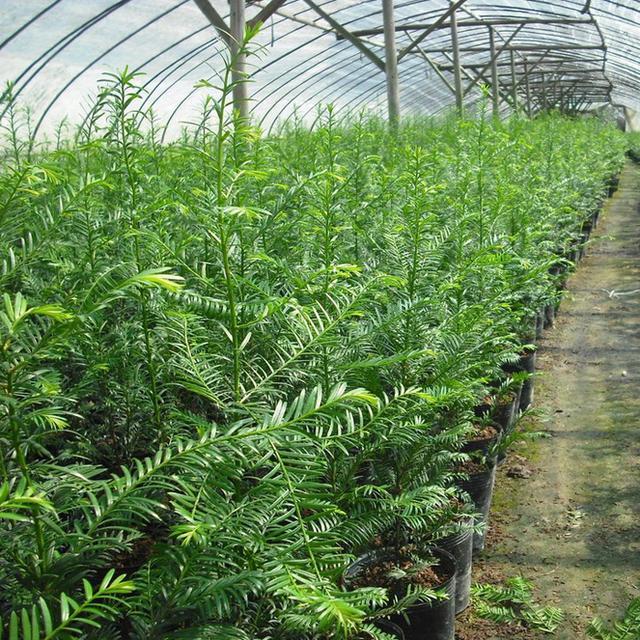
Seedling Raising and Large Seedling Breeding Management Techniques of Taxus wallichiana var. mairei
Taxus wallichiana var. mairei is a precious tree species with extremely high economic value. In recent years, it has attracted more and more attention, and its market prospects are extremely broad. Shiyan, Hubei has a subtropical monsoon climate, mainly characterized by abundant precipitation, an obvious plum rain season, uneven spatial and temporal distribution, and rain and heat occurring in the same season, which is suitable for the growth of Taxus wallichiana var. mairei. This article summarizes the techniques for seed collection, seedling raising, and large seedling transplanting management of Taxus wallichiana var. mairei, in order to provide a reference for its cultivation and management.
1 Seed Collection and Storage
1.1 Seed Collection
In the Shiyan area of Hubei, the flowering period of Taxus wallichiana var. mairei is generally between March and April, and the seeds begin to enter the maturity stage in October. By the end of October, the seeds turn dark red, and the best picking time is from the end of October to mid-November. After the seeds are picked, they must be processed strictly according to the relevant procedures, and the aril of the seeds should be rubbed off promptly. During seed selection, damaged seeds should be eliminated to ensure the growth vigor of the seedlings later.
1.2 Seed Storage
The seeds of Taxus wallichiana var. mairei have an after-ripening period. After being picked, the seeds must undergo... 5 quarters of storage before they can fully mature and reach the highest germination rate. Under normal circumstances, sowing can only be carried out in the 3rd year after picking. Therefore, the storage environment directly affects the germination rate and growth vigor of the seeds. The seeds should be stored in sand in a ventilated environment at 17 to 30°C with humidity maintained at about 60% to 75%, keeping the temperature constant. The sand should be disinfected with a 500-fold potassium permanganate solution to prevent effects on the normal development of the seeds. In addition, the seeds should also be disinfected with potassium permanganate. The sand bed is generally about 1 m wide and 1.75 m long, and the size of the sand bed can be determined according to the amount of seeds stored. Under normal circumstances, the sand can be spread in 3 layers, with the thickness of each layer controlled at about 3 to 4 cm. Place the seeds neatly on the sand bed, regularly check the development of the seeds, and water the sand in a timely manner to maintain a certain humidity. The seeds generally begin to germinate around April. Once germination is found, transplanting should be carried out promptly to avoid economic losses.
2 Nursery Seedling Raising Techniques
2.1 Selection of Seedling Raising Site and Soil Treatment
The climatic conditions of Shiyan City, Hubei Province are relatively suitable for the growth of Taxus wallichiana var. mairei. A site with sufficient light and good drainage should be selected for seedling raising, and then the soil at the site should be treated to ensure that the soil is rich in nutrients. Remove weeds and shrubs around the site, remove stones and other debris from the soil, and level the soil surface. After the soil surface is leveled, begin building beds. The bed length is 1.2 m, the width is 1 m, and the ditch depth is 0.15 m, which is conducive to fertilization management and later maintenance of the seedbed.
2.2 Selection of Sowing Time
After 1 year of storage, the surface of Taxus wallichiana var. mairei seeds will gradually crack, exposing the white seed flesh. At this time, they should be soaked again in a 500-fold potassium permanganate solution to ensure the disinfection effect. Dry them in the sun before sowing. Sowing is generally carried out in April, which is more favorable for the later growth of the seedlings. When sowing, the spacing of the seeds should be well controlled, generally with a row spacing of... 15 cm and a plant spacing of 3 cm.
2.3 Seedling Management
(1) Provide shade treatment for the nursery to ensure that the seedlings are not exposed to overly strong direct sunlight during the seedling stage. From April to August, the shading rate of the nursery should be controlled at about 70%, and after September, the shading rate should be controlled at about 50%.
(2) Attach importance to the prevention and control of seedling diseases and insect pests. Taxus wallichiana var. mairei seedlings are very susceptible to diseases and insect pests during the seedling stage, so prevention work should be emphasized. A 800-fold thiophanate solution can be sprayed once every 7 d to kill diseases, and dexon can also be used for root watering treatment.
(3) Actively weed and fertilize. In the early stage of seedling growth in the 1st year, the seedlings should be fertilized. A 0.2% urea aqueous solution can be selected for spraying, once every 3 d or so. In the middle and late stages of seedling growth, compound fertilizer can be applied by furrow application between rows.
If no major problems occur during the management stage, when the seedlings leave the nursery,... 1-year-old seedlings can reach a plant height of about 0.2 m, and the trunk diameter can reach about 0.3 cm. When the seedlings have 3 to 4 branches, they can leave the nursery for large seedling breeding.
3 Large Seedling Transplanting Management Techniques
3.1 Selection of Transplanting Soil
Taxus wallichiana var. mairei has strong survivability and prefers a relatively warm and humid climate. As far as the climatic conditions of Shiyan, Hubei are concerned, any soil is suitable for the growth of Taxus wallichiana var. mairei.
3.2 Transplanting Time and Seedling Treatment
Taxus wallichiana var. mairei is generally transplanted from February to March, and transplanting should preferably be carried out after heavy rain. In order to better select the transplanting time, Taxus wallichiana var. mairei seedlings can be selected from February, April, and June respectively for transplanting treatment. Prune according to the development of the seedlings. ABT rooting powder can be used to treat the seedlings. The concentration of rooting powder should preferably be 60-fold. Soak the root system for 2 h before transplanting.
3.3 Planting of Large Seedlings
Classify the treated Taxus wallichiana var. mairei seedlings according to height. During transplanting, pay attention to the spacing between seedlings, generally controlled at about 10 cm. Transplanting should preferably be carried out after rain, when the soil contains relatively abundant moisture, which is conducive to seedling growth. During the transplanting process, be careful not to damage the seedling roots, otherwise it will seriously affect the later growth of the seedlings and may even cause the seedlings to become diseased and die.
3.4 Seedling Stage Management
After transplanting, the seedlings should be watered in the morning and evening for the first 7 d. In the early stage after transplanting, the water demand is relatively large, and the soil should be kept moist at all times. In order to promote healthy growth of the seedlings during the seedling stage, water management can be changed to a combination of spraying water and appropriate dry watering. Under normal circumstances, spray water 2 to 3 times a day in dry weather, and spray once a day or not at all in humid weather. Fertilization begins 3 months after transplanting, mainly with superphosphate or urea. Taxus wallichiana var. mairei prefers shade during the seedling stage and should not be exposed to strong light. Especially in relatively dry seasons, a shade shed should be used for shading until it is gradually removed around... September.