Key Points of Seedling Raising, Planting and Fertilization Techniques for Erythrophleum fordii
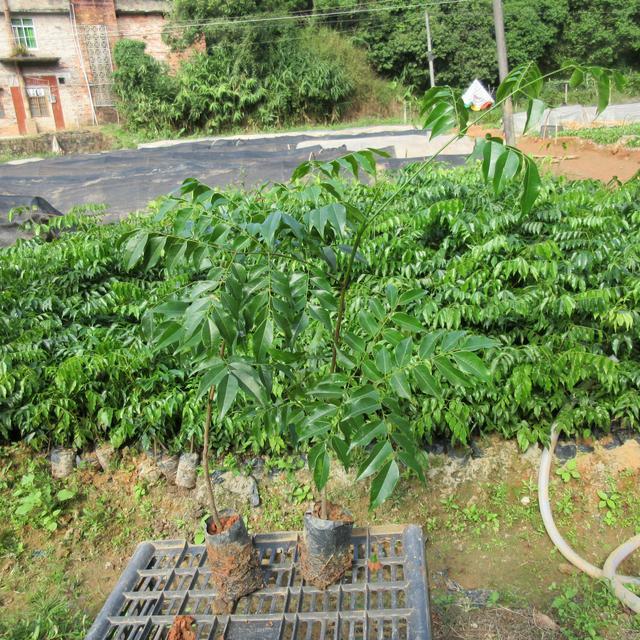
Seedling Raising, Planting and Fertilization Techniques for Erythrophleum fordii
1 Seedling Raising Management of Erythrophleum fordii
1.1 Germination Promotion Treatment
After the seedling raising and planting work of Erythrophleum fordii begins, it is necessary to ensure that the germination promotion work can meet the actual planting needs. The seeds of Erythrophleum fordii mostly come from mother trees of local mature forests. In the germination promotion management work, in order to increase the germination rate to a certain extent, hot water (90°C) should be used for soaking treatment. After placing them in hot water, ensure that the volume ratio of seeds to hot water can be maintained at 1:3. After cooling and leaving them for 24 h, the seeds have by then absorbed water and swollen fairly fully. If there are still positions that have not absorbed enough water, hot water should be used for repeated soaking until they swell. After sieving, rinse repeatedly with clean water to remove the gelatinous structure on the surface, then place them in a ventilated and shaded place for centralized germination promotion treatment. Every day, warm water at about 38°C should be used for rinsing management, and the germination rate is above 90%.
1.2 Field Seedling Raising
Before the seedling raising management project begins, a relatively flat area should be selected as the nursery, and the soil should be fertile and the drainage system should be kept in good condition. This is mainly done by means of raised-bed seedling raising. Therefore, the height of the seedbed is 25 cm, the width should be about 1 m, and the path width should be about 40 cm. During the seedling raising process, the refinement level of land preparation should be ensured, the comprehensive deep plowing treatment should be effectively completed, and the broken soil should be kept uniform. After effectively carrying out weed treatment, ensure that standardized operations can be achieved. It should be noted that the seedbed should be disinfected with a 40% formalin solution, covered with plastic film, and the film should be removed 3-4 d before sowing, and organic base fertilizer should be applied. At present, strip drilling is relatively common, with a row spacing of about 25 cm and a plant spacing of about 15 cm, inserted into the soil layer at 0.3 cm to 0.5 cm, and covered with 1 cm of soil after sowing.
1.3 Nutrient Bag Seedling Raising
The preparation of nutrient soil is a measure that has been widely used in recent years. While ensuring that its texture is loose, it should be rich in nutrients and have good permeability, and the substrate should have the ability to retain fertilizer and water. The basic constituent elements include: 55% yellow subsoil, 10% fine river sand, 33% burnt soil and 2% superphosphate, etc. It should be ensured that the particle diameter can be controlled below 0.5 cm. One seed should be sown in each bag. After covering with nutrient soil, soil should be banked up on both sides, and water should be effectively sprinkled.
1.4 Selection of Sowing Time
In order to effectively improve the effectiveness of sowing, the sowing time should be effectively selected, and while improving control measures, the effect should be optimized. The sowing season is generally winter sowing or spring sowing. The former should be sown before the beginning of December, and the latter should be sown in early March. Both should be covered with film to ensure that temperature and humidity can be effectively controlled. For example, this article uses early June as the dividing point to investigate the seedling height and ground diameter of the seedlings, compares and analyzes the seedling height and ground diameter of spring-sown seedlings, and the yield rate of winter sowing and spring sowing. The seedling height and average ground diameter of winter-sown seedlings are significantly higher than those of spring sowing, and they grow faster. The reason is mainly that winter-sown seedlings form better adaptability in a low-temperature environment, and their cold resistance is significantly improved, effectively enhancing the lignification degree of Erythrophleum fordii and making the overall resistance of the seedlings more prominent. Based on this, winter sowing is generally chosen in the planting process of Erythrophleum fordii.
1.5 Reasonable Prevention and Control of Diseases and Insect Pests
1.5.1 Disease Prevention and Control
In order to ensure the effectiveness level of Erythrophleum fordii planting, centralized treatment and prevention should be carried out against damping-off. After damping-off appears, water-soaked lesions will appear on the root and stem parts of the plant, and will rapidly expand until the entire plant dies. White mycelial structures will also appear at the necrotic positions, accompanied by an unpleasant odor. For damping-off, a drug prevention and control mechanism should be established. Before sowing, the soil should be centrally disinfected, mainly using a 40% formalin solution. During seed soaking, 2 g/L carbendazim should be used for treatment, and the soaking time should be controlled at about 30 min. At the seedling stage, carbendazim and mancozeb should also be used for treatment, or chlorothalonil should be used to spray the seedlings, with the concentration controlled at 1.33 g/L.
1.5.2 Insect Pest Prevention and Control
The relatively common insect pest is the Erythrophleum fordii shoot borer. Dimethoate solution at 1 g/L should be used for centralized spraying, with a time interval controlled at 7 d, for 30 d continuously.
2 Planting Management of Erythrophleum fordii
2.1 Planting Techniques
In the process of applying planting techniques, systematic management should be carried out on the seedlings, and standardized planting control should be effectively implemented.
(1) Seedling management. Before the seedlings leave the nursery, insect killing, sterilization and disinfection treatment should be carried out, and the grading and acceptance items should be effectively handled. Seedlings aged two years or more are preferred. Not only should the seedlings be ensured to be thick and strong, but there are also requirements for the specific seedling height, maintained between 40-70 cm, with a ground diameter of about 0.4-1.0 cm. When transporting seedlings, they should be placed neatly, and the transport time should be timely and shortened as much as possible. When transporting light-substrate seedlings, excessive squeezing should be avoided. When the seedlings are transported to the afforestation site, they should be stacked and protected along the seedbed, the nutrient cups should be thoroughly watered, and the leaf surfaces of the seedlings should be rinsed clean.
(2) Systematic planning and treatment should be carried out for forest area access roads. Before afforestation in forest land, a comprehensive analysis of the road conditions should be carried out, and roads should be opened as much as possible in the middle and lower parts of hillsides, adhering to the principle of sustainable utilization. Among the specific management parameters, the actual width of the roadbed should be greater than 3 m, and the maximum longitudinal slope should be below 13%. If sections with many landslides are encountered, it should be ensured that the roadbed side slope can be set at a ratio of 1:1. If the longitudinal slope is relatively large and the slope length is relatively long, drainage ditches should be effectively set up, and culverts should be centrally buried for drainage.
(3) Before the project begins, the mountain should be cleared and the land should be burned, logging residues should be removed, and after reporting to the relevant departments for acceptance and passing, the land should be burned according to relevant fire use regulations, and garbage should be handled reasonably.
(4) The project management department should systematically guide and constrain the specific pit digging and point layout work on site to ensure that the pit digging density meets the standard. The afforestation density is 111 plants/mu, with a plant-row spacing of 2 m x 3 m. For the specifications of the pits, it should be ensured that the depth is maintained at 35 cm, and the bottom width is 30 cm x 30 cm.
(5) Planting operation. This is very critical for the seedling raising and planting management of Erythrophleum fordii. Place the seedling toward the uphill direction, with the planting hole about 15 cm deep, tear off the plastic film bag, place the seedling cup in the hole and hold it upright, take soil from above to cover the cup surface by 3-5 cm, so that the roots are spread and the seedling is upright, and finally cover with soil and compact it.
2.2 Tending Measures
First, strip reclamation or hole expansion treatment should be carried out. Differentiated management should be established for different situations. On the one hand, for slopes below 30°, strip reclamation between rows should be completed about 1 month after planting, turning over the grass heads without breaking up the soil.
On the other hand, for forest land with slopes above 30°, hole expansion work should be completed 1 month after planting, with the plant as the center, an expansion radius of 60 cm, and a depth of 15 cm.
Second, weeding work in young and middle-aged forests. The weeding and tending each year should all be completed before the end of October, and the time of each weeding operation should be determined in combination with the actual situation of the forest land. (1) For the shovel-weeding technique in strips between plant rows, it should be ensured that the actual weeding range has a strip width of 80 cm, of which 40 cm is above the plant row and 40 cm is below it, and it should be ensured that weeds, shrubs and vines within the strip can all be effectively removed, and the digging out of grass heads should also meet actual needs. At the same time, planting personnel should carry out soil banking operations for the young Erythrophleum fordii trees. (2) For the grass cutting treatment process outside the Erythrophleum fordii strip, weeds, shrubs and vines on the forest land should be centrally treated, with stumps within 20 cm. (3) For the shrub cutting and tending technique, relevant planting personnel should centrally clean up weeds, shrubs and vines on the forest land, and ensure that the cut debris will not affect the seedling plants.
Finally, herbicides should be used. While spraying comprehensively, it should be ensured that the spraying distance at the edge of the forest land can be controlled at a position 2 m away from the seedlings.
3 Fertilization Management of Erythrophleum fordii
In the process of actual planting work, it is necessary to ensure that the fertilization work can meet actual requirements.
(1) At the initial stage of planting, it should be ensured that the base fertilizer return-to-pit management meets the standard. Planting personnel should evenly scatter the base fertilizer into the pits. After mixing evenly, ensure that all topsoil within a radius of 70 cm above the pit can be effectively broken up and returned to the pit. The actual amount of base fertilizer should be maintained at 250 g per pit.
(2) Follow-up fertilization for young and middle-aged forests should be carried out according to planting requirements, and it can be completed before the end of June each year. Fertilizer should be measured with a measuring vessel to ensure, to a certain extent, that the fertilizer is uniform and sufficient. The whole process should be monitored on site until the fertilization operation ends, ensuring that the fertilizer is applied in place. It is worth mentioning that in the 2nd and 3rd years of Erythrophleum fordii planting, one follow-up fertilization treatment should be carried out, applying 250 g of compound fertilizer per plant. In addition, fertilization ditches should be set up, with a depth of about 15 cm, a length of about 25 cm, and a bottom width of about 10 cm, and soil should be covered immediately after fertilization.
(3) In autumn, the application of nitrogen fertilizer should be stopped, and only an appropriate amount of potassium fertilizer should be given, which can effectively improve the lignification degree of the seedlings.