Repotting wild orchids: summer and spring methods are different, and if you don't understand this, it's very hard to keep them alive
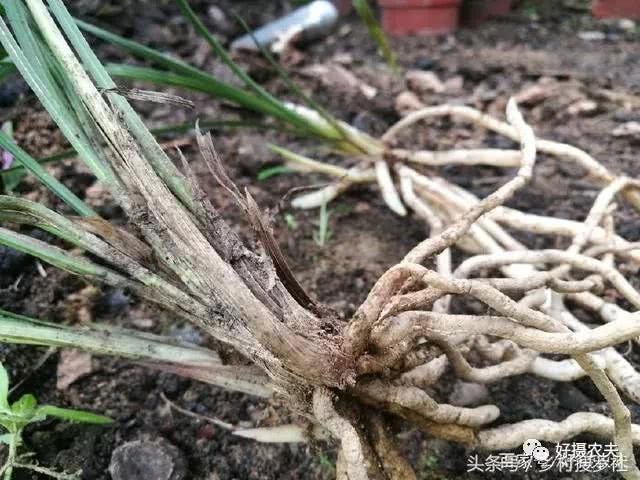
Haoshe Nongfu has made videos before specifically explaining that wild orchids need root trimming when repotting, and has also shown everyone through videos that the more aggressively you trim, the better the new roots grow. But everything has a prerequisite, and that is the importance of the season. Yesterday a netizen asked me whether a newly transplanted down-the-mountain orchid also needs aggressive root trimming. You can take a look at why wild orchids need root trimming when repotting
Haoshe Nongfu did not expect that orchid enthusiasts would still be digging up wild orchids in this season, so this point was not mentioned in previous articles and videos, which was my oversight. If we have been up the mountain and looked for wild orchids, we surely know that wild orchids in this season all have new shoots and also many new roots (crystal tips). The picture above shows the condition of wild orchid roots and shoots in summer.
Generally, the peak season for wild orchids coming down the mountain is December to April. During this period, the orchid root system is in dormancy, and when repotting we can trim off all old, weak, rotted and hollow roots, which will not affect its normal sprouting. On the contrary, after removing these poor roots, the orchid's new roots will grow better and stronger. But if we do this now, I think there will be several problems.
First, aggressively trimming the roots now will mean that for a short time they cannot provide water and nutrients to the orchid seedlings. Summer temperatures are too high, and the water needed for transpiration from the orchid leaves cannot keep up, which will cause dehydration.
Furthermore, June is precisely the high-temperature, high-humidity plum rain season. If the orchid plant's roots have too many wounds, they are more likely to be infected by fungi, bacteria and viruses in the potting soil, and this is also not conducive to the normal growth of the orchid plant.
To the orchid enthusiast who asked yesterday, Haoshe Nongfu answered like this. In this season, it is best not to transplant wild orchids. Without a very good environment and experience, it is difficult to keep them alive. If you are already prepared to repot, try not to trim the roots, unless there are truly rotted roots that need to be cut off. Any root that might transport nutrients and water should not be trimmed off. Moreover, after repotting, it must be kept in shade for more than ten days, and only after the orchid seedlings have initially adapted should normal care be resumed.
Netizens, what do you think? You are welcome to leave your valuable opinions and suggestions.