Detailed Explanation of Key Cultivation Techniques for Baby Bok Choy in Greenhouses
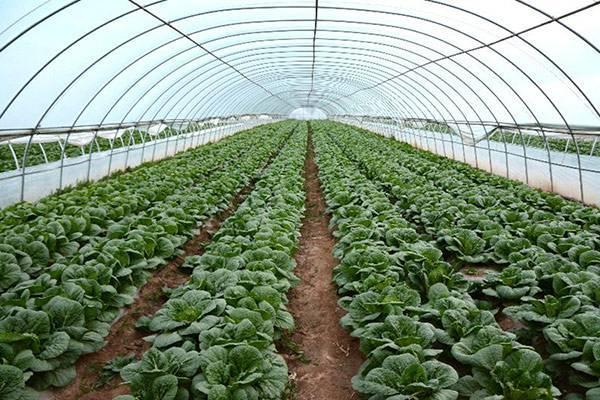
Key Techniques for Cultivating Baby Bok Choy in Greenhouses
With the rapid development of our country's economy, people's living standards have been continuously improving. Consumers' requirements for the quality of vegetable products have correspondingly increased. Because baby bok choy is crisp and tender in quality, with thin and sweet stalks, delicious flavor, and a high edible ratio. It has now become one of the main vegetables favored by consumers. It has naturally become a main crop vegetable for many growers.
1 Variety Selection
Suitable cultivation varieties should be selected according to the different planting seasons. For spring sowing, varieties with better cold tolerance and bolting resistance should be selected, such as Gaoli Yu Baby Bok Choy, Mini Star, etc.; for summer sowing, disease-resistant varieties with better heat tolerance and early heading should be selected, such as Libeibei, Heat-Resistant 55. Autumn planting has less strict requirements for varieties. Regardless of the season of cultivation, attention should be paid to varieties with fast heading, uniform growth, uniform thickness from top to bottom, excellent quality, good flavor, and strong disease resistance. In addition, varieties should also be suitable for the local market demand.
2 Temperature Requirements
Because baby bok choy is a variety of Chinese cabbage, it is a semi-cold-tolerant vegetable plant. The suitable temperature for growth is 5 °C to 25 °C, the suitable temperature for seed germination is 25 °C, the suitable temperature for leaf and head growth is 15 °C to 20 °C, growth is slow at 10 °C, and below 5 °C it is prone to freezing damage, with loose heads or inability to form heads; above 25 °C it is prone to viral diseases.
3 Fertilization
Because baby bok choy plants are relatively small, have small root systems, and have a short growth period, sufficient base fertilizer should be applied during cultivation, and 10 to 15 kg of compound fertilizer per mu should be applied as base fertilizer. For calcium-deficient or alkaline soil, 15 kg of superphosphate can be added to facilitate the plant's absorption of calcium. Topdressing throughout the entire growth period of baby bok choy should be combined with irrigation. During the seedling stage, generally a small amount of quick-acting nitrogen fertilizer is applied as a seedling-promoting fertilizer. When plant growth enters the continuous cropping period, more fertilizer supply is needed during this period. Urea and potassium sulfate can be applied at 10 kg each per mu, or 20 kg of ternary compound fertilizer, for a total of 1 to 2 applications. At the same time, 0.2% potassium dihydrogen phosphate should be sprayed on the leaves 2 times. In the late heading stage, topdressing can be carried out according to the plant growth condition.
4 Watering
Generally no watering is done during the seedling stage. If there is drought, small amounts of water can be applied frequently to keep the soil moist. In the early rosette stage, water should be properly controlled to promote seedling hardening. After seedling hardening is completed, irrigation should be carried out promptly to prevent drought from affecting the plant's growth and water demand. The continuous cropping period is the peak period of plant water demand, but flood irrigation should not be used. Small amounts of water should be applied frequently, so that no water is visible on the ridge surface while the root system is not short of water, avoiding excessive vegetative growth of plants, which can lead to excessively high air humidity and breed diseases. Stop watering one week before harvest.
5 Pest and Disease Control
5.1 Diseases. Although the growth period of baby bok choy is short, improper management can easily lead to diseases. Common diseases include anthracnose, downy mildew, and soft rot. Anthracnose and downy mildew can be controlled with zineb and carbendazim-thiram wettable powder; soft rot can be controlled with agricultural streptomycin and metalaxyl-mancozeb. The dosage and concentration of chemicals should be used according to the instructions, sprayed once every 7 d, for 2 to 3 consecutive sprays.
5.2 Insect pests. Damage by diamondback moth is relatively severe, especially for spring-sown crops. Attention should be paid to applying chemicals for control at the beginning of the peak period of young larvae. Chemicals that can be used include 1.8% abamectin emulsifiable concentrate at 2,500 to 3,000 times, and 5% pyrethrin emulsifiable concentrate at 1,000 to 1,500 times; for aphids, use 350 g/mu of aphid-whitefly net smoke agent for fumigation, or alternately spray 20% cypermethrin emulsifiable concentrate at 2,000 to 3,000 times solution and 10% imidacloprid wettable powder at 1,000 to 2,000 times solution for control.