Detailed Explanation of Plant Selection and Construction Techniques for Landscape Flower Borders
Plant Selection and Construction Techniques for Landscape Flower Borders
1 Analysis of the Characteristics and Types of Landscape Flower Borders
Flower borders are mainly a form of flower application that simulates the growth state of plants in nature. Through artistic expression, they bring distinctive features to landscape plant design. In the process of construction, flower borders usually use perennial flowers as the main material and combine them with annual and biennial flowers, flowering shrubs and bulbous flowers, showing the combined beauty of plants while enriching the landscape color of garden flowers and bringing visual enjoyment.
Landscape flower borders are rich in types, and their flowering periods are staggered, so they can present different scenes throughout the four seasons. Flower borders also have their own advantages and characteristics, namely that their maintenance and management are simple and they save the cost of seasonal flower replacement. They can not only increase the color of the landscape but also play a role in dividing space.
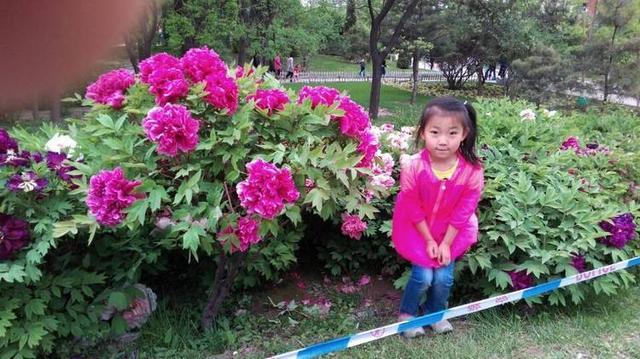
Generally speaking, landscape flower borders are mainly divided into three categories: 1 special-category plant flower borders composed of plants of the same genus but different species or the same species but different cultivars, such as chrysanthemum flower borders and peony flower borders; 2 flower borders composed mainly of cold-tolerant perennial flowers and configured with a small number of bulbous flowers or shrubs; 3 flower borders composed of perennial flowers that overwinter in the open ground, such as balloon flower and blanket flower. There are many types of flower borders. Among them, in landscape configuration, designers more often use mixed flower borders. This type of flower border can present seasonal changes and has diversity, better meeting the aesthetic needs of different people. In addition, classified according to location and design intent, flower borders can also be divided into roof flower borders, forest-edge flower borders, courtyard flower borders, etc.; classified according to season, they can be divided into summer and spring flower borders, autumn and winter flower borders, etc.; classified from different viewing angles, flower borders can also be divided into double-sided flower borders, single-sided flower borders, etc. In practical application, designers need to choose the best form of landscape flower border according to the specific requirements of garden construction and people's aesthetic needs.
2 Plant Selection for Landscape Flower Borders
There are many types of landscape flower borders, and in the process of plant selection it is necessary to adhere to certain principles and adopt appropriate methods, so that the role of landscape flower borders can be better brought into play. Usually, most plants in landscape flower borders are groundcover plants. How to select them scientifically so as to ensure the aesthetic effect of the flower border while also meeting the needs of garden construction is a issue that designers need to consider as a priority. The following text analyzes the issue of plant selection for landscape flower borders.
(1) Adhere to the biological characteristics of plants and make scientific selections based on actual conditions. When selecting plants for landscape flower borders, it is essential to proceed from actual conditions and ensure that plants in the garden environment can grow under suitable conditions. For this reason, the selection of flower border plants must adapt to the climatic conditions of the region. Plant growth and distribution are closely related to climate, thus forming the zonal distribution characteristics of plants. Under such circumstances, when selecting plants for landscape flower borders, it is necessary to follow the growth laws of plants and make selections according to the biological and ecological characteristics of plants, so that the plants can grow better. The climatic differences between northern and southern China are relatively large, especially in winter. When selecting flower border plants, climatic conditions must be taken into account. In order to ensure the healthy growth of flower border plants, native plants can generally be selected. If fresh elements are to be incorporated, the tolerance limits of exotic species must be considered when selecting them; otherwise, the phenomenon of southern oranges becoming northern trifoliate oranges will occur.
Soil is also an indispensable element in plant growth, and soil conditions also need to be considered when selecting flower border plants. Soil can provide the necessary nutrients for plant growth and is the foundation on which plants depend for survival. Therefore, when constructing landscape flower borders, the soil composition of the garden area should be studied, and plants suitable for this type of soil should be selected. In addition, when selecting plants for landscape flower borders, it is also necessary to ensure the ornamental value and ecological character of the plants.
(2) Select the best plants based on the type of flower border. Different types of flower borders require different selected plant species, so when selecting flower border plants, the type of flower border should be taken as the basis. The following text analyzes this in combination with specific flower border types.
For example, for bulbous flower borders, when selecting flower species, tulips, lilies, canna lilies and narcissus are usually used; for perennial flower borders, when selecting flower species, blanket flower, showy stonecrop, Chinese peony, iris and bleeding heart are usually included. The flowers and leaves of these flowers have relatively high ornamental value, and their flowering periods and green periods are relatively long. Therefore, they are relatively commonly used in plant selection for landscape flower borders and have good ornamental value; for shrub flower borders, when selecting plant species, Chinese rose, tree peony, Amur honeysuckle, crape myrtle and photinia are usually selected, generally mainly small shrub groundcover plants for flower viewing, foliage viewing or fruit viewing; for special-category flower borders, when selecting plants, the plants are required to have relatively rich flower colors and flowering periods and diverse plant forms, so as to better display the colors of the flower border, such as chrysanthemum flower borders and peony flower borders; mixed flower borders are created from annual and biennial flowers, bulbous flowers and flowering shrubs, etc., and mixed arrangement is their main characteristic.
3 Construction Techniques for Landscape Flower Borders
When designing and constructing landscape flower borders, the main aim is to simulate the growth state of flowers in nature. Therefore, in order to achieve good results, modern technical means must be adopted to improve the quality of flower border construction, better highlight the characteristics of the flower border and display its natural beauty. Specifically, the application of technology in flower border construction is mainly manifested in the following aspects:
(1) Adhere to correct principles of flower border design. In the process of constructing flower borders, the principles of ornamental value and ecology must be adhered to, and the technical measures adopted must be able to realize these two characteristics of flower borders. That is, in actual construction, reasonable combinations should be made according to the living habits of plants, so that the flowering and fruiting periods of plants can be perfectly presented, highlighting the characteristics of seasonal changes. At the same time, when constructing flower borders, a sense of layering also needs to be highlighted. When configuring flower border plants, a sense of three-dimensionality and spatiality needs to be highlighted, which requires the combination of shrubs or small trees with low perennial flowers to achieve a well-arranged effect and present people with visual effects at different levels. When constructing flower borders, local characteristics also need to be highlighted, which requires that native plants can be selected when configuring plants, integrated with regional culture and matched with other auxiliary colors to give people visual enjoyment.
(2) Appropriate technical measures should be selected during the process of flower border construction. Specifically, the following work needs to be done well.
Conduct on-site surveys and scientifically select flower border plants based on actual conditions. Before carrying out flower border design, relevant personnel need to do a good job of on-site survey work, understand the environmental characteristics, climatic conditions and soil conditions of the construction area, and select the most appropriate flower border plants according to these conditions. At the same time, when selecting plants, they should be integrated with the surrounding landscape, and appropriate plant materials should be selected. After all preparatory work is completed, scheme design should then be carried out.
Do a good job of on-site setting out. After surveying the site, flower border designers should carry out on-site setting out according to the design scheme, and should properly prepare the planting bed and slope and apply base fertilizer well. When necessary, the soil in the planting bed can be improved to better meet the growth needs of flower border plants.
When planting flower border plants, it is necessary to grasp the configuration proportion of various plants. It should not be too complicated, and the key points should be highlighted with a clear theme. For adjacent plants, it is best to choose types with obvious differences and contrasts, so that strong contrast can be formed and a mutually enhancing effect can be achieved.
Flower borders mainly simulate natural plant communities. Therefore, in the process of constructing flower borders, natural characteristics must be highlighted, so when configuring flower border plants, they should be interspersed to highlight harmonious and natural characteristics. For example, when constructing a mixed flower border at the forest edge, the middle and upper layer plants close to the woods can be ornamental flowering shrubs and relatively slow-growing small trees, while the foreground can choose low annual and biennial flowers. In the middle position of the entire flower border, taller ornamental grasses or bulbous flowers can be configured. Through such a configuration method, the obvious boundaries among various plants can be broken through, presenting people with a well-arranged natural scene.
After the construction of the flower border is completed, in order to better highlight its effect, maintenance work needs to be done well. In particular, flowering shrubs and bulbous flowers need to be maintained. Regular pruning, fertilization and irrigation are required to maintain good plant appearance and transport nutrients for their growth. Weed control also needs to be done well.
Landscape flower border construction is currently widely used in landscape configuration. With the progress of flower border construction techniques, its effects have become more prominent, and flower border construction is also developing in a personalized direction, with outstanding local characteristics and the ability to present a certain aesthetic value.