Detailed Explanation of Key Points for High-Yield Cultivation Techniques of Chaenomeles in Yilong County
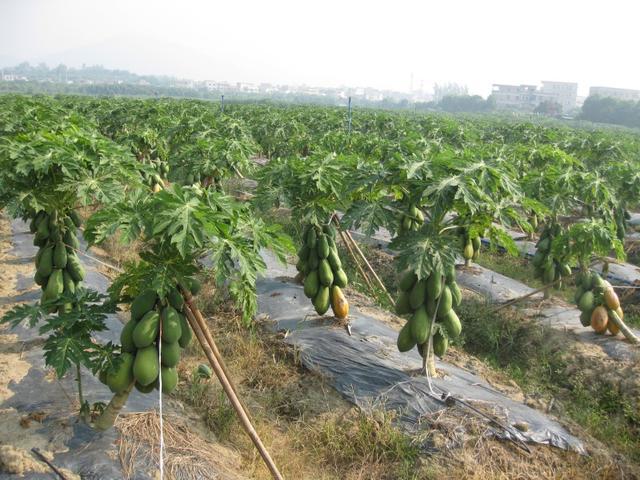
High-Yield Cultivation Techniques of Chaenomeles in Yilong County
1 Site Selection and Planting
Chaenomeles has strong adaptability and does not require very good soil and water conditions, so when selecting a site, high demands are often not made. However, if the purpose is commercial operation and sufficient economic returns are desired, then when selecting a site, factors such as deep soil layers and soil fertility levels of the location must be considered.
When establishing the orchard, a thorough understanding of the local actual conditions is necessary, and then suitable varieties should be selected. Although Chaenomeles is relatively suitable for self-pollination, the fruit-setting rate of various varieties after pollination is not high. Therefore, to enhance economic returns, pollinator trees must be planted at the appropriate time during production. Usually, the ratio between the main cultivar and the pollinator variety is 4:1. For ease of management, it is best to have pollinator trees in separate rows. The Chaenomeles tree is not tall, and the planting density on hillside land can be 3m x 4m.
2 Soil and Fertilizer Management
2.1 Soil Management
If the Chaenomeles orchard adopts intensive management, deep soil plowing and improvement is usually carried out. Before autumn arrives, base fertilizer should be applied, and at a position about 1.2m from the tree, a large hole with a length in the range of 80-120cm and a depth in the range of 40-60m should be dug, then organic fertilizer, weeds, etc. should be used, mixed together in a ratio of 2:1:2, then all incorporated into the ground, and sufficient soil placed over the surface. By the second year, another large hole with a range of 80-120cm and a depth in the range of 40-60m should be dug around the inner rows of trees, and weeds placed inside. After 3-4a, the deep plowing should be expanded outward.
2.2 Fertilization
Autumn is the main season for applying base fertilizer. In winter, grass mulching can also be done during the young tree stage. The main reason for applying base fertilizer in autumn is to ensure that the soil temperature can reach the ideal requirement, so that the fine roots in the plow layer are not damaged by freezing, and it can also prevent winter drought and twig shriveling. In a year, topdressing should be done at most 4 times. The first is pre-flowering fertilizer, and appropriate watering should be carried out, and in terms of fertilizer selection, it is best to apply quick-acting nitrogen fertilizer, with the topdressing amount kept in the range of 100-200g; the second topdressing is called fruit enlargement fertilizer, and in terms of fertilizer selection, it is best to use a ternary compound fertilizer, with the topdressing amount kept at 250g, and if conditions are sufficient, it is best to apply a 0.3% urea solution on the leaf surface.
3 Pest and Disease Control
3.1 Flower Rot
Flower rot is a disease caused by the infection of petals by the camellia flower rot fungus. It can cause damage to leaves and young fruit. If leaves are infected by the pathogen, then flower rot will develop within 2-3d. The edge of the leaf has small spots, which after slowly spreading form a radial pattern and move along the leaf veins toward the petiole, then reach the base of the diseased leaf, and finally cause the petiole to rot. Symptoms of flower rot include: the disease occurs as soon as the flower buds appear, and the diseased flowers are mainly yellow-brown and slowly wither; when leaf rot gradually approaches the base of the petiole, the mycelium moves toward the flower stalk, causing the flower and flower stalk to rot. If the infected young fruit reaches the size of a peanut grain, then brown lesions appear on the fruit surface, and at this point the young fruit will rot. Control measures: when the disease occurs, remove diseased leaves, diseased flowers, etc. In summer and autumn, all fallen leaves should be burned, and in winter pruning should be carried out, and all diseased branches should be cleaned up. Before sprouting, 5° lime sulfur mixture should be sprayed, and lime sulfur mixture should also be sprayed after leaf expansion and at the flower bud stage, with the usage amount kept in the range of 0.4-0.5.
3.2 Brown Spot
Brown spot is mainly a fungal disease caused by Rhizoctonia solani. Brown spots first appear in the leaves. If the damage is severe, then many lesions will merge together, ultimately forming large spots. Control measures: in winter, completely remove fallen leaves from the orchard. If disease occurs on the leaf surface, then spray 70% carbendazim wettable powder 800-fold solution.
3.3 Large Bagworm
The large bagworm is a polyphagous pest. If it reaches a certain number, it will cause damage to young fruit. Control measures: remove overwintering cocoons. For larvae still in the incubation stage, spray 50% dichlorvos emulsifiable concentrate 800-fold on the leaf surface. For larvae in the occurrence stage, spray BT biological insecticide on the leaf surface.
3.4 Copper Green Chafer Beetle
Larvae in the occurrence stage mainly cause damage to petals and flower buds. The main control measures include: using phototaxis to capture adults in the occurrence stage, and for adults in the occurrence stage, spray 50% omethoate 1500-fold solution on the leaf surface.