Asparagus Fern Bonsai Care Guide: Grow This Bacteria-Buster Even More Vigorously
Care Guide for the Bacteria "Buster" Asparagus Fern Bonsai
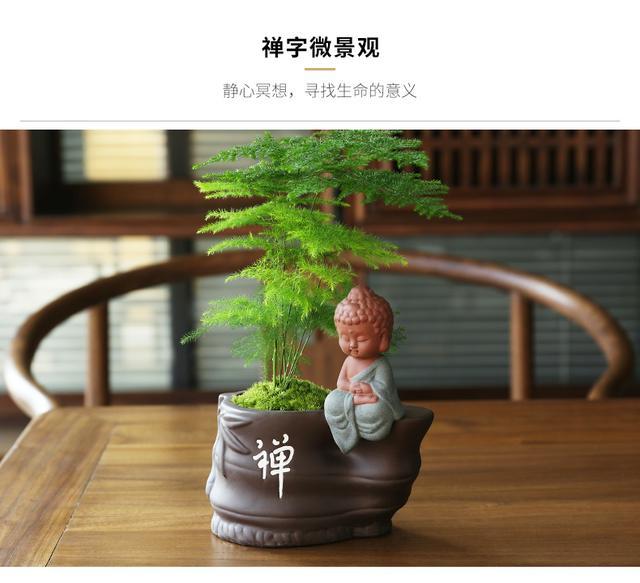
Asparagus fern, also known as cloud-layer bamboo, is a perennial evergreen herbaceous plant with near-white flowers, black seeds, and spherical berries. The asparagus fern has an elegant charm and is highly ornamental. The photo shows an asparagus fern bonsai.
1. Environmental Benefits
At night, the asparagus fern can absorb harmful gases such as phosphorus dioxide and sulfur dioxide. The gases released by the plant have antibacterial and bacteria-inhibiting functions.
2. Care Guide
(1) Light. The asparagus fern must not be exposed to blazing sun; in hot seasons it should be placed in a cool, well-ventilated spot. At the same time, during its flowering period the asparagus fern is sensitive to both wind and rain, so good ventilation must be ensured; in good weather it can be placed outdoors appropriately to receive sunlight [Jishan Huayao].
(2) Temperature. Keep the indoor temperature at around 5°C in winter and place it in a sunny area, and it can overwinter safely.
(3) Watering. Ordinarily, watering should alternate between dry and moist: do not water when the soil is dry, and when you do water, water thoroughly. Never give "half-way water," and even less should the soil stay overly wet or waterlogged for long periods, otherwise the fleshy root system will grow poorly and root rot will result. In the scorching, dry season, besides keeping the potting soil moist, also spray water on the branches, leaves and the surrounding area.
(4) Fertilizing. During the spring and autumn growing seasons, apply fertilizer once every 10 days, mainly nitrogen and potassium fertilizer, and add extra phosphorus fertilizer before the flowering period. Stop fertilizing during the high temperatures of summer to avoid damaging the roots.
(5) Soil. It prefers soil rich in humus that is loose and well-drained. For the potting soil, use a growing medium mixed from 4 parts garden soil, 4 parts leaf mold and 2 parts yellow sand.
(6) Propagation. For soil culture, asparagus fern is commonly propagated by sowing and division, and can also be grown hydroponically. Division propagation is often carried out in combination with repotting in spring: dig out the whole plant and divide it into several clumps, potting each separately. However, plants obtained by division often have an irregular shape and a low survival rate, so this method is used less often.
(7) Placement and Display. The asparagus fern is mainly grown in pots for its foliage; fresh and elegantly understated, it adds even more of a scholarly atmosphere when placed in a study. Slightly larger potted plants can be placed on a windowsill; for large potted plants, add a support frame so that the leaves are evenly distributed, and they can be displayed in a corner of the room.